What Health Metrics Should I Monitor Regularly? 8 Daily Essentials
Tech
Key Findings
The best health metrics to monitor regularly are the ones that show how well you sleep, recover, move, and respond to stress. Start with daily essentials like sleep quality, resting heart rate, HRV, steps, training load, recovery, body composition, and temperature or respiratory trends. Wearables can make this data easier to collect, but the real value comes from turning health and fitness data into practical changes that improve your energy, performance, and long-term wellbeing.
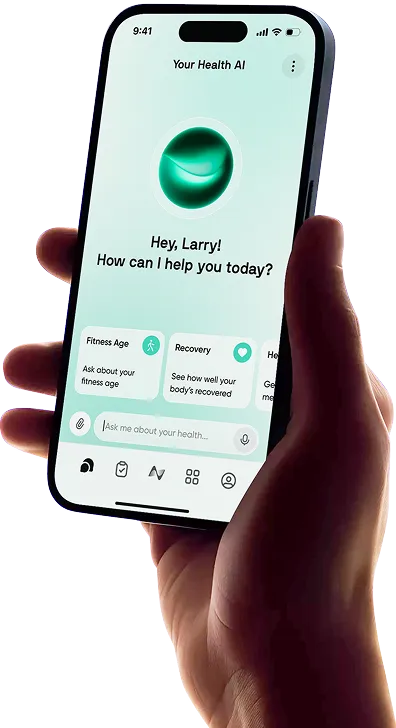
Nowadays, wearables, smart rings, smart scales, and apps can show you everything from heart rate variability to sleep quality, recovery, stress, body temperature, blood oxygen, and training readiness.
That can be useful, but it can also become overwhelming. The goal should not be to track every number and data point possible. The goal is to focus on the health and fitness data that actually helps you make better decisions.
The best fitness metrics are the ones that connect clearly to how you feel, how you recover, and how your habits affect your long-term health.
Best Health Metrics You Should Consistently Track

The best health metrics to track are the ones that help you understand your sleep, recovery, activity, and overall well-being without overwhelming you with unnecessary or misleading data.
These are our 8 essential health metrics you should track regularly:
1. Resting Heart Rate
Resting heart rate is the number of times your heart beats per minute while your body is at rest. It is one of the simplest health metrics to track, but also one of the most useful.
A lower resting heart rate can be linked with better cardiovascular fitness, although what is “normal” depends on your age, fitness level, health status, and genetics. The key is not to compare your number with someone else’s. The key is to watch your personal trend.
If your resting heart rate is higher than usual for several days, it may be a sign that your body is under strain. Common causes include poor sleep, stress, dehydration, illness, alcohol, overtraining, or late meals.
Why it matters: resting heart rate gives you a quick view of how hard your body is working at baseline. If it rises unexpectedly, it may be worth taking a lighter day, hydrating more, or prioritizing sleep.
2. Heart Rate Variability
Heart rate variability, or HRV, measures the variation in time between heartbeats. It is one of the most important recovery-focused fitness metrics because it reflects how your nervous system is responding to stress.
Higher HRV compared with your own baseline often suggests better recovery and resilience. Lower HRV can suggest fatigue, stress, dehydration, illness, poor sleep, or too much training load. WHOOP notes that HRV is highly individual and is best interpreted by following your own long-term trends rather than comparing your score with someone else’s.
Why it matters: HRV can help you decide whether to push harder or recover. If your HRV is trending down for several days, your body may benefit from lighter training, more rest, better hydration, and improved sleep consistency.
3. Sleep Duration and Sleep Quality
Sleep is one of the most important health metrics because it influences almost everything else: mood, recovery, appetite, cognitive performance, hormones, immune function, and exercise performance.
Sleep duration tells you how long you slept. Sleep quality looks at how well you slept, including restlessness, wake-ups, sleep stages, sleep efficiency, and timing. Many wearables now provide a sleep score to simplify these signals into one number.
Apple Watch, for example, can track overnight metrics such as sleep duration, heart rate, respiratory rate, wrist temperature, and blood oxygen through its health features. Oura also uses sleep quality, resting heart rate, temperature, movement, HRV, and activity balance to support its Readiness Score.
Why it matters: poor sleep often shows up in other data. You may see higher resting heart rate, lower HRV, lower readiness, more hunger, reduced workout performance, or lower motivation. Improving sleep is one of the fastest ways to improve your overall health and fitness metrics.
4. Daily Movement and Steps
Daily movement is one of the most practical fitness metrics to track because it reflects your baseline activity outside of workouts. Steps are not perfect, but they are easy to understand and useful for spotting patterns.
Many people focus only on structured exercise, but your total daily movement matters too. A 45-minute workout does not fully offset sitting for the rest of the day. Tracking steps, active minutes, walking distance, or general movement can help you notice when your day has become too sedentary.
Why it matters: regular movement supports cardiovascular health, metabolic health, mobility, energy, and weight management. If your step count drops for several days, it may be a sign that your routine needs more movement breaks, walks, or low-intensity activity.
5. Exercise Intensity and Training Load
Exercise intensity tells you how hard your body is working during activity. This can be measured through heart rate zones, pace, power, perceived effort, active calories, or strain scores.
Training load looks at the total amount of stress your workouts place on the body over time. This is especially important if you run, cycle, lift, train for events, or exercise most days.
Garmin’s Training Readiness feature, for example, considers relationships between strain, stress, recovery, sleep hygiene, and your ability to maintain balance. WHOOP also focuses heavily on strain, recovery, sleep, stress, and health monitoring.
Why it matters: tracking intensity helps you train smarter. Too little intensity may limit progress. Too much intensity without recovery can increase fatigue, reduce performance, and raise injury risk.
6. Recovery and Readiness
Recovery metrics combine several signals to estimate how prepared your body is for the day. These often include HRV, resting heart rate, sleep quality, recent activity, body temperature, and stress.
Oura’s Readiness Score ranges from 0 to 100 and is designed to show whether you are ready for greater challenges or need more recovery. Oura describes scores of 85 or higher as optimal, 70 to 84 as good, and under 70 as a sign to pay attention.
Why it matters: readiness helps you adapt your day. A high-readiness day may be a good time for a hard workout or demanding schedule. A low-readiness day may call for lighter movement, more breaks, hydration, and an earlier bedtime.
7. Body Weight and Body Composition
Body weight can be useful, but it is only one part of the picture. Body composition gives more context by estimating fat mass, lean mass, muscle mass, water weight, and sometimes visceral fat.
Weight naturally fluctuates because of hydration, salt intake, menstrual cycle changes, carbohydrate intake, digestion, and training. That is why daily weight should be interpreted as a trend, not a verdict.
Why it matters: body composition can help you understand whether your fitness plan is supporting fat loss, muscle gain, maintenance, or general metabolic health. It is especially useful when paired with performance, strength, sleep, and recovery data.
8. Blood Oxygen, Respiratory Rate, and Temperature Trends
Blood oxygen, respiratory rate, and body temperature trends are useful background health metrics. They can help you identify changes in your body that may not be obvious yet.
Blood oxygen, or SpO2, estimates how much oxygen your blood is carrying. Respiratory rate tracks how many breaths you take per minute. Temperature trends can show deviations from your usual baseline.
Fitbit Charge 6 can track health metrics such as breathing rate, HRV, skin temperature, and resting heart rate in the Fitbit app in certain regions. Google says these trends can help identify changes in wellbeing, including increased stress, fatigue, or potential signs of illness.
Why it matters: these metrics are especially helpful when viewed together. If your temperature is elevated, resting heart rate is higher, HRV is lower, and sleep is poor, your body may be under strain. These are wellness signals, not a diagnosis, but they can help you respond earlier.


How to Track Your Health & Fitness Metrics at Home
You do not need a medical setup to start tracking your health. Most people can monitor the essential health metrics to track using a combination of wearables, smart devices, and simple habits.
A good home tracking setup might include:
A wearable for heart rate, HRV, sleep, activity, and workouts.
A smart scale for weight and body composition trends.
A blood pressure monitor if cardiovascular health is a priority.
A food or habit tracking app if nutrition, hydration, or energy are major goals.
A journal or notes app to record context, such as stress, alcohol, caffeine, soreness, mood, and illness.
The most important rule is to track consistently without obsessing. Fitness data analytics is only useful when the data leads to better choices. If you collect numbers but never change your habits, the dashboard becomes noise.
A better approach is to review your data in patterns:
Look at daily signals for quick decisions, such as whether to train hard or take it easy.
Look at weekly trends to see whether sleep, activity, and recovery are improving.
Look at monthly trends to understand bigger changes in fitness, body composition, stress, and long-term progress.
Also, remember that wearables are not medical devices unless specifically cleared for a medical use. They are best for trends, habit feedback, and general wellness insights. Speak to a clinician if you see concerning symptoms or persistent abnormal readings.
The Best Health & Fitness Trackers
The best tracker depends on what you care about most. Some people want deep sleep and recovery data. Others want workout performance, GPS, smartwatch features, or a simple daily activity tracker.
Below are some of the strongest options for tracking the essential health metrics to track regularly.
Oura Ring
Best For: Sleep, recovery, readiness, and low-profile tracking
Oura is a smart ring designed for people who want detailed health and recovery insights without wearing a traditional watch. It tracks sleep, readiness, activity, heart rate, HRV, body temperature trends, blood oxygen, stress, resilience, and more.
Oura is especially strong for people who want to understand how sleep, recovery, and lifestyle habits affect their body. Its Readiness Score combines short-term and long-term signals, including sleep quality, lowest resting heart rate, body temperature, previous activity, HRV, sleep balance, and activity balance.
Choose Oura if your main priorities are sleep, recovery, and daily readiness rather than on-wrist workout displays.
Apple Watch
Best For: iPhone users who want health, fitness, safety, and smartwatch features
Apple Watch is one of the most versatile health and fitness trackers. It can track workouts, heart rate, sleep, activity rings, ECG in supported models, blood oxygen in supported regions and models, wrist temperature, respiratory rate, and overnight vitals.
Apple says the Vitals app can show overnight health metrics including heart rate, respiratory rate, wrist temperature, blood oxygen, and sleep duration, and can notify users when multiple metrics fall outside their typical range.
Choose Apple Watch if you want a strong all-rounder that combines fitness metrics, notifications, apps, safety features, and everyday smartwatch functionality.
WHOOP
Best For: Recovery, strain, athletes, and people who train seriously
WHOOP is built around recovery, strain, sleep, stress, and coaching. It is a screenless wearable, which makes it useful for people who want health data without another display.
WHOOP measures metrics across sleep, strain, stress, recovery, and broader health monitoring. It also provides recommendations designed to translate body data into guidance.
Choose WHOOP if you care about training load, recovery, HRV, sleep debt, and performance-focused health & fitness data.
Garmin
Best For: Runners, cyclists, endurance athletes, and outdoor training
Garmin is one of the strongest choices for people who want detailed workout data. Depending on the model, Garmin watches can track heart rate, HRV status, sleep, Body Battery, training load, training readiness, VO2 max, stress, GPS routes, pace, power, elevation, and sport-specific metrics.
Garmin’s Body Battery feature is designed to help monitor personal energy resources around the clock. Its Training Readiness feature also connects strain, stress, recovery, and sleep hygiene to help users judge whether they are ready for demanding activity.
Choose Garmin if you want performance analytics, sport-specific data, and strong battery life.
Fitbit Charge 6
Best For: Simple everyday tracking and approachable fitness data
Fitbit Charge 6 is a good option for people who want essential health and fitness metrics without a large smartwatch. It tracks heart rate, workouts, sleep, stress, Daily Readiness, GPS-supported activity, ECG in supported regions, and other health metrics.
Google says Charge 6 includes its most accurate heart rate on a Fitbit tracker and supports insights such as calories, Active Zone Minutes, Daily Readiness, and sleep. Fitbit also supports health metrics like breathing rate, HRV, skin temperature, and resting heart rate in certain regions.
Choose Fitbit if you want a user-friendly tracker for steps, sleep, workouts, heart rate, and basic recovery insights.
Withings ScanWatch
Best For: Hybrid watch design and heart health-focused tracking
Withings ScanWatch is a hybrid smartwatch that looks more like a traditional watch while still tracking key health metrics. ScanWatch 2 includes activity and sleep tracking, ECG, SpO2, body temperature tracking, and heart rate monitoring.
Withings also highlights features such as active minutes, steps, Sleep Quality Score, workout heart rate zones, high and low heart rate notifications, atrial fibrillation detection through ECG recording, blood oxygen levels, and breathing insights.
Choose Withings if you want a less tech-heavy look with strong basic health tracking and heart health features.
Turn Passive Tracking into Active Improvement with Neura
Tracking health and fitness data is useful, but it can quickly become overwhelming. You might check your sleep score, HRV, readiness, stress, and training load, then still wonder what to do next.
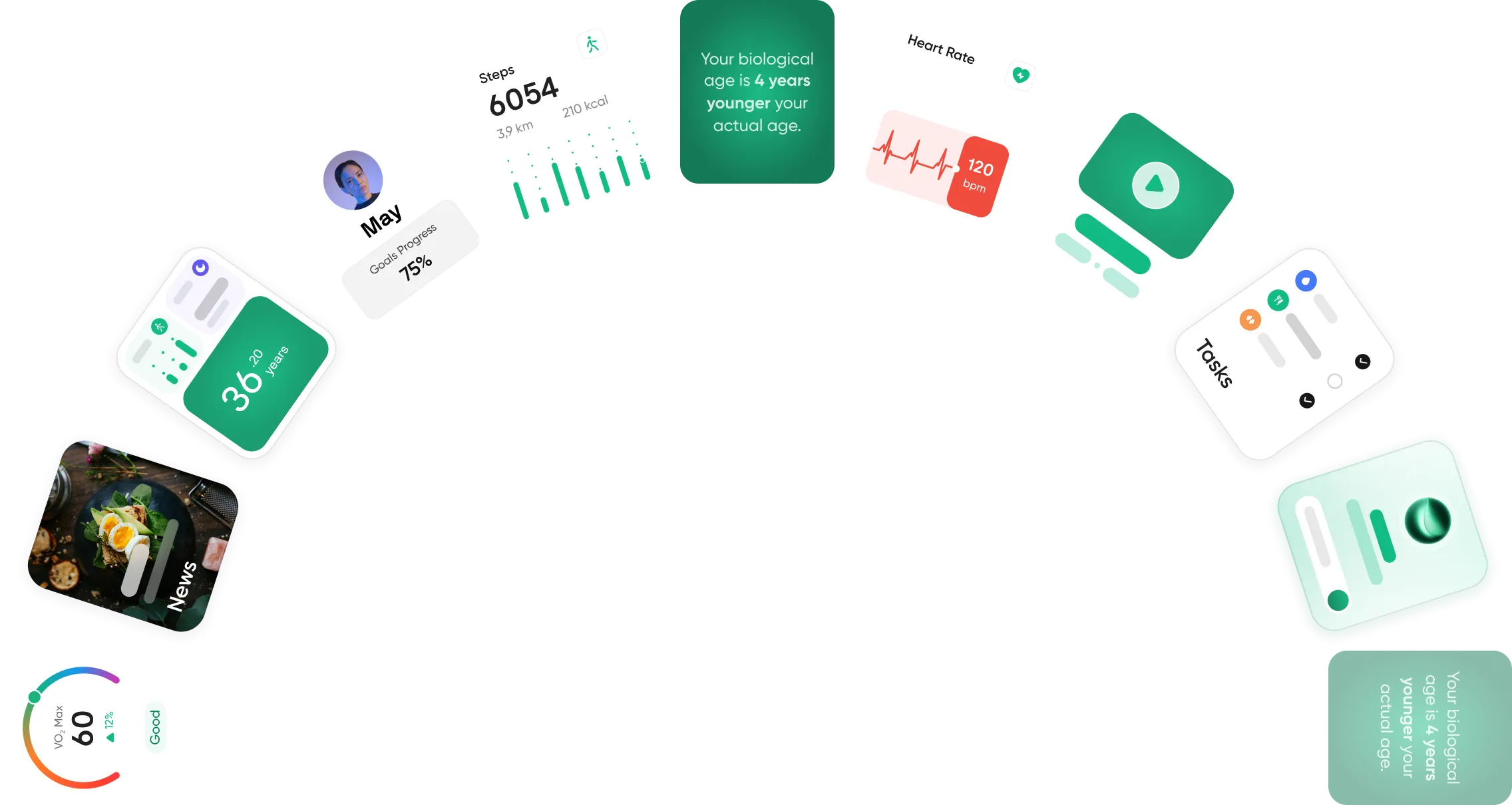
Neura is designed to solve this problem by transforming passive tracking into active guidance. Instead of simply showing your data, Neura helps interpret it and translate it into practical daily recommendations. Its philosophy is simple: health data should look after you, not create more work.
For example, if your wearable shows low HRV, poor sleep, and elevated resting heart rate, Neura can help adjust your day around recovery. That might mean lighter training, more rest, better meal timing, or an earlier bedtime.
The goal is to move beyond dashboards and use your health data to make better daily decisions with less effort.
Final Thoughts: Essential Health & Fitness Metrics
The best fitness metrics to monitor regularly are the ones that help you understand your body and improve your habits. For most people, the eight essentials are resting heart rate, HRV, sleep, daily movement, exercise intensity, recovery, body composition, and respiratory or temperature trends.
You do not need to track everything. You need to track the right things consistently.
Start with the basics: sleep, heart rate, movement, and recovery. Then add more advanced fitness metrics as your goals become clearer. If you train seriously, pay closer attention to HRV, training load, and readiness. If your priority is long-term health, focus on sleep consistency, resting heart rate, body composition, activity, and cardiovascular signals.
Most importantly, do not let your health data become homework. Use your tracker to understand what is happening, then use tools like Neura to turn that data into action. The goal is not to become obsessed with numbers. The goal is to feel better, recover faster, train smarter, and build a healthier routine that actually fits your life.
Article FAQ
What health metrics should I track daily?
The most useful health metrics to track daily include sleep duration, sleep quality, resting heart rate, heart rate variability, daily movement, exercise intensity, recovery, and body weight trends. You do not need to monitor every number available. Focus on the metrics that help you understand your energy, recovery, fitness progress, and overall wellbeing.
What are the best fitness metrics to track?
The best fitness metrics to track are resting heart rate, HRV, workout intensity, training load, steps, active minutes, sleep, and recovery. These metrics help show whether your body is adapting well to exercise or needs more rest. For most people, trends matter more than single-day scores.
How do I track my health metrics at home?
You can track health metrics at home using a wearable, smart ring, smartwatch, smart scale, or health app. A basic setup can monitor sleep, heart rate, HRV, steps, workouts, weight, and recovery. For more advanced tracking, you can also use a blood pressure monitor or glucose monitor if recommended by a clinician.
Why is tracking health and fitness data important?
Tracking health and fitness data helps you spot patterns in your sleep, activity, stress, and recovery. This can make it easier to understand why you feel tired, why performance changes, or which habits improve your wellbeing. The goal is not to obsess over numbers, but to make better daily decisions.
How often should I check my fitness metrics?
Most people should check key fitness metrics once a day or a few times per week. Daily tracking is useful for sleep, recovery, steps, and resting heart rate, while weekly reviews are better for trends like training load, body weight, and fitness progress. Avoid reacting too strongly to one unusual reading.
What is the difference between health metrics and fitness metrics?
Health metrics usually refer to broader wellbeing signals, such as sleep, resting heart rate, blood pressure, temperature, respiratory rate, and body weight. Fitness metrics focus more on activity and performance, such as steps, training load, workout intensity, pace, strength, calories burned, and recovery. There is overlap between the two, especially with wearables.