Table of Contents

Share this Article

28-Day Calisthenics Workout Challenge: Beginner’s Guide

Fitness

65 minutes reading time

65 min read time

Man doing a handstand outside to showcase calisthenics exercises with buildings in the background

Key Findings

A 28-day calisthenics plan builds functional strength and joint mobility using only your body weight. This equipment-free progression safely introduces beginners to fundamental movements like squats and push-ups, prioritizing proper form to establish a solid foundation for long-term fitness.

Why you Should Care?

Calisthenics is an accessible way for beginners and professionals alike to build functional strength and mobility.

Welcome to your training journey. Getting started with fitness does not require a gym membership or heavy weights. 

By using your own body weight, you can build strength, improve endurance, and enhance your mobility from home. 

A structured 28-day calisthenics workout provides a clear roadmap to help you establish a consistent routine and learn the fundamentals of bodyweight mechanics.

What is Calisthenics?

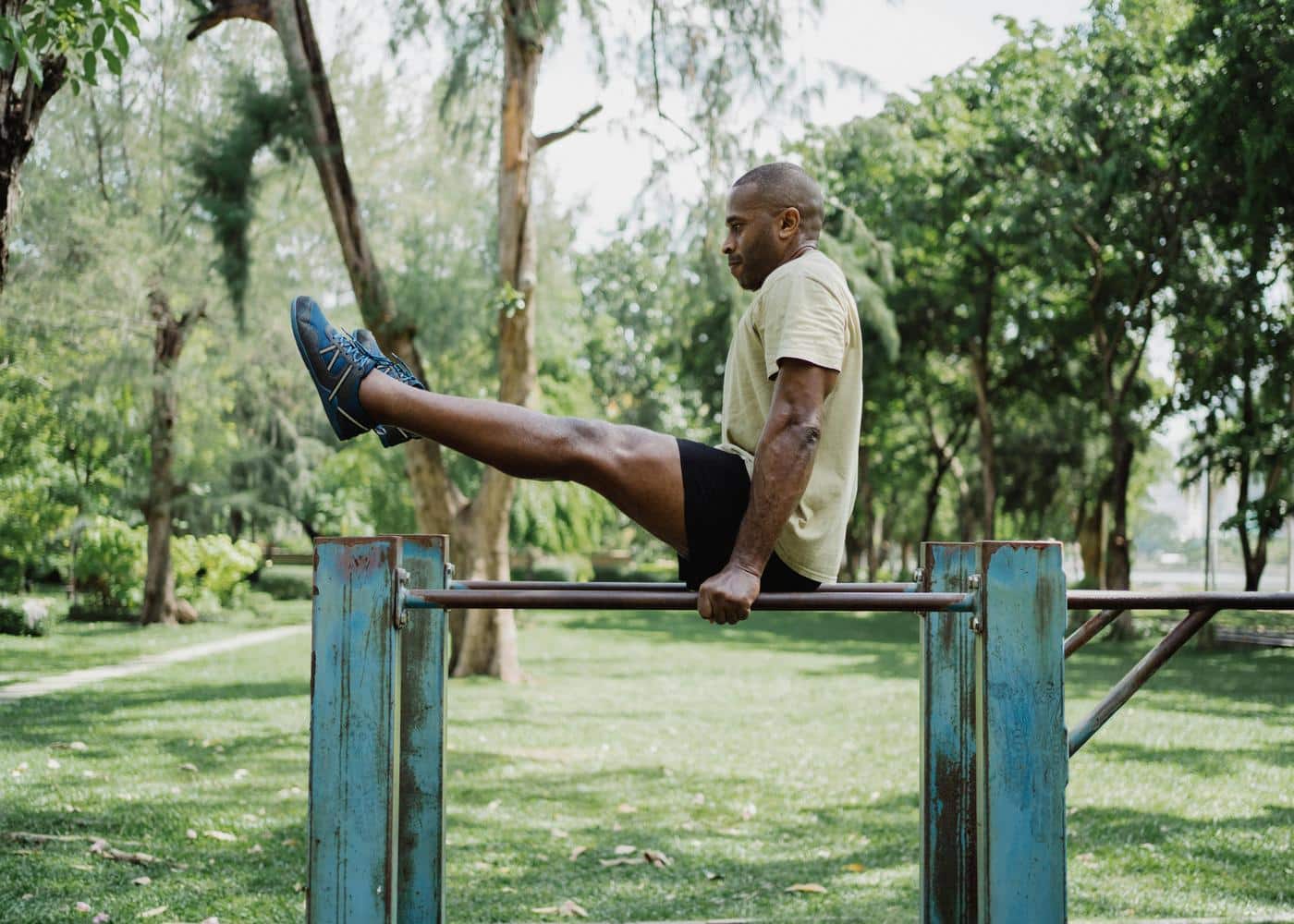
Man outdoors holding dip bar with hands while raising legs above dip bar to showcase calisthenics workouts

Calisthenics is a form of strength training that utilizes your body weight as the primary source of resistance. 

Instead of relying on dumbbells or machines, you perform gross motor movements like pushing, pulling, squatting, and bending. 

The practice ranges from basic movements like push-ups and lunges to advanced gymnastic skills like muscle-ups. 

By mastering how your body moves through space, you naturally build a balanced and proportional calisthenics physique. 

This training style emphasizes functional strength, meaning the muscle you build translates to making everyday physical tasks easier to perform.


What are the Benefits of Calisthenics?

Training with your own body weight improves functional movement and provides a highly accessible approach to daily fitness.


Accessible and Cost-Effective

One of the main advantages of bodyweight training is its accessibility. You can perform these routines almost anywhere, whether you are in a small apartment, a hotel room, or a local park. 

Because you do not need to invest in machines or monthly gym subscriptions, it removes financial and logistical barriers to getting fit. 

When you rely solely on your body weight, you eliminate the commute time associated with traveling to a fitness center. This convenience makes it easier to stick to a consistent schedule, which is important in seeing long-term results. 

Furthermore, you can break up your training throughout the day. If you work from home, you can complete a few sets of squats between meetings or practice your push-up form during a lunch break. 

This flexibility allows you to integrate physical activity into your daily life without needing to carve out a dedicated hour for a traditional gym session.


Builds Functional Real-World Strength

Unlike isolation exercises performed on gym machines, bodyweight movements require multiple muscle groups to work together simultaneously. A simple push-up engages your chest, shoulders, triceps, and core all at once. 

This compound approach builds functional strength that mimics natural human movement, improving your overall physical capability in daily life. 

When you train your body to move as a single cohesive unit, you improve your intermuscular coordination. This means your nervous system becomes more efficient at recruiting different muscle fibers to accomplish a task. 

As a result, activities like carrying heavy groceries, lifting your children, or moving furniture become noticeably easier. 

Functional strength focuses on movement patterns rather than just muscle size. By regularly practicing squats, lunges, and pulling motions, you prepare your body for the physical demands of the real world. 

This type of training also builds stabilizer muscles, which are often neglected when using seated weight machines that guide your range of motion for you.


Improves Flexibility and Joint Mobility

Proper bodyweight training requires you to move your joints through their full range of motion. Exercises like deep squats and lunges stretch your muscles while building strength in those extended positions. 

Over time, this dual action of stretching and strengthening leads to improvements in both flexibility and joint mobility. 

Many people struggle with tight hips and rounded shoulders due to prolonged sitting. Calisthenics movements actively counteract these issues by forcing you to open up your hips and extend your thoracic spine. 

When you perform a full-depth squat, you are increasing the mobility of your ankles, knees, and hips simultaneously. 

Building strength at the end range of your joint mobility is a key factor in preventing injuries. It ensures that your muscles can safely support your body weight even in awkward or stretched positions. 

Consistently practicing these full-range movements keeps your joints healthy and helps maintain your independence and ease of movement.


Enhances Core Stability and Posture

Almost every bodyweight movement inherently requires core engagement to maintain proper body alignment. 

Whether you are holding a plank or performing a pull-up, your abdominal and lower back muscles must contract to stabilize your spine. 

This constant engagement builds a strong core, which naturally leads to better upright posture and a reduced risk of lower back discomfort. 

Your core acts as the central bridge connecting your upper and lower body. When this bridge is strong, force transfers more efficiently through your entire frame. 

During bodyweight exercises, you are constantly fighting gravity to keep your body straight and aligned. This anti-extension and anti-rotation training is highly effective for the abdominal muscles. 

Over time, this continuous core activation translates into how you carry yourself outside of your training sessions. You will find it easier to sit tall at your desk and stand with your shoulders pulled back, mitigating the slouching habits that often lead to chronic pain.


Promotes Sustainable Progression

Bodyweight training allows for customizable progression without the need to add external weight. If a standard push-up is too difficult, you can modify it by placing your hands on an elevated surface. 

As you grow stronger, you can change the leverage or angle to make the movement more challenging. This gradual scalability ensures that your joints and tendons adapt safely, promoting long-term joint health. 

Progression in bodyweight training is about mastering your body rather than just adding plates to a barbell. Once you can perform a standard movement easily, you can transition to unilateral calisthenics exercises, such as one-arm push-ups or pistol squats. 

You can also manipulate the tempo, pausing at the bottom of a movement to remove momentum and increase the time your muscles spend under tension. 

This methodical approach to increasing difficulty keeps your workouts engaging and provides a clear path for continuous improvement over months and years of consistent training.


What Equipment Do I Need for Calisthenics?

While you can start with zero equipment, acquiring a few basic items will expand your exercise options as you progress.


  • Pull-up bar: A useful tool for developing your back and biceps. You can purchase a doorway pull-up bar that installs without screws.


  • Resistance bands: These provide assistance during difficult movements like pull-ups or add resistance to squats and push-ups.


  • Yoga mat: A standard fitness mat provides cushioning for your hands, knees, and back during floor exercises and core work.


  • Sturdy chairs or parallettes: Two stable chairs of equal height can be used to perform triceps dips. Alternatively, a set of parallette bars offers a safer and more ergonomic grip.


  • Liquid chalk: As you begin hanging from bars, your hands may sweat. Liquid chalk keeps your hands dry and improves your grip strength.

Our 28-Day Calisthenics Workout Plan for Beginners

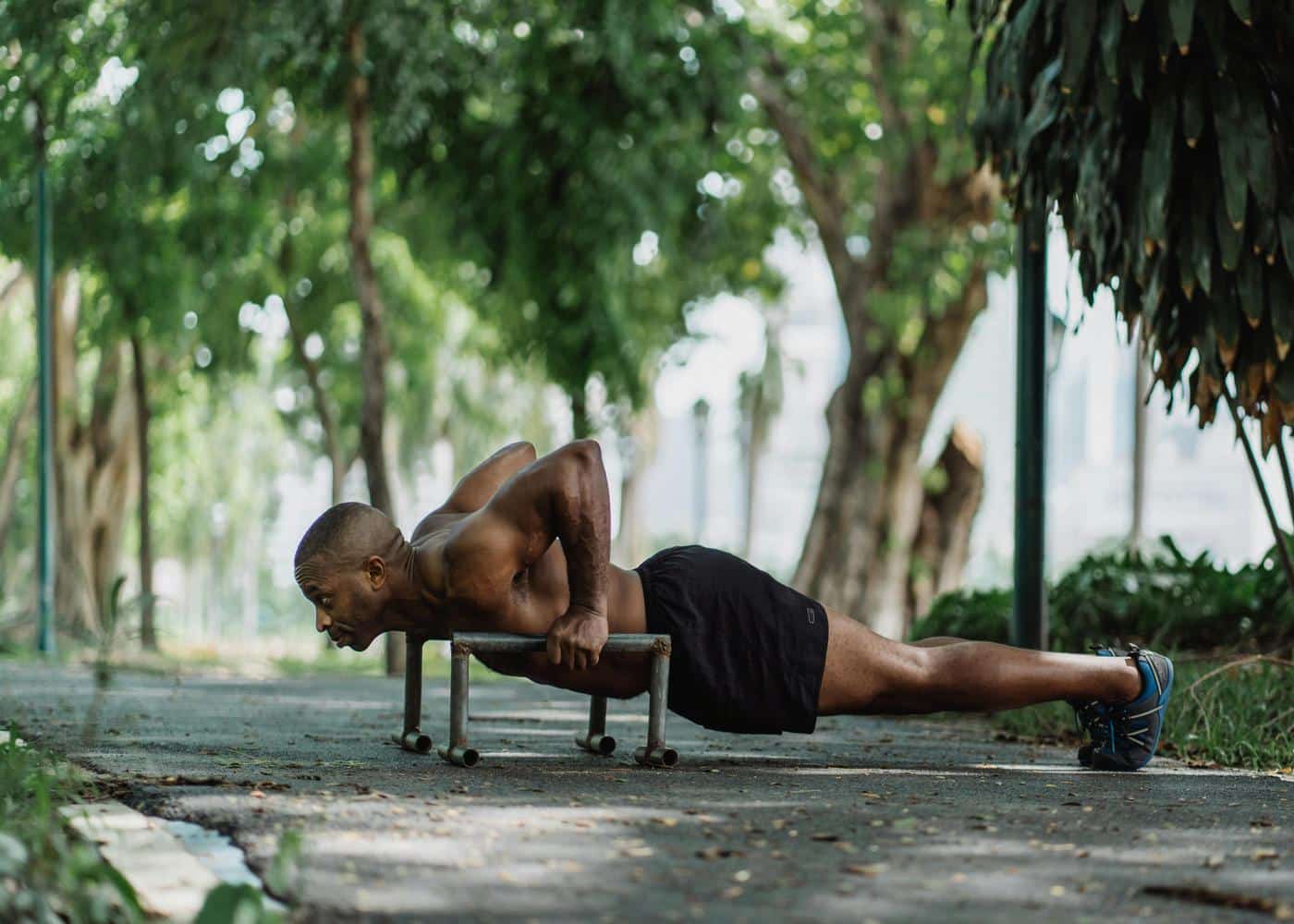
Man without shirt doing pushups on low dip bars outdoors

This program is a solid starting point for calisthenics if you are a beginner.


Week 1: Building the Foundation

This initial week focuses entirely on mastering fundamental mechanics and preparing your joints for future progression.


Day 1: Full Body Basics

Day 1 focuses on establishing proper form for fundamental movements to safely prepare your central nervous system.

The Workout:


  1. Squats (3 sets of 10 to 15 repetitions): Stand with feet shoulder-width apart. Keep your chest up. Lower your hips backward until thighs are parallel to the floor. Stand back up.


  2. Incline Push-ups (3 sets of 8 to 12 repetitions): Place hands slightly wider than shoulder-width on a stable bench or wall. Engage your core. Lower your chest to the surface. Press back up to the starting position.


  3. Forearm Planks (3 sets of 20 to 30 seconds): Rest your weight on your forearms and toes. Keep your body perfectly straight from head to heels. Hold the position.

Benefits: The primary advantage of this routine is neurological adaptation, teaching your muscles how to fire together efficiently without overloading them prematurely. This foundational phase builds the crucial mind-muscle connection required for all subsequent bodyweight exercises.

Tips: Prioritize technique over the number of repetitions at all times; if your form begins to break down, stop the set early to prevent injury and ensure you are targeting the correct muscle groups consistently. Never sacrifice your joint health just to hit a specific number of repetitions.


Day 2: Core and Stability

Day 2 shifts the focus toward core stability and active recovery to allow your major muscle groups time to repair.

The Workout:


  1. Bird-Dogs (3 sets of 10 repetitions per side): Begin on your hands and knees. Keep your back completely flat. Simultaneously extend your right arm forward and your left leg backward. Hold for two seconds. Return to the start and switch sides.


  2. Dead Bugs (3 sets of 10 repetitions per side): Lie flat on your back. Reach your arms toward the ceiling. Bend your knees at a 90-degree angle. Slowly lower your right arm and left leg toward the floor. Keep your lower back pressed into the mat. Return to the start and switch sides.

Benefits: This session builds a stable core, which is the absolute foundation of all bodyweight movements, and helps prevent lower back strain during your regular daily activities. A strong core acts as a stabilizer for every other compound movement you will perform.

Tips: Moving slowly is highly recommended for core movements because rushing relies on momentum rather than muscular engagement, which defeats the purpose of the exercise. Focus entirely on feeling your abdominal muscles contract throughout the entire range of motion.


Day 3: Lower Body Focus

Day 3 targets the legs and tests your spatial awareness, balance, and unilateral strength.

The Workout:


  1. Reverse Lunges (3 sets of 10 repetitions per leg): Stand tall. Take a controlled step backward with your right foot. Lower your hips until both knees bend at a 90-degree angle. Push off your back foot to return to the start. Alternate legs.


  2. Glute Bridges (3 sets of 15 repetitions): Lie on your back. Bend your knees and place feet flat on the floor. Squeeze your glutes. Push your hips toward the ceiling until your body forms a straight line. Lower back down.


  3. Calf Raises (3 sets of 20 repetitions): Stand tall. Push up onto your toes. Hold for one second. Lower your heels back down.

Benefits: This lower-body focus builds essential leg strength and stabilizes the knee and hip joints for better daily mobility. Developing strong legs provides a stable base that improves your performance in all other physical activities.

Tips: Keep your front knee tracking in line with your toes during reverse lunges, ensuring it does not collapse inward, to protect your knee joint from unnecessary strain. If you struggle with balance, perform the lunges next to a wall for light support.


Day 4: Mobility and Flexibility

Day 4 is dedicated to stretching your muscles and improving your joint mobility to prevent stiffness.

The Workout:


  1. Cat-Cow Stretch (3 sets of 10 repetitions): Start on hands and knees. Arch your back upward toward the ceiling. Drop your belly toward the floor while lifting your head.


  2. World's Greatest Stretch (3 sets of 5 repetitions per side): Step into a deep lunge. Drop your inside elbow toward your front instep. Rotate your arm and chest toward the ceiling.


  3. Seated Hamstring Stretch (Hold 60 seconds per leg): Sit on the floor. Extend one leg straight. Bend the other leg inward. Reach toward your straight foot.


  4. Deep Yogic Squat (Hold for 2 minutes): Stand with feet wide. Lower your hips down between your heels. Press your knees outward with your elbows. Keep your chest up.

Benefits: Active mobility work prevents muscular imbalances, reduces the risk of injury, and ensures your joints can move freely through their entire range of motion during heavier training days. It keeps your tissues elastic and responsive.

Tips: Breathe deeply into each stretch and avoid forcing your body into painful positions; the goal is gentle release, not extreme tension. Use your exhales to sink slightly deeper into the stretches as your muscles begin to relax naturally.


Day 5: Upper Body Push

Day 5 introduces pushing mechanics to strengthen your chest, shoulders, and triceps safely.

The Workout:


  1. Knee Push-ups (3 sets of 8 to 12 repetitions): Start in a high plank position. Drop your knees to the floor. Keep your core tight. Lower your chest until it nearly touches the ground. Press back up.


  2. Triceps Bench Dips (3 sets of 8 to 10 repetitions): Sit on the edge of a chair. Place hands next to your hips. Walk feet forward. Lower your body by bending elbows to 90 degrees. Press back up.


  3. Shoulder Tap Planks (3 sets of 10 taps per side): Hold a high plank position. Tap your right hand to your left shoulder. Tap your left hand to your right shoulder. Keep your hips as still as possible.

Benefits: Pushing movements build functional upper body strength and help stabilize the shoulder girdle for improved posture. This directly translates to an easier time pushing heavy doors or lifting items over your head.

Tips: Keep your elbows tucked at a 45-degree angle to your body during push-ups and dips to protect your shoulder joints from impingement. Spreading your fingers wide on the floor will also help distribute your weight more evenly across your wrists.


Day 6: Posterior Chain Activation

Day 6 focuses on your back and glutes to ensure balanced muscular development.

The Workout:


  1. Doorframe Rows (3 sets of 10 repetitions per arm): Stand facing a doorframe. Grip the frame with one hand. Place feet close to the base. Lean back until your arm is extended. Pull your body toward the frame.


  2. Superman Holds (3 sets of 12 repetitions): Lie face down. Squeeze your glutes. Lift your chest, arms, and legs off the floor. Hold the top position for three seconds. Lower back down.


  3. Reverse Snow Angels (3 sets of 15 repetitions): Lie face down. Lift your chest slightly. Sweep your arms from overhead down to your hips. Return arms overhead.

Benefits: This routine trains the often-dormant muscles of your posterior chain, leading to better posture and creating the necessary foundation for future pull-up strength. A strong back is the primary defense against rounding shoulders and chronic neck tension.

Tips: Always initiate these pulling movements by retracting your shoulder blades first, rather than just pulling with your biceps, to properly engage your back muscles. Imagine trying to squeeze a pencil between your shoulder blades on every repetition.


Day 7: Complete Rest

Day 7 is a full rest day to let your body recover completely before the next training block.


  1. Complete Physical Rest: Do not perform any structured physical exercises today.


  2. Light Activity: Take a 15-minute gentle walk outdoors.


  3. Hydration: Drink plenty of water throughout the day.


  4. Review: Spend 10 minutes mentally reviewing the previous six days of training. Note which movements felt easy and which challenged you.

Benefits: Complete rest is when your muscles actually grow and repair the micro-tears created during your training sessions throughout the week. Without adequate rest, your body will remain in a constant state of fatigue, stalling your progress entirely.

Tips: Listen to your body today; if you feel excessively sore, consider taking a warm bath with Epsom salts to further aid the recovery process. Proper nutrition is critical today, so ensure you are eating enough protein to support cellular repair.


Week 2: Increasing Time Under Tension

During the second week, you will increase the difficulty of your training by manipulating leverage and slowing down your movements.


Day 8: Full Body Progression

Day 8 steps up the intensity by slowing down the lowering phase of your fundamental exercises.

The Workout:


  1. Tempo Squats (3 sets of 10 to 12 repetitions): Stand with feet shoulder-width apart. Take three full seconds to lower your hips. Pause for one second at the bottom. Stand back up at a normal speed.


  2. Negative Push-ups (3 sets of 6 to 8 repetitions): Start in a high plank position on your toes. Lower your body to the floor over a count of four seconds. Drop to your knees to push back up.


  3. Forearm Planks (3 sets of 30 to 40 seconds): Rest your weight on your forearms and toes. Keep your body perfectly straight. Hold the position.

Benefits: Maximizing time under tension during these movements stimulates muscle growth effectively and increases muscular endurance even without heavy weights. By moving slowly, you strip away momentum and force your muscles to perform all of the work.

Tips: Do not hold your breath during the slow descending phases; exhale steadily as you lower yourself to maintain stable blood pressure and core engagement. Focus intensely on maintaining perfect alignment as your muscles begin to fatigue.


Day 9: Core Endurance

Day 9 challenges your abdominal muscles to sustain tension for longer periods.

The Workout:


  1. Flutter Kicks (3 sets of 30 seconds): Lie flat on your back. Press your lower back into the floor. Lift legs six inches off the ground. Rapidly flutter them up and down.


  2. Russian Twists (3 sets of 20 repetitions): Sit on the floor. Lean back slightly to engage your core. Lift feet off the ground. Twist your torso to touch the floor on either side of your hips.


  3. Side Planks (3 sets of 20 to 30 seconds per side): Prop your body up on one forearm and the side of your foot. Keep your body in a straight line. Hold the position. Switch sides.

Benefits: This session builds rotational stability and lateral core strength, which are essential for transferring power smoothly through your body. Strong obliques are critical for protecting your spine during twisting motions in your daily life.

Tips: If flutter kicks cause pain in your lower back, raise your legs higher off the floor until the discomfort subsides, ensuring your lower back remains pinned to the mat. Quality movement is always more important than the height of your leg kicks.


Day 10: Lower Body Strength

Day 10 introduces new angles to your leg training to target different muscle fibers.

The Workout:


  1. Bulgarian Split Squats (3 sets of 8 to 10 repetitions per leg): Stand in front of a chair. Place one foot behind you on the seat. Lower your hips until your front thigh is parallel to the floor. Push back up.


  2. Wide-Stance Sumo Squats (3 sets of 15 repetitions): Stand with feet wider than shoulder-width. Point toes outward. Lower your hips backward. Stand back up.


  3. Single-Leg Glute Bridges (3 sets of 10 repetitions per leg): Lie on your back with knees bent. Extend one leg straight out. Squeeze your glutes. Push your hips toward the ceiling. Lower back down.

Benefits: Unilateral leg exercises correct strength imbalances between your left and right sides while dramatically improving your balance and coordination. This ensures that one dominant leg is not overcompensating and masking weakness in the other.

Tips: During the Bulgarian split squats, you might need to hop your front foot forward or backward to find the optimal distance that allows you to drop straight down comfortably. Take your time setting up before initiating the first repetition.


Day 11: Active Recovery

Day 11 provides a gentle physical reset to alleviate delayed onset muscle soreness.

The Workout:


  1. Child's Pose (Hold for 2 minutes): Kneel on the floor. Sit back on your heels. Reach arms forward on the ground. Rest your forehead on the floor.


  2. Downward-Facing Dog (5 sets of 30 seconds): Start on hands and feet. Push your hips toward the ceiling. Keep arms and legs straight. Pedal your feet to stretch your calves.


  3. Supine Spinal Twist (Hold for 2 minutes per side): Lie on your back. Pull one knee toward your chest. Cross it over your body toward the floor. Extend your opposite arm straight out.

Benefits: Light stretching increases blood flow to fatigued muscles, delivering nutrients that speed up recovery without taxing your central nervous system. This gentle movement keeps your joints lubricated and prevents you from feeling stiff and lethargic.

Tips: Focus purely on your breathing today; inhale deeply through your nose and exhale slowly through your mouth to activate your parasympathetic nervous system for better relaxation. Do not push any of these stretches into a pain zone.


Day 12: Upper Body Push Progression

Day 12 introduces more resistance to your pushing muscles by modifying leverage rather than adding external weights.

The Workout:


  1. Standard Push-ups (3 sets to failure): Start in a high plank position on toes. Lower your chest to the floor. Press back up. Repeat until you cannot perform another repetition with good form. If needed, drop to knees to finish a minimum of 8 reps.


  2. Pike Push-ups (3 sets of 8 repetitions): Start in a downward dog position. Bend your elbows. Lower the crown of your head toward the floor between your hands. Press back up.


  3. High Plank (3 sets of 45 seconds): Place hands flat on the floor directly under shoulders. Extend legs straight back. Hold your body in a straight line.

Benefits: Transitioning to standard push-ups and pike push-ups builds true upper body pressing power and specifically targets the anterior deltoids for broader shoulders. This builds the fundamental pressing strength needed for advanced gymnastic holds.

Tips: Keep your core extremely tight during standard push-ups to prevent your hips from sagging, which is the most common cause of lower back pain during this movement. Your body must move up and down as one solid plank of wood.


Day 13: Pulling Mechanics Preparation

Day 13 continues to reinforce the pulling motions necessary for a balanced physique.

The Workout:


  1. Prone Lat Pulldowns (3 sets of 12 repetitions): Lie face down on the floor. Extend your arms straight out in front of you. Lift your chest slightly off the ground. Pull your elbows down toward your ribs. Squeeze your back muscles. Extend your arms back to the starting position.


  2. Prone I-Y-T Raises (3 sets of 10 repetitions per letter): Lie face down. Lift arms straight overhead (I). Move arms to a 45-degree angle (Y). Move arms straight out to the sides (T). Lower back down.


  3. Bird-Dogs with Hold (3 sets of 10 repetitions per side): Begin on hands and knees. Extend opposite arm and leg. Hold the extended position for five seconds. Return to start.

Benefits: This routine isolates the smaller stabilizing muscles of the upper back, which are critical for healthy shoulder function and upright posture. Strengthening these hidden muscles will prevent injuries as you progress to standard pull-ups later.

Tips: Keep your neck in a neutral position by looking down at the floor during the prone exercises, rather than cranking your head upward. Relaxing your neck ensures the tension stays entirely in your upper back and shoulders where it belongs.


Day 14: Rest and Hydration

Day 14 is the final day of your second week, reserved for complete bodily rest.

The Workout:


  1. Complete Physical Rest: Do not perform any structured physical exercises today.


  2. Foam Rolling: Spend 15 minutes rolling your legs and upper back.


  3. Hydration: Drink at least eight glasses of water throughout the day.


  4. Meal Planning: Plan meals for the upcoming week focusing on adequate protein intake.

Benefits: Hydration and rest allow your tendons and ligaments to catch up with your muscle development, reducing the risk of overuse injuries. Taking scheduled breaks ensures you do not suffer from mental burnout halfway through the challenge.

Tips: Use today to visualize the dynamic movements coming in Week 3, mentally preparing yourself to tackle the explosive exercises with confidence and proper form. Setting clear intentions on your rest days keeps you focused on your long-term goals.


Week 3: Introducing Dynamic Movements

The third week introduces explosive movements and dynamic core stabilization to build power and cardiovascular endurance.


Day 15: Explosive Lower Body

Day 15 introduces a cardiovascular element by incorporating dynamic leg movements.

The Workout:


  1. Jump Squats (3 sets of 8 to 10 repetitions): Perform a standard squat. Drive forcefully through your feet at the bottom. Jump a few inches off the ground. Land softly with bent knees.


  2. Lateral Lunges (3 sets of 8 repetitions per leg): Stand tall. Take a wide step to the right. Push hips back. Bend your right knee while keeping the left leg straight. Push back to center.


  3. Wall Sits (3 sets of 30 to 45 seconds): Press your back flat against a wall. Slide down until thighs are parallel to the floor. Hold the position.

Benefits: Adding dynamic movements trains fast-twitch muscle fibers and elevates your heart rate, providing cardiovascular benefits alongside strength training. Generating power quickly is a crucial component of overall athleticism and agility.

Tips: Focus on a soft landing during jump squats; if your feet are hitting the ground loudly, you need to bend your hips and knees more upon landing to absorb the impact. Never land with your legs completely straight and locked out.


Day 16: Advanced Core Integration

Day 16 challenges your abdominal muscles to stabilize your body during movement rather than just remaining static.

The Workout:


  1. Mountain Climbers (3 sets of 30 seconds): Start in a high plank position. Drive your right knee toward your chest. Return it quickly. Drive your left knee forward. Alternate at a brisk pace.


  2. Hollow Body Holds (3 sets of 20 to 30 seconds): Lie on your back. Press lower back into the floor. Lift legs and shoulders slightly off the ground. Hold the position.


  3. Plank Knee-to-Elbow Tucks (3 sets of 8 repetitions per side): Start in a high plank position. Bring your right knee to touch the outside of your right elbow. Return to start. Alternate sides.

Benefits: This session teaches your core to brace under dynamic stress, which mimics the stabilization required for daily physical activities and sports. A dynamic core protects your spine when you are moving rapidly or changing directions abruptly.

Tips: Raise your legs higher during the hollow hold if you feel your lower back arching, as keeping the lower back on the floor prevents lumbar strain. Prioritize an engaged core over the aesthetic look of the movement.


Day 17: Unilateral Leg Training

Day 17 forces each leg to work independently to build superior balance.

The Workout:


  1. Step-Ups (3 sets of 10 repetitions per leg): Stand in front of a chair. Place right foot completely on the seat. Drive through your heel to stand up on the chair. Slowly lower back to the floor.


  2. Single-Leg Romanian Deadlifts (3 sets of 8 repetitions per leg): Stand on one leg. Hinge at your hips. Keep your back flat. Lower your torso until it is parallel to the floor. Return to standing.


  3. Standing Calf Raises (3 sets of 25 repetitions): Stand tall. Push up onto your toes. Lower heels back down.

Benefits: Unilateral training highlights and corrects muscular imbalances, ensuring that your dominant leg is not overcompensating for your weaker leg. This directly improves your running mechanics and walking gait over time.

Tips: During the single-leg Romanian deadlift, focus your eyes on a fixed point on the floor to help maintain your balance throughout the movement. Take your time on the descent to fully stretch your hamstring before returning to an upright position.


Day 18: Active Mobility

Day 18 focuses on opening up tight joints caused by the introduction of explosive movements.

The Workout:


  1. Walking Lunges with Torso Twist (3 sets of 20 total steps): Take a lunge step forward. Twist your torso over your front leg. Return to center. Step forward into the next lunge.


  2. Arm Circles (3 sets of 20 forward, 20 backward): Stand tall. Extend arms out to the sides. Make 20 small forward circles. Make 20 small backward circles.


  3. Deep Straddle Stretch (Hold for 2 minutes): Sit on the floor. Spread legs wide. Lean forward from the hips. Hold the stretch.

Benefits: Dynamic stretching improves functional range of motion and helps flush out metabolic waste products that accumulate after intense explosive training days. Keeping your tissues mobile is essential when increasing the velocity of your workouts.

Tips: Keep your movements fluid and controlled during dynamic stretches; jerky or bouncing motions can trigger a stretch reflex that causes muscles to tighten rather than relax. Move through the motions gracefully to promote healing blood flow.


Day 19: Dynamic Push

Day 19 adds an explosive component to your upper body pressing mechanics.

The Workout:


  1. Explosive Push-ups (3 sets of 5 to 8 repetitions): Start in a push-up position. Lower yourself. Push off the ground with enough force that your hands leave the floor. Land softly with bent elbows.


  2. Diamond Push-ups (3 sets of 8 to 10 repetitions): Place hands close together under your chest. Form a diamond shape with thumbs and index fingers. Lower chest to hands. Press back up.


  3. Triceps Dips (3 sets of 12 repetitions): Use a sturdy chair. Lower your body by bending elbows to 90 degrees. Press back up.

Benefits: Explosive upper body training builds fast-twitch muscle power, improving your ability to generate force quickly and efficiently. The diamond push-ups will also specifically target and isolate your triceps for greater arm strength.

Tips: When landing from the explosive push-up, ensure you land with your elbows slightly bent to absorb the shock safely instead of catching yourself with locked joints. If jumping off the floor is too difficult, simply press up as fast as possible without leaving the ground.


Day 20: Posterior Chain Power

Day 20 targets the back of your body with sustained isometric holds.

The Workout:


  1. Reverse Planks (3 sets of 30 seconds): Sit on the floor with legs straight. Place hands behind hips. Push hips up until body forms a straight line. Hold the position.


  2. Prone Swimmers (3 sets of 30 seconds): Lie face down. Lift arms and legs off the floor. Flutter them up and down rapidly.


  3. Glute Bridge Marches (3 sets of 20 repetitions): Push hips into a glute bridge position. Hold the bridge. March your knees to your chest one at a time.

Benefits: Isometric holds for the posterior chain build incredible endurance in the postural muscles, combating the effects of sitting hunched over a desk all day. This routine forces your glutes to fire continuously, alleviating tension in the lower back.

Tips: Squeeze your glutes as hard as possible during the reverse plank; this takes the pressure off your lower back and ensures the hips remain fully extended. Keep your neck relaxed during the prone swimmers to avoid cervical strain.


Day 21: Rest and Recovery

Day 21 marks the end of your third week and is essential for preparing your body for the final push.


  1. Complete Physical Rest: Do not perform any structured physical exercises today.


  2. Light Activity: Take a leisurely walk.


  3. Organization: Spend 15 minutes organizing your workout area and cleaning your mat.


  4. Sleep Focus: Aim for a full eight hours of sleep tonight.

Benefits: Proper rest ensures you enter the final week of the program fully recovered, allowing you to give maximum effort during the upcoming stamina circuits. Adequate sleep is the single most important factor for central nervous system recovery.

Tips: Avoid prolonged periods of sitting today; try to stand up and walk around the house every hour to keep your blood circulating effectively. Maintaining light movement will prevent your muscles from seizing up before the most intense week begins.


Week 4: Combining Skills and Stamina

In the final week, you will combine all the skills you have learned into stamina-building circuits and complete a performance assessment.


Day 22: Full Body Stamina Circuit

Day 22 combines upper body, lower body, and core movements into a continuous circuit to test your stamina.

The Workout:


  1. Standard Push-ups (3 rounds of 10 repetitions): Perform on toes. Drop to knees if necessary to finish the set. Move immediately to the next exercise.


  2. Walking Lunges (3 rounds of 20 total steps): Step forward into a lunge. Bring rear foot forward to step into the next lunge. Move immediately to the next exercise.


  3. Long-Lever Plank (3 rounds of 30 seconds): Set up in a forearm plank. Walk elbows forward slightly ahead of shoulders. Hold the position. Rest for two minutes after completing the circuit.

Benefits: Formatting these calisthenics workouts as a circuit builds muscular endurance, burns more energy in a shorter amount of time, and keeps your heart rate elevated. This combination effectively bridges the gap between raw strength and cardiovascular fitness.

Tips: Squeeze your glutes tightly during the long-lever plank to prevent your hips from sagging downward when the increased leverage makes the movement heavier on your abdominal muscles. Pace your breathing to avoid gassing out before the third round.


Day 23: Core Mastery

Day 23 tests your core stability with advanced static holds and dynamic crunches.

The Workout:


  1. V-ups (3 sets of 10 to 15 repetitions): Lie flat on your back with arms overhead. Simultaneously lift legs and torso. Reach for your toes. Lower back down with control.


  2. Bicycle Crunches (3 sets of 30 seconds): Lie on your back. Bring opposite elbow to opposite knee. Extend the other leg straight out. Alternate continuously.


  3. Plank Up-Downs (3 sets of 10 repetitions): Start in a forearm plank. Push up to a high plank one hand at a time. Lower back down to forearms.

Benefits: This advanced routine targets both the upper and lower abdominal regions while incorporating rotational movements for complete core development. Mastering these movements provides the foundational strength needed for complex exercises like levers.

Tips: During V-ups, focus on initiating the movement with your abdominal muscles rather than using momentum to swing your arms and legs upward. Controlled descent is just as important as the upward phase of the contraction.


Day 24: Lower Body Burn

Day 24 fatigues your leg muscles thoroughly with high-repetition sets.

The Workout:


  1. Bodyweight Squats (3 sets of 25 repetitions): Perform at a steady pace without pausing at the top. Lower hips backward. Stand back up.


  2. Alternating Forward Lunges (3 sets of 20 total repetitions): Take a large step forward. Drop back knee to hover just above the floor. Push back to the start. Alternate legs.


  3. Calf Raise Holds (3 sets of 30 seconds): Push up onto your toes. Hold the top contracted position. Lower back down when the time is up.

Benefits: High-repetition lower body training builds incredible muscular endurance, preparing your legs for sustained activities like long-distance hiking or running. This builds dense, functional leg muscles capable of resisting fatigue.

Tips: If you feel your knees caving inward during the high-rep squats, actively push them outward against an imaginary resistance to engage your gluteus medius. Keeping a steady rhythm will help you push through the inevitable muscle burn.


Day 25: Active Stretching

Day 25 focuses on lengthening the muscle fibers that have been shortened during your stamina circuits.

The Workout:


  1. Pigeon Pose (Hold 2 minutes per leg): Start on hands and knees. Bring right knee forward behind right wrist. Extend left leg straight back. Lower torso toward the floor. Switch legs.


  2. Kneeling Hip Flexor Stretch (Hold 60 seconds per side): Kneel on one knee. Push hips forward gently while keeping torso upright. Switch sides.


  3. Doorway Chest Stretch (Hold 60 seconds per side): Place forearm on a doorframe. Turn your body away to open up the chest. Switch sides.


  4. Neck Stretch (Hold 30 seconds per side): Gently pull your head toward one shoulder. Switch sides.

Benefits: Static stretching after intense training days restores muscles to their resting length, preventing the tight, bound-up feeling that often accompanies high-volume workouts. This ensures your posture remains upright and pain-free.

Tips: Only stretch to the point of mild tension; pushing past this point into sharp pain can cause muscle tears and prolong your recovery time. Sinking into the stretch gradually yields much better results than forcing it immediately.


Day 26: Upper Body Max Effort

Day 26 pushes your upper body to its absolute limit before your final assessment.

The Workout:


  1. Push-ups to Failure (3 sets): Perform standard push-ups. Stop only when you cannot press yourself back up with good form. Rest for two minutes between sets.


  2. Doorway Rows to Failure (3 sets per arm): Grip a doorframe. Lean back. Pull your chest to the frame. Repeat until muscular failure.


  3. Chair Dips to Failure (3 sets): Perform triceps dips on a chair. Stop only when you cannot press back up.

Benefits: Training to failure safely recruits every available muscle fiber, providing a powerful stimulus for muscle growth and strength gains. Pushing your physical limits occasionally teaches you mental resilience and toughness.

Tips: Ensure you have a soft surface underneath you during the push-ups to failure, so you can safely collapse onto your mat when your muscles finally give out. Never compromise your spinal alignment just to squeeze out one more repetition.


Day 27: Full Body Flow

Day 27 is a light, full-body movement session to keep your blood flowing before test day.

The Workout:


  1. Bodyweight Squats (5 slow repetitions): Perform with deep, controlled motion.


  2. High Plank to Push-ups (2 slow repetitions): Transition to a plank. Perform two very slow push-ups.


  3. Deep Squat to Stand (1 repetition): Step feet forward into a deep squat. Stand back up slowly.


  4. Continuous Flow: Repeat this exact sequence continuously for five minutes at a relaxed pace.

Benefits: This flow acts as active recovery while keeping your movement patterns fresh in your nervous system for the final assessment. It promotes blood flow without generating any new muscular fatigue prior to testing day.

Tips: Do not treat this as a cardiovascular workout; keep your breathing relaxed and focus entirely on the fluidity and grace of your transitions between movements. Stay entirely mindful of how your joints are feeling today.


Day 28: The Final Milestone Assessment

Day 28 is a testing day to measure exactly how far you have progressed over the last four weeks.

The Workout:


  1. Bodyweight Squats (1 set to maximum effort): Perform as many continuous repetitions as possible with perfect form. Rest exactly three minutes.


  2. Standard Push-ups (1 set to maximum effort): Perform as many continuous repetitions as possible on your toes. Rest exactly three minutes.


  3. Forearm Plank (1 set to maximum time): Hold the position strictly. Stop the timer the moment your hips sag or hike upward. Record all results.

Benefits: This assessment provides concrete data showing your strength and endurance have increased since the first week, giving you a tangible sense of accomplishment. It proves that consistency directly translates into measurable physical results.

Tips: Write these numbers down in a journal to track your progress, as having a recorded baseline will motivate you to push further as you transition out of the beginner phase. Use this data to help build your next, more advanced programming cycle.

Develop a Personalized Calisthenics Fitness Plan with Neura

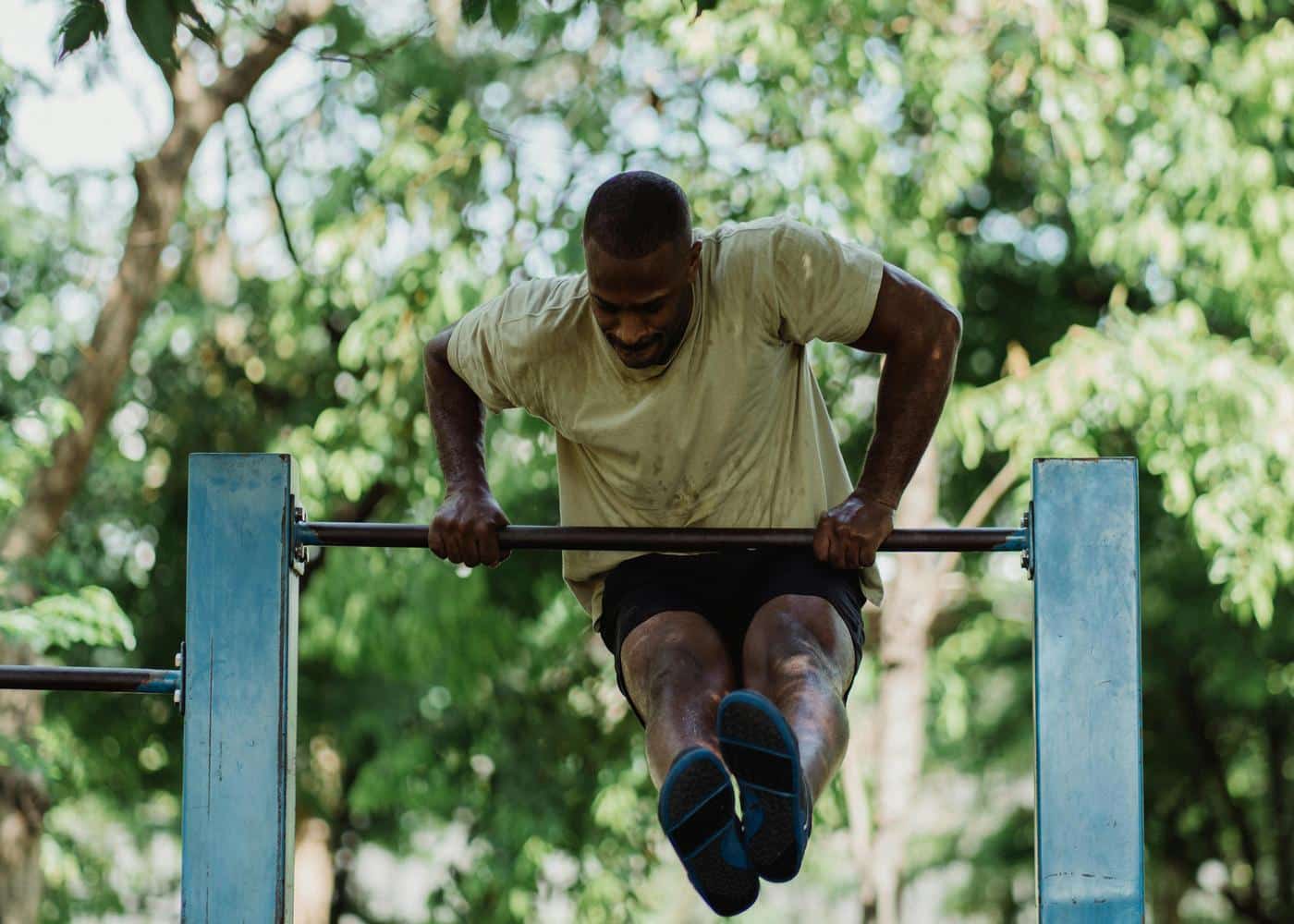
Man lifting himself up on pullup bar with legs stretched out in front of him outdoors

Once you have completed your first 28 days, you might wonder how to structure your training moving forward. 

Neura can help you take the guesswork out of designing effective routines. Neura analyzes your performance and automatically generates the next phase of your programming. 

A personalized plan keeps your workouts varied, tracks your recovery times, and offers immediate visual feedback to help refine your form on more complex movements as you evolve past the beginner stage.

Final Thoughts: Calisthenics Challenge for Beginners

Completing a fitness challenge is a tangible accomplishment. It proves that you have the discipline to establish a habit and the dedication to improve your physical well-being. 

Building a strong body takes time and consistent effort over many months. 

The foundational strength, mobility, and spatial awareness you have developed over these past four weeks will serve as the bedrock for your future physical endeavors. 

Keep prioritizing your form, listen to your body's recovery signals, and continue challenging yourself with new bodyweight movements as you advance.

Article FAQ

What is the 28-day calisthenics challenge?

The 28-day calisthenics challenge is a structured four-week workout program designed to teach beginners the fundamentals of bodyweight training. It progressively introduces basic movements to build functional strength, improve mobility, and establish a consistent fitness habit without requiring gym equipment.

Does the 28-day calisthenics challenge work?

Yes, the 28-day calisthenics challenge works effectively for building foundational strength and muscular endurance. By consistently applying progressive overload through modified leverage and increased time under tension, beginners will experience noticeable improvements in their physical capabilities and core stability by the end of the month.

Is calisthenics better than weights?

Calisthenics is not inherently better than weightlifting; they serve different physical purposes. Calisthenics excels at building functional strength, joint mobility, and spatial awareness. Weightlifting is typically more efficient for absolute strength and maximum muscle hypertrophy because it allows for simple, incremental external loading.

Does calisthenics burn fat?

Yes, calisthenics burns fat by elevating your heart rate and building lean muscle mass. Circuit-style bodyweight workouts require significant energy, which burns calories during the session. Building more muscle also increases your resting metabolic rate, helping your body burn fat throughout the day.

How many days a week should a beginner do calisthenics?

Beginners should practice calisthenics three to four times per week. This frequency provides enough physical stimulus to trigger muscle growth and neurological adaptation while allowing adequate rest days for tissue repair. Overtraining can lead to joint strain, making recovery days essential for long-term progress.

Can you build muscle with calisthenics alone?

Yes, you can build muscle using only calisthenics. Muscle hypertrophy occurs when muscle fibers are pushed near failure, regardless of the resistance source. By manipulating leverage, slowing down your repetition tempo, and decreasing rest times, you can provide enough resistance to stimulate muscle growth.

Table of Contents

Read More

Read More

Read More

Read More

Enter your email for free
early access + 7-day Neura iQ trial

Limited beta spots!

Enter your email for free
early access + 7-day Neura iQ trial

Limited beta spots!

Got Questions? We've Got Answers

What exactly is Neura app?

Neura is a holistic AI health assistant that acts as your personal wellness coach. It combines your wearable data, lifestyle habits, and health metrics to deliver personalized plans, daily micro-tasks, mini-podcasts, and actionable insights to improve sleep, fitness, recovery, and longevity.

How does Neura work?

1. Answer a quick onboarding quiz (1–2 min). 2. Set your goals (e.g., better sleep, running a 5K). 3. Connect your wearables or apps for real-time health data. 4. Receive a daily, AI-personalized plan and mini-podcasts. 5. Track progress on your dashboard while Neura optimizes automatically.

Do I need a wearable or fitness tracker to use Neura?

No. You can start with just your phone and basic input. Wearables like Apple Watch, Garmin, Oura, or Fitbit unlock deeper, real-time insights and premium metrics, but they are optional.

Is my data safe and private?

Absolutely. Neura uses end-to-end encryption, is GDPR/HIPAA compliant, and gives you full control over data exports and deletion. Only anonymized data is processed for AI improvements.

What kind of results can I expect with Neura?

Most users report noticeable improvements in sleep quality, daily energy, and habit consistency within 2–3 weeks. Real-time insights help you save hours each week by replacing endless self-tracking and guesswork with an AI-driven health plan.

What devices and apps can Neura connect to?

Neura integrates with 90+ apps and devices like Apple Health, Google Fit, Garmin, Oura, Fitbit, Polar, Suunto, Peloton, Zwift, Withings, Eight Sleep, and more. You can also upload lab results for advanced analysis.

What’s included in the free plan?

The free Neura Plan comes with all the basic features you need to kickstart your holistic health and fitness journey. Those include our core AI chat (single-chat memory), a standard health plan with one active goal, up to 5 customizable Health Hub widgets, and daily auto-sync with limited integrations. Upgrade to Neura iQ for unlimited AI chat with persistent multi-session memory, multiple simultaneous Health Plans, and real-time data sync from 100+ integrations with 360° Health Sync, alongside all other premium features.

How is Neura different from other health apps or trackers?

Neura isn’t just a tracker – it’s a smart health operating system. It pulls together your data, analyzes it in real time, and gives you proactive, science-backed recommendations tailored to your lifestyle, without the hassle of manual research or multiple apps.

Can I cancel if I am not satisfied?

Yes. Neura Free is free forever, and Neura iQ comes with a 7-day free trial. After upgrading, you can cancel anytime. If you’re not satisfied within 30 days, we offer a full refund—no questions asked.

How do I get started with Neura?

Simply sign up with your email to claim free early access. You can start in less than 2 minutes, connect your wearables later, and immediately receive your personalized plan and first mini-podcast.

Got Questions? We've Got Answers

What exactly is Neura app?

Neura is a holistic AI health assistant that acts as your personal wellness coach. It combines your wearable data, lifestyle habits, and health metrics to deliver personalized plans, daily micro-tasks, mini-podcasts, and actionable insights to improve sleep, fitness, recovery, and longevity.

How does Neura work?

1. Answer a quick onboarding quiz (1–2 min). 2. Set your goals (e.g., better sleep, running a 5K). 3. Connect your wearables or apps for real-time health data. 4. Receive a daily, AI-personalized plan and mini-podcasts. 5. Track progress on your dashboard while Neura optimizes automatically.

Do I need a wearable or fitness tracker to use Neura?

No. You can start with just your phone and basic input. Wearables like Apple Watch, Garmin, Oura, or Fitbit unlock deeper, real-time insights and premium metrics, but they are optional.

Is my data safe and private?

Absolutely. Neura uses end-to-end encryption, is GDPR/HIPAA compliant, and gives you full control over data exports and deletion. Only anonymized data is processed for AI improvements.

What kind of results can I expect with Neura?

Most users report noticeable improvements in sleep quality, daily energy, and habit consistency within 2–3 weeks. Real-time insights help you save hours each week by replacing endless self-tracking and guesswork with an AI-driven health plan.

What devices and apps can Neura connect to?

Neura integrates with 90+ apps and devices like Apple Health, Google Fit, Garmin, Oura, Fitbit, Polar, Suunto, Peloton, Zwift, Withings, Eight Sleep, and more. You can also upload lab results for advanced analysis.

What’s included in the free plan?

The free Neura Plan comes with all the basic features you need to kickstart your holistic health and fitness journey. Those include our core AI chat (single-chat memory), a standard health plan with one active goal, up to 5 customizable Health Hub widgets, and daily auto-sync with limited integrations. Upgrade to Neura iQ for unlimited AI chat with persistent multi-session memory, multiple simultaneous Health Plans, and real-time data sync from 100+ integrations with 360° Health Sync, alongside all other premium features.

How is Neura different from other health apps or trackers?

Neura isn’t just a tracker – it’s a smart health operating system. It pulls together your data, analyzes it in real time, and gives you proactive, science-backed recommendations tailored to your lifestyle, without the hassle of manual research or multiple apps.

Can I cancel if I am not satisfied?

Yes. Neura Free is free forever, and Neura iQ comes with a 7-day free trial. After upgrading, you can cancel anytime. If you’re not satisfied within 30 days, we offer a full refund—no questions asked.

How do I get started with Neura?

Simply sign up with your email to claim free early access. You can start in less than 2 minutes, connect your wearables later, and immediately receive your personalized plan and first mini-podcast.

Got Questions? We've Got Answers

What exactly is Neura app?

How does Neura work?

Do I need a wearable or fitness tracker to use Neura?

Is my data safe and private?

What kind of results can I expect with Neura?

What devices and apps can Neura connect to?

What’s included in the free plan?

How is Neura different from other health apps or trackers?

Can I cancel if I am not satisfied?

How do I get started with Neura?

Got Questions? We've Got Answers

What exactly is Neura app?

Neura is a holistic AI health assistant that acts as your personal wellness coach. It combines your wearable data, lifestyle habits, and health metrics to deliver personalized plans, daily micro-tasks, mini-podcasts, and actionable insights to improve sleep, fitness, recovery, and longevity.

How does Neura work?

1. Answer a quick onboarding quiz (1–2 min). 2. Set your goals (e.g., better sleep, running a 5K). 3. Connect your wearables or apps for real-time health data. 4. Receive a daily, AI-personalized plan and mini-podcasts. 5. Track progress on your dashboard while Neura optimizes automatically.

Do I need a wearable or fitness tracker to use Neura?

No. You can start with just your phone and basic input. Wearables like Apple Watch, Garmin, Oura, or Fitbit unlock deeper, real-time insights and premium metrics, but they are optional.

Is my data safe and private?

Absolutely. Neura uses end-to-end encryption, is GDPR/HIPAA compliant, and gives you full control over data exports and deletion. Only anonymized data is processed for AI improvements.

What kind of results can I expect with Neura?

Most users report noticeable improvements in sleep quality, daily energy, and habit consistency within 2–3 weeks. Real-time insights help you save hours each week by replacing endless self-tracking and guesswork with an AI-driven health plan.

What devices and apps can Neura connect to?

Neura integrates with 90+ apps and devices like Apple Health, Google Fit, Garmin, Oura, Fitbit, Polar, Suunto, Peloton, Zwift, Withings, Eight Sleep, and more. You can also upload lab results for advanced analysis.

What’s included in the free plan?

The free Neura Plan comes with all the basic features you need to kickstart your holistic health and fitness journey. Those include our core AI chat (single-chat memory), a standard health plan with one active goal, up to 5 customizable Health Hub widgets, and daily auto-sync with limited integrations. Upgrade to Neura iQ for unlimited AI chat with persistent multi-session memory, multiple simultaneous Health Plans, and real-time data sync from 100+ integrations with 360° Health Sync, alongside all other premium features.

How is Neura different from other health apps or trackers?

Neura isn’t just a tracker – it’s a smart health operating system. It pulls together your data, analyzes it in real time, and gives you proactive, science-backed recommendations tailored to your lifestyle, without the hassle of manual research or multiple apps.

Can I cancel if I am not satisfied?

Yes. Neura Free is free forever, and Neura iQ comes with a 7-day free trial. After upgrading, you can cancel anytime. If you’re not satisfied within 30 days, we offer a full refund—no questions asked.

How do I get started with Neura?

Simply sign up with your email to claim free early access. You can start in less than 2 minutes, connect your wearables later, and immediately receive your personalized plan and first mini-podcast.