Military Calisthenics for Women: Free 28-Day Workout Plan
Fitness
Key Findings
This free 28-day military calisthenics workout for women uses three main training sessions per week, supported by conditioning, mobility and proper recovery. Exercises can be adjusted for beginners, experienced trainees and women over 50. Four weeks will not completely transform your body, but consistent training can improve your strength, stamina, technique and confidence.
Free printable: Download the 28-day PDF workout calendar and progress tracker to keep on your phone or mark off each session as you complete it.

Building functional strength, increasing cardiovascular endurance, and developing consistency are common fitness goals.
A structured bodyweight routine helps reach these milestones without needing a gym membership.
If you need a comprehensive and completely free military calisthenics workout for women, the following routine is made just for you.
Utilizing training methods from the armed forces, this precise program improves physical capacity and builds daily fitness habits.
Over four weeks, you will focus on mastering foundational movements, building stamina, and establishing consistency. This women's military calisthenics workout is specifically made accessible for beginners while providing adequate intensity for steady progress.
Does Military Calisthenics Really Work for Women?
Yes, military calisthenics can work for women when the exercises are matched to their current ability and become progressively more challenging. Push-ups, squats, lunges, rows and core exercises use body weight as resistance, allowing the muscles to adapt in much the same way they respond to other forms of strength training.
Women do not need an entirely separate type of calisthenics. However, exercise variations, training volume, impact and recovery should be adjusted to suit the individual. Someone completing her first push-up will need a different starting point from someone who can already perform several full push-ups and pull-ups.
Consistency matters more than trying to make every session exhausting. The latest resistance-training guidance from the American College of Sports Medicine recommends training all major muscle groups at least twice per week and emphasizes that regular participation matters more than following an unnecessarily complicated program.
Over 28 days, you may notice that you can perform more repetitions, hold a plank for longer, recover faster between exercises and complete daily physical tasks more easily. Visible muscle gain or fat loss may take longer and will also depend on your nutrition, sleep, starting fitness and overall activity level.
It is also important to understand the limitations. Military calisthenics can build bodyweight strength and endurance, but it does not fully replicate military training. Current military fitness tests can include running, loaded carries and weightlifting movements alongside calisthenics. This plan is therefore military-inspired rather than an official test-preparation program.
What Is Military Calisthenics for Women?
Military calisthenics for women is a structured form of bodyweight training inspired by the conditioning methods used by armed forces. It focuses on practical movements that can be performed in limited space with little or no equipment.
Common military calisthenics exercises include:
Push-ups
Squats
Lunges
Planks
Mountain climbers
Burpees
Pull-ups or rows
Running or marching drills
The goal is not to perform advanced gymnastics skills. Military-style workouts typically emphasize movement quality, repeatable strength, muscular endurance and the ability to continue working while tired.
How It Differs From Regular Calisthenics
Regular calisthenics can cover everything from beginner wall push-ups to advanced skills such as handstands, muscle-ups and planches. People often use it to develop strength, body control or specific athletic skills.
Military calisthenics tends to be more direct. Sessions are built around fundamental exercises performed for sets, repetitions, timed intervals or circuits. The focus is usually on practical conditioning rather than learning visually impressive movements.
A military calisthenics workout may also include more structured rest periods, repeated circuits and fitness assessments. However, harder does not automatically mean better. The intensity should still reflect your experience, recovery and technique.
Benefits and Potential Drawbacks
The main advantage is accessibility. Most exercises can be performed at home, outside or while traveling. You can train several major muscle groups in a short session without paying for a gym membership.
Military calisthenics can also improve relative strength, which is your ability to control and move your own body weight. It develops muscular endurance, coordination and core stability while providing a cardiovascular challenge when exercises are organized into circuits.
The exercises are also easy to adapt. A wall push push-up can gradually become an incline push-up, a floor push-up and eventually a decline push-up. Similar progressions can be used for squats, rows, lunges and planks.
There are some limitations. Training the back without any equipment can be difficult, and advanced trainees may eventually need a resistance band, pull-up bar or weights to keep progressing. High-repetition circuits can also place unnecessary strain on the wrists, knees or shoulders when technique begins to deteriorate.
A military theme can sometimes encourage people to ignore pain or treat exhaustion as the goal. That is not the approach used in this plan. Discipline means training consistently and making sensible decisions, not forcing repetitions after your form has broken down.
Before Starting the 28-Day Military Calisthenics Plan

The plan includes three primary training days each week, one optional conditioning session and several recovery days. Most workouts should take approximately 20 to 30 minutes.
The notation “3 × 8” means three sets of eight repetitions. Rest for approximately 60 to 90 seconds between sets unless the workout specifies otherwise.
You should finish most sets feeling as though you could perform another two good repetitions. If you have to twist, shorten the movement or hold your breath to complete a repetition, choose an easier variation.
Equipment and No-Equipment Alternatives
You can complete most of this military calisthenics workout with no specialist equipment. A small amount of basic gear will provide more exercise options, but none of it needs to be expensive.
Useful items include an exercise mat, a stable chair or bench, a light resistance band and access to a secure pull-up or row station.
If you have no equipment:
Use wall, countertop or floor push-ups for upper-body pushing.
Replace band rows with prone pull-downs or reverse snow angels.
Use regular squats, split squats and glute bridges for the lower body.
Replace jumping jacks with fast step jacks or marching.
Use dead bugs, bird dogs and planks for core training.
Prone pull-downs and reverse snow angels help activate the upper back, but they cannot provide the same resistance as a row or pull-up. A resistance band is a useful addition if you plan to continue beyond the first four weeks.
Only use chairs, benches and exercise bars that are stable enough to support the movement. Avoid improvised pulling setups that could move, tip over or damage a door.
Choose Your Starting Level
Choose the beginner level if you are new to structured exercise, returning after a long break or currently unable to complete five controlled floor push-ups.
Beginners can start with two sets of each exercise, use the easiest modification and complete the low-impact version of conditioning exercises.
Choose the intermediate level if you already exercise regularly and can complete approximately eight to 12 floor push-ups, 15 controlled squats and a 30-second plank.
Intermediate trainees can use the listed sets and repetitions as written.
Choose the advanced level if you can comfortably complete more than 15 floor push-ups, controlled split squats and at least one full pull-up or several strong inverted rows.
Advanced trainees can select harder exercise variations, but should not add extra sets to every workout. The aim is controlled progression, not maximum fatigue.
Warm-Up and Safety Guidance
Begin every strength or conditioning session with approximately five minutes of easy movement:
March briskly in place for 60 seconds.
Perform 10 controlled bodyweight squats.
Complete five reverse lunges on each side.
Perform 10 arm circles in each direction.
Complete eight wall or elevated push-ups.
Finish with 10 slow hip hinges.
The warm-up should increase your body temperature and prepare the joints without tiring you before the workout begins.
Stop the session if you experience sharp pain, dizziness, chest discomfort or unusual shortness of breath. Muscle fatigue is expected, but joint pain or a sudden change in how you feel should not be ignored.
Speak with a qualified healthcare professional before beginning if you are pregnant, recently postpartum, recovering from an injury or managing a condition that could affect exercise. Anyone experiencing pelvic pressure, leaking, heaviness or pain may also benefit from guidance from a pelvic health physiotherapist.


Free 28-Day Military Calisthenics Workout for Women

This plan gradually increases training volume across four weeks. It includes complete rest days because muscles need time to recover and adapt.
Beginners can perform two sets instead of three during the first week. Advanced trainees should use more challenging variations rather than rushing through extra repetitions.
Week 1: Learn the Movements
The first week introduces the core exercises and gives you a starting point for measuring progress. Focus on controlled repetitions and finding variations that feel challenging without compromising your form.
Day | Focus | Workout |
|---|---|---|
Day 1 | Baseline circuit | Complete two steady rounds: 6 push-ups, 10 squats, 6 reverse lunges per leg, 8 band rows or 10 prone pull-downs, and a 20-second plank. Record your completion time and effort out of 10. |
Day 2 | Light activity | Walk for 20 to 30 minutes at a comfortable pace, followed by five minutes of gentle mobility. |
Day 3 | Full Body A | Push-up variation 3 × 6 to 10, bodyweight squat 3 × 10, band row or prone pull-down 3 × 8 to 12, glute bridge 3 × 12, plank 3 × 20 seconds. |
Day 4 | Rest | Take a complete rest day or perform normal light daily activity. |
Day 5 | Full Body B | Reverse lunge 3 × 6 per leg, incline or floor push-up 3 × 6 to 10, band row 3 × 8 to 12, dead bug 3 × 8 per side, step jacks 3 × 30 seconds. |
Day 6 | Easy conditioning | Complete three rounds: 30 seconds of brisk marching, 10 squats, 30 seconds of step jacks and a 20-second plank. Rest for 60 seconds between rounds. |
Day 7 | Rest and review | Rest. Note which exercises felt too easy, appropriately challenging or too difficult. |
Do not increase the difficulty simply because the first session felt manageable. Use the whole week to confirm that you can complete each exercise with consistent form.
Week 2: Build Training Volume
Week two adds a small amount of work while retaining the same fundamental movement patterns. Increase the repetitions only when you completed the previous week without joint pain or substantial loss of technique.
Day | Focus | Workout |
Day 8 | Full Body A | Push-up variation 3 × 8 to 12, squat 3 × 12, band row or prone pull-down 3 × 10 to 12, glute bridge 3 × 15, plank 3 × 25 seconds. |
Day 9 | Light activity | Walk, cycle or perform another easy activity for 25 to 30 minutes. |
Day 10 | Full Body B | Reverse lunge 3 × 8 per leg, push-up variation 3 × 8 to 12, band row 3 × 10 to 12, dead bug 3 × 10 per side, step jacks or jumping jacks 4 × 30 seconds. |
Day 11 | Rest | Complete rest. Gentle stretching is optional. |
Day 12 | Strength circuit | Complete three rounds: 8 push-ups, 12 squats, 8 rows or 12 prone pull-downs, 8 reverse lunges per leg and a 25-second plank. Rest for 90 seconds between rounds. |
Day 13 | Conditioning | Alternate 30 seconds of work with 30 seconds of rest for three rounds of step jacks, slow mountain climbers, fast marching and bodyweight squats. |
Day 14 | Rest | Take a complete rest day and prepare for the next week. |
If increasing repetitions makes an exercise noticeably less controlled, return to the previous week’s target. Progress is only useful when the movement remains stable.
Week 3: Improve Strength and Conditioning
The third week introduces slightly more demanding variations. You do not need to use the hardest option listed. Choose the version that lets you complete every set with approximately two good repetitions remaining.
Day | Focus | Workout |
Day 15 | Full Body A | Push-up variation 4 × 6 to 10, split squat 3 × 8 per leg, band row 4 × 8 to 12, bridge march 3 × 8 per side, plank 3 × 30 seconds. |
Day 16 | Mobility and walking | Walk for 20 to 30 minutes. Add gentle hip, chest and ankle mobility if desired. |
Day 17 | Full Body B | Squat 4 × 10 to 15, elevated pike push-up or incline push-up 3 × 6 to 10, reverse lunge 3 × 8 per leg, row or prone pull-down 3 × 12, side plank 3 × 15 to 25 seconds per side. |
Day 18 | Rest | Take a complete rest day. |
Day 19 | Military-style circuit | Complete four rounds: 8 push-ups, 12 squats, 10 rows or prone pull-downs, 8 alternating lunges per leg and 20 seconds of mountain climbers. Rest for 60 to 90 seconds between rounds. |
Day 20 | Conditioning | Complete four rounds of 40 seconds of brisk marching or jumping jacks followed by 20 seconds of rest. Then walk easily for five minutes. |
Day 21 | Rest | Rest and review your recovery before beginning the final week. |
You should feel that the sessions are becoming more demanding, but you should not feel exhausted for the remainder of the day. If soreness is affecting your normal movement, reduce the next session or take an additional recovery day.
Week 4: Consolidate and Assess Progress
The final week gives you another opportunity to practice the movements before repeating the baseline circuit. It does not require maximum-effort pull-ups, pistol squats or other advanced exercises that may be inappropriate after only four weeks.
Day | Focus | Workout |
Day 22 | Full Body A | Push-up variation 3 × 8 to 12, split squat 3 × 8 per leg, row or prone pull-down 3 × 10 to 12, glute bridge 3 × 15, plank 3 × 30 to 40 seconds. |
Day 23 | Light activity | Walk or cycle comfortably for 25 to 35 minutes. |
Day 24 | Full Body B | Squat 3 × 12 to 15, push-up variation 3 × 8 to 12, reverse lunge 3 × 8 per leg, row 3 × 10 to 12, dead bug 3 × 10 per side. |
Day 25 | Rest | Take a complete rest day. |
Day 26 | Final training circuit | Complete three controlled rounds: 10 push-ups, 15 squats, 10 rows or 12 prone pull-downs, 10 alternating lunges per leg and a 30-second plank. Rest for 60 to 90 seconds between rounds. |
Day 27 | Recovery | Walk gently for 15 to 20 minutes or take a complete rest day. Avoid hard training before the assessment. |
Day 28 | Progress assessment | Repeat the Day 1 baseline circuit using the same exercise variations. Compare your time, technique and effort rating with your original results. |
A faster time is not the only sign of progress. Better control, a harder exercise variation, fewer pauses or a lower effort rating can all show that your fitness has improved.
Exercise Modifications for Beginners, Intermediate and Advanced Levels
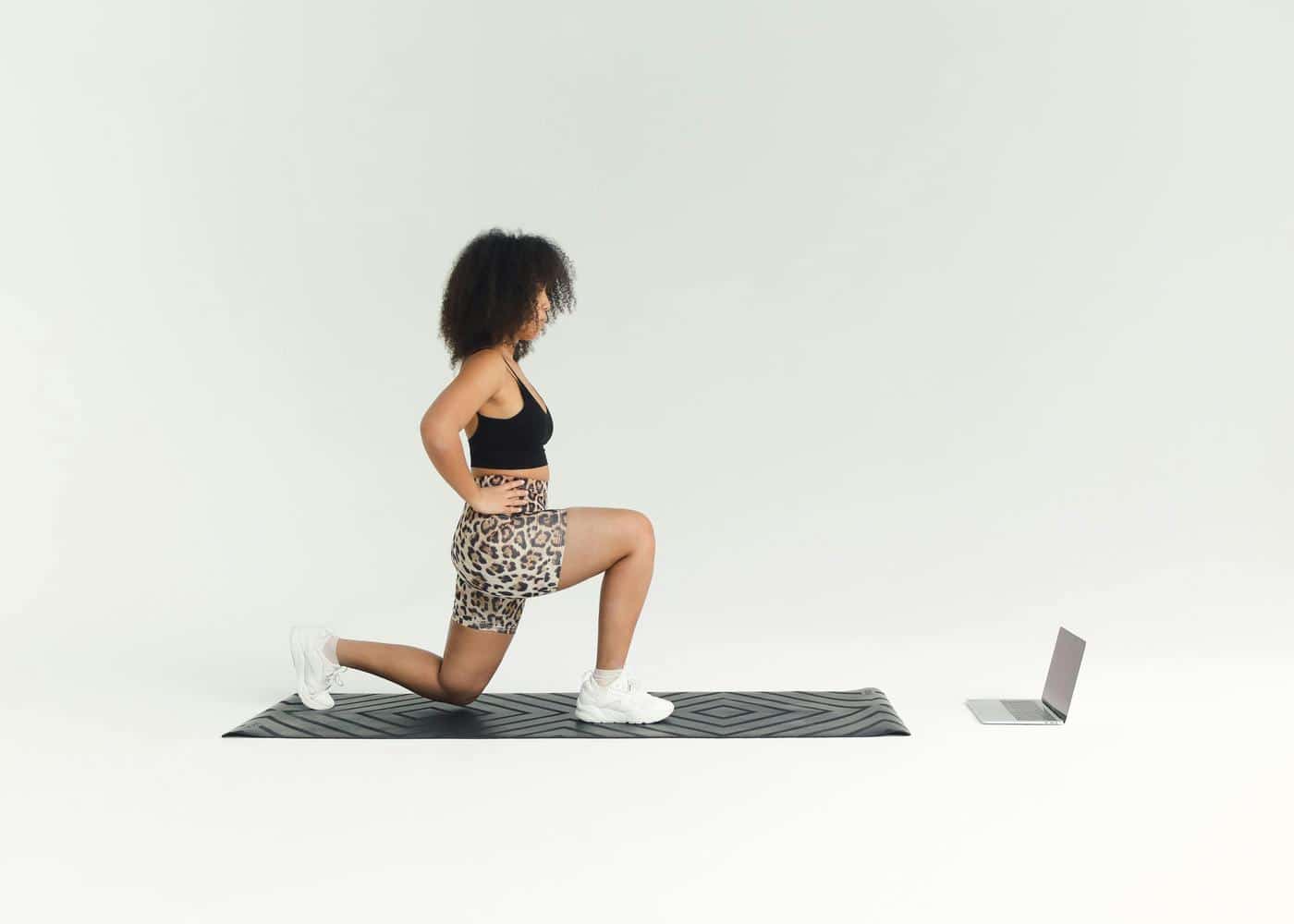
Use this table to adjust the plan without changing its overall structure.
Exercise | Beginner | Intermediate | Advanced |
Push-up | Wall or countertop push-up | Floor or knee push-up | Decline or close-grip push-up |
Squat | Chair squat | Bodyweight squat | Tempo squat or jump squat |
Lunge | Supported reverse lunge | Reverse or walking lunge | Split squat or jumping lunge |
Pulling exercise | Prone pull-down or light band row | Stronger band or inverted row | Pull-up or controlled negative pull-up |
Glute bridge | Standard bridge | Single-leg-assisted bridge | Single-leg bridge |
Plank | Elevated or knee plank | Forearm plank | Long-lever plank or shoulder-tap plank |
Mountain climber | Hands elevated, slow steps | Floor mountain climber | Faster controlled mountain climber |
Jumping jack | Step jack | Standard jumping jack | Squat jack |
Burpee | Hands elevated, step back, no jump | Floor burpee without push-up | Burpee with push-up |
You do not need to use the same level for every movement. Many women will be stronger in lower-body exercises than upper-body pulling or pushing exercises. Select each variation independently.
Military Calisthenics for Women Over 50
Military calisthenics can be adapted for women over 50, including those who are new to strength training. Age alone does not determine which exercises you can perform, but training history, joint health, balance and recovery should influence your starting level.
Begin with wall or elevated push-ups, chair squats and supported reverse lunges if floor exercises or deep ranges of motion feel uncomfortable. Replace jumping jacks and burpees with step jacks, brisk marching or controlled step-ups to reduce impact.
Women over 50 may also benefit from taking 90 seconds between sets and leaving a full recovery day between strength sessions. Support from a wall or chair can make balance exercises safer without removing their benefits.
The goal should be to develop strength and movement confidence gradually. There is no need to match the pace or repetitions of someone with a different training background. If you have osteoporosis, significant joint pain, balance difficulties or a cardiovascular condition, discuss the program with a qualified healthcare professional before starting.
What Results Can You Expect After 28 Days?
A 28-day program is long enough to establish a routine and begin improving your performance, but it is not long enough to guarantee dramatic physical changes.
After four weeks, you may be able to:
Complete more push-ups or use a lower incline.
Perform squats and lunges with better control.
Hold a plank for longer.
Recover faster between exercises.
Complete the same circuit with less effort.
Feel more confident using your body weight for resistance.
Early strength improvements often come from better coordination and greater familiarity with the movements. More visible muscle development usually requires several months of consistent progressive training.
Body composition changes vary considerably. Calisthenics burns energy and can support fat loss, but no workout can guarantee a specific amount of weight loss or reduce fat from one chosen area. Nutrition, daily movement, sleep and energy intake will all influence the outcome.
Take progress photos only if you find them helpful. Your repetitions, exercise variations, circuit time and effort ratings usually provide a clearer picture of what changed during the first month.
How to Continue After the Program
Do not restart at Day 1 automatically without considering how the plan felt.
Repeat the full beginner plan if you missed several sessions, still need the easiest modifications or found week three too demanding. Repeating it with better form is still progress.
Repeat weeks three and four if you completed the program comfortably but are not ready for a significantly harder routine. Add a small number of repetitions or use a slightly stronger resistance band.
Move to a more advanced plan if you completed every session with controlled technique and improved your Day 28 assessment. Your next program could introduce pull-up progressions, harder push-up variations, longer circuits or resistance training.
Progressive overload means gradually increasing the challenge placed on your muscles. You can do this by:
Adding one or two repetitions.
Adding one set to selected exercises.
Using a harder variation.
Slowing the lowering portion of an exercise.
Increasing the range of motion.
Reducing assistance.
Using a stronger resistance band or external weight.
Change only one or two variables at a time. Increasing the repetitions, sets, difficulty and speed simultaneously makes it difficult to recover and difficult to identify what is actually helping.

Final Thoughts: Build a Personalized Military Calisthenics Plan With Neura
A structured 28-day routine provides a useful starting point, but it cannot account for every difference in fitness, equipment, schedule and recovery.
With Neura Health Plans, you can create a military calisthenics plan based on your current ability, goals, available equipment and preferred training schedule. This could mean replacing high-impact exercises, building toward your first full push-up or developing a more demanding program around an existing fitness routine.
Neura can also adapt your plan as your performance and recovery change. If an exercise becomes too easy, the volume or variation can progress. If you are recovering poorly or struggling to complete the sessions, the plan can reduce the workload or add more recovery.
Instead of following the same static routine indefinitely, you receive a program that develops alongside you, helping you build strength and stamina without losing sight of your actual starting point.
Article FAQ
What are military calisthenics for women?
Military calisthenics for women are structured bodyweight training routines inspired by the physical conditioning used in the armed forces. Instead of relying on heavy gym equipment or complex machines, these workouts focus entirely on mastering foundational movements. The primary goal is to build functional strength, increase muscular endurance, and develop the stamina required for daily physical demands.
What are some military calisthenics exercises?
Common military calisthenics exercises include standard pushups, unassisted pullups, bodyweight squats, walking lunges, burpees, flutter kicks, and forearm planks. These are fundamental compound movements that force multiple muscle groups to work together simultaneously. By focusing on these basics, individuals can effectively build overall physical stamina, improve joint stability, and increase their cardiovascular capacity.
Can beginners do military calisthenics?
Yes, beginners can safely perform military calisthenics because every movement is easily modified to accommodate different starting fitness levels. For example, a beginner can execute pushups with their hands elevated on a bench or use resistance bands for assisted pullups. This allows new trainees to safely build their baseline strength and perfect their form before advancing to standard variations.
How many days a week should you do military calisthenics?
You should aim to perform military calisthenics three to five days a week to see consistent progress. This frequency provides enough training volume to effectively increase muscle tone and cardiovascular endurance. It also leaves adequate time for necessary rest days and active recovery sessions, ensuring your muscles have the opportunity to repair and grow between workouts.
Can you build muscle with just military calisthenics?
Yes, you can successfully build muscle using only military calisthenics. By utilizing your own body weight as resistance, you create the necessary tension for muscle growth. As you progress, you can continually challenge your muscles by increasing your total repetitions, decreasing your rest periods, or changing the exercise angles to force your muscle fibers to adapt and grow stronger over time.
Do you need equipment for a military calisthenics workout?
You need very little equipment to complete a military calisthenics workout, making it a highly accessible training method. The only highly recommended piece of gear is a sturdy pull-up bar to properly train your back and bicep muscles. Other helpful, though optional, items include a basic exercise mat for comfortable floor work and a simple bench or sturdy chair to help modify pushing exercises.