
Gravl vs Fitbod vs Hevy: Which Strength Training App is Better?
Tech

Key Findings
Gravl is best for automated programming and progression, Fitbod stands out for flexible workouts and exercise variety, and Hevy offers the best value and most control. Beginners will likely prefer Gravl, while experienced lifters may get more from Hevy.
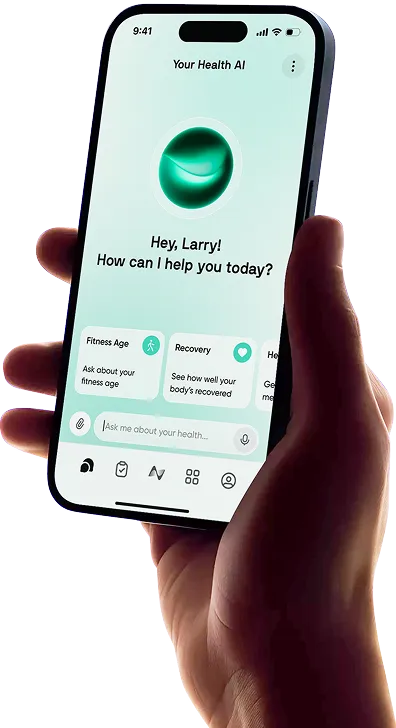
Gravl, Fitbod, and Hevy are all built to make strength training easier to manage, but they go about it in different ways.
Gravl leans heavily into automation, making it a good fit if you want most of your workout planned for you. It builds sessions around your goals and equipment, recommends weights and reps, tracks recovery, and adjusts your progression as you train.
Fitbod also generates personalized workouts, but puts more emphasis on flexibility. If your schedule, equipment, or gym setup changes often, it can adapt sessions around what you have available while still factoring in recovery and exercise variety.
Hevy gives you more control and suits people who already know how they like to train. It started mainly as a workout logger, but its newer Hevy Trainer feature now adds personalized programming alongside its routine builder, progress tracking, and social features.
Why Use a Strength Training App?
Strength training gets more complicated once you move beyond simply showing up and doing a few exercises.
You need to keep track of your weights, reps, sets, exercise selection, and training frequency. You also need some way to tell whether you are actually progressing over time. That is where a good app can be useful.
Some apps mainly organize the training plan you already have. Others take a more active role by deciding what you should train, how much weight to use, and when it might be time to progress.
The right strength training app for women works the same way. Rather than looking for an app built around gender alone, it is usually more useful to choose one that can adapt to your actual goals, equipment, schedule, and level of experience.
Benefits of Using a Strength Training App
Structured workout programming: Having a plan ready before your workout makes it easier to stay consistent, rather than choosing exercises as you go.
Progressive overload: Tracking weights, reps and training volume gives you a clearer idea of when it is time to make an exercise more challenging.
Personalized exercise selection: Better apps can adjust workouts around your available equipment, goals and training experience.
Clear progress tracking: Workout histories, personal records and strength charts make it easier to see how your training is developing over time.
Greater accountability: Planned sessions, streaks, reminders and social features can all help you stay more consistent.
Gravl vs Fitbod vs Hevy: Comparison at a Glance

Gravl, Fitbod, and Hevy all support strength training, but they differ most in how much programming, flexibility, and control they give you.
Comparison | Gravl | Fitbod | Hevy |
Best For | Lifters who want every workout planned and progressed automatically | Users wanting adaptable workouts and extensive exercise variety | Lifters who prefer creating, logging, and sharing their own routines |
Price | $14.99/month or typically $79.99/year | $15.99/month or $95.99/year | Free; Pro costs $2.99/month, $23.99/year, or $74.99 lifetime |
USP | AI programming with automatic per-exercise progression, recovery tracking and coaching support | Established workout algorithm with recovery-aware recommendations and a large exercise library | Affordable, polished workout logging with strong progress and social features |
Key Features | AI-generated plans, weight recommendations, muscle recovery, form analysis and human coaching | Personalized workouts, muscle recovery, equipment profiles, exercise demonstrations and workout analytics | Routine builder, Hevy Trainer, detailed logging, progress charts, personal records and social feed |
Free Version | Free trial; continued access requires a subscription | Seven-day free trial; continued access requires a subscription | Usable free plan with four routines, seven custom exercises and three months of history |
Workout Generation | Creates an adaptive weekly plan and recalculates it as workouts are completed | Generates individual workouts around goals, equipment and muscle recovery | Hevy Trainer generates personalized programs for Pro users; manual routine building remains central |
Progression and Recovery | Automatically adjusts recommended weights and monitors recovery by muscle group | Recommends sets, repetitions and weights while considering recently trained muscles | Progress is primarily user-managed, although Hevy Trainer adds adaptive programming |
Logging and Analytics | Prefilled sets, exercise history, Strength Score, personal records and progress photos | Workout history, training volume, muscle usage and strength achievements | Fast set logging, estimated one-rep max, personal records, charts and detailed workout history |
Platforms | iOS and Android, plus Apple Watch, Wear OS and Garmin support | iOS and Android, plus Apple Watch and Wear OS support | iOS, Android and web, plus Apple Watch and Wear OS support |
Social and Coaching | Human coaching, AI form feedback, friends and strength leaderboards | Primarily a self-guided training experience | The strongest social experience, with follows, comments, routine sharing and leaderboards |
Gravl Overview
Gravl is built for people who want more help deciding what to do in the gym.
You start by telling the app about your goals, experience, training schedule and available equipment. Gravl then uses that information to build your workouts, including the exercises, sets, repetitions and recommended weights.
The progression system is one of the biggest reasons to use it. Instead of simply showing you what you lifted last time and leaving the next step up to you, Gravl uses your workout history and performance to adjust future recommendations.
That could mean increasing the weight on an exercise, adding reps, or keeping things where they are until you are ready to progress.
It takes some of the manual decision-making out of progressive overload, which can be particularly helpful if you understand the importance of progressing but are not sure exactly when to do it.
Gravl also tracks muscle recovery and uses recent workouts when planning what comes next. So if you trained a muscle group heavily the day before, that information can influence the exercises it recommends.
This makes Gravl the most natural choice here if what you really want is an AI strength training app rather than a more traditional workout tracker.
There is still room to customize things, so you are not forced to follow every recommendation exactly. However, the main appeal is the amount of work Gravl does for you. That makes it especially useful for beginners and intermediate lifters.
More experienced users who already have a carefully planned program may find that they would rather make more of those decisions themselves.
For more, read our dedicated and in-depth Gravl Review here.
Gravl Key Features
AI-generated workout programming: Gravl builds your training around your goals, experience level, schedule, and available equipment.
Automatic progressive overload: The app adjusts recommended weights and repetitions based on your previous performance.
Muscle recovery tracking: Recovery estimates help Gravl decide which muscle groups to prioritize in upcoming workouts.
AI form analysis and human coaching: Form feedback and access to coaching give Gravl more guidance than a standard workout logger.
Apple Watch, Wear OS and Garmin support: You can follow workouts and log sets from several popular wearable platforms.
Who Is Gravl For?
Gravl is best suited to people who want clear direction when they start a workout.
If you do not want to build your own training split, choose every exercise or decide how quickly to increase your weights, the app can take care of most of that for you.
Beginners are likely to get the most value from this approach because there are fewer programming decisions to make. Intermediate lifters who like structured progression but do not want to manage everything manually should also feel comfortable with it.
The recovery tools and coaching support make it a good choice for anyone who wants more guidance than they would get from a standard workout log.
Verdict
Gravl is the best option for highly automated strength programming and hands-off progression.
It is particularly good if you want the app to take the lead and give you a clear workout to follow each time you train.
Fitbod Overview
Fitbod also creates personalized workouts, but the experience feels more flexible than Gravl.
Its algorithm looks at factors including your goals, experience, workout history, available equipment, and muscle recovery when putting together a session.
One of Fitbod's biggest strengths is how easily it can adapt to different training environments.
You can create equipment profiles for different gyms, which is useful if you train in more than one location.
Your regular gym could have barbells, machines, and cables, while your home setup may only include dumbbells and a bench. Fitbod can create a workout based on whichever equipment profile you select.
That makes it a strong option for people who travel, change gyms regularly, or simply do not have access to the same equipment every time they train.
Exercise variety is another advantage. Fitbod has a large exercise library and can suggest alternatives when needed, which gives its workouts more variety than a rigid program built around the same handful of movements.
Muscle recovery is also built into the experience. The app estimates how recovered different areas are based on your recent workouts and presents that information through a visual body map. Those recovery estimates can then help shape upcoming sessions.
It is a useful way to keep recent training in mind, although it should still be treated as guidance rather than a perfect measurement of how your body feels.
The biggest drawback is the cost. Standard Fitbod pricing is $15.99 per month or $95.99 per year, making it the most expensive annual subscription in this comparison.
You are mainly paying for the workout-generation system, exercise library, and flexibility. If those are not important to you, Hevy gives you plenty of tracking functionality for considerably less.
Fitbod Key Features
Personalized workout generation: Sessions are built around your goals, experience, training history, and available equipment.
Muscle-recovery visualization: A visual body map shows estimated recovery levels for different muscle groups.
Weight, repetition, and set recommendations: Fitbod gives you suggested training targets instead of leaving every variable up to you.
Extensive exercise library and demonstrations: A large selection of movements gives you more options for substitutions and workout variety.
Multiple gym and equipment profiles: Save different equipment setups and have workouts adjust depending on where you are training.
Who Is Fitbod For?
Fitbod is a strong fit for people who want workout guidance without being tied to the same weekly routine.
If your equipment changes regularly, its gym profiles are particularly useful. You can move between different setups without having to rebuild your program every time.
It is also a good choice for people who enjoy exercise variety and would rather have the app create a suitable session each day than follow a more fixed program.
Verdict
Fitbod is the best option for flexible workout generation and exercise variety.
It gives you plenty of structure while still adapting well when your schedule, equipment, or recent workouts change.
Hevy Overview
Hevy takes a more straightforward approach.
Its biggest strength is still workout logging. You can create your own routines, record sets, reps, and weights, check previous performance, and track personal records without the app constantly trying to manage your entire program.
The Hevy app workout tracker is especially easy to use during an actual workout. Your previous numbers are visible as you train, making it simple to compare your current session with the last one and see where you may be ready to progress.
You can also build routines around whatever training split you already follow. If you have an upper/lower program, push-pull-legs split, or a routine from a coach, you can simply recreate it in Hevy and use the app to track it.
Progress charts and workout history give you a useful picture of how individual lifts are changing over time, while the social side lets you follow other lifters, share routines, and interact with friends.
That social element is one area where Hevy clearly stands apart from Gravl and Fitbod.
Hevy has also become more competitive on the programming side thanks to Hevy Trainer. Trainer is available to Pro members and can create a personalized program based on your goals and preferences. It also provides progressive-overload recommendations as you train.
Importantly, Hevy describes this as an algorithm-based feature rather than an AI system. So while it moves Hevy closer to the other apps in terms of automatic programming, the overall experience is still more focused on giving the user control.
There is also a separate Hevy Coach service. This is different from Hevy Trainer and is built around working with an actual coach rather than simply generating a program inside the app.
Hevy's other major advantage is price.
Its free tier is much more useful than the trials offered by Gravl and Fitbod, and Hevy Pro costs considerably less than either competitor. That makes it particularly attractive if you already have a program and mainly need a reliable place to track it.
Hevy Key Features
Fast and detailed workout logging: Record your sets, reps, and weights while easily referencing previous performance.
Custom routine builder: Build and organize your own training split rather than relying entirely on generated workouts.
Hevy Trainer personalized programming: Pro members can generate a program and receive progression recommendations.
Progress charts and personal-record tracking: Follow individual exercises over time and keep track of new strength milestones.
Social feed and routine sharing: Follow friends, view workouts, and share training routines with other users.
Who Is Hevy For?
Hevy is best suited to lifters who want more control over their training.
If you already follow a program or know how you like to structure your workouts, Hevy gives you the tools to manage everything without getting in the way.
That makes it especially appealing to more experienced lifters, although Hevy Trainer now gives beginners a better starting point if they need help creating a program.
It is also the easiest option to recommend if price is a major factor. The free version covers the basics, while Pro remains considerably cheaper than Gravl or Fitbod.
Verdict
Hevy is the best option for workout logging, manual control, social features, and overall value.
It is particularly strong if you already have a training plan and want an app that makes it easier to follow and track.


So, Which Is the Best Strength Training App in 2026?

The main difference between Gravl, Fitbod, and Hevy comes down to how much control you want to keep.
Gravl offers the most automated experience. It builds your training, recommends weights and reps, tracks recovery, and helps progress your exercises over time. For beginners who want guidance without having to learn the finer details of programming first, it is probably the easiest option to pick up.
Fitbod is also highly guided, but feels more flexible. Its equipment profiles and large exercise library make it particularly good for people who regularly change gyms, travel, or simply prefer more variety from one workout to the next.
Hevy gives you the most independence. The app can now generate programs through Trainer, but its biggest strength is still giving you a simple, polished way to manage your own routines and track your progress.
Price also separates them.
Fitbod has the highest standard annual subscription, followed by Gravl. Hevy is much cheaper and also has the most useful free version, so it offers the best overall value if you do not need advanced workout generation.
Recovery is another difference. Gravl and Fitbod both make recovery a more noticeable part of the programming process, while Hevy is mainly focused on what you actually log in the gym.
So, which is the best strength training app?
For beginners, I would lean toward Gravl. For people whose training setup changes frequently, Fitbod has an advantage. For experienced lifters or anyone already following a program, Hevy is probably the most practical choice.
Alternative Strength Training Apps

There are also several good alternatives if none of these three quite fit what you are looking for.
Neura Health
Neura takes a broader approach to workout planning by looking beyond your recent gym sessions.
It can factor in information such as sleep, recovery, stress, nutrition, your schedule, and connected wearable data when helping shape your training plan.
That makes it a useful alternative if you want your workouts to respond to more than just what you lifted during your last session.
Someone who has slept poorly or is showing lower recovery may need a different training day than someone who is well rested, even if both technically have the same workout scheduled.
Strong
Strong is a good option if you mainly want a clean workout log.
It is built for people who already have a routine and do not need an app generating new workouts every day.
You can create sessions, record sets and weights, track personal records, and review your training history.
That makes it one of the closest alternatives to Hevy for people who prefer handling their own programming.
Alpha Progression
Alpha Progression places more emphasis on hypertrophy and progressive overload.
The app can generate training plans around your goals, equipment, and schedule while also recommending how your weights and reps should progress over time.
It is particularly worth considering if building muscle is your main goal and you want more structured progression without giving up all control over the program.
Caliber
Caliber combines strength training with a wider approach to fitness.
Its app includes workout programming, logging and progress tracking, while additional coaching options provide more personalized support.
It can be a good fit if you want your strength plan to sit alongside things such as cardio, nutrition and habit tracking rather than using a separate app for each.
Boostcamp
Boostcamp is a strong alternative if you prefer following established programs.
Its library includes bodybuilding, powerlifting and general strength programs from coaches and experienced lifters, so you can choose a proven routine rather than having an algorithm create one from scratch.
This makes it especially appealing if you already know the type of program you want but would rather follow and track it inside an app.
Final Thoughts: Gravl vs Fitbod vs Hevy
Gravl, Fitbod, and Hevy are all good options, but they suit different types of lifters.
Gravl is the strongest choice if you want an app to take care of most of the programming. It gives you a clear plan, recommends how to progress, and includes recovery and coaching tools for additional guidance.
Fitbod makes more sense if flexibility is your priority. Its workout generation works particularly well when your available equipment or training environment changes regularly.
Hevy is the better fit if you already know how you want to train. It gives you excellent logging tools, more manual control, and stronger social features without requiring an expensive subscription.
For beginners who want the most guidance, Gravl gets my pick. For people who want adaptable sessions and plenty of exercise variety, Fitbod is a good middle ground. For experienced lifters and anyone focused on value, Hevy is difficult to beat.
The best choice really comes down to what you want the app to do for you.
Article FAQ
What is the best strength training app?
The best strength training app depends on how much guidance you want. Gravl is a strong choice for automatic programming and progression, Fitbod is better for flexible workouts and exercise variety, and Hevy is ideal for people who prefer to build and track their own routines. Beginners may find Gravl easier to follow, while experienced lifters may prefer Hevy’s added control.
What features should I look for in a workout app?
Look for workout planning, progressive overload tracking, exercise demonstrations, workout history, and progress analytics. It is also worth considering whether the app can adapt to your available equipment, experience and goals. Features like recovery tracking, wearable support, coaching and social tools can be useful too, but the most important thing is finding an app that fits the way you actually train.
Are strength training apps worth it?
Strength training apps can be worth it if they help you train more consistently and track your progress. They are especially useful for keeping a record of weights, reps, and sets or providing structured workouts when you do not already have a program. If you already follow a routine, a simpler and cheaper workout logger may be all you need.
What is the best workout app for beginners?
Gravl is one of the better options for beginners because it can create workouts and recommend exercises, sets, reps, and weights rather than expecting you to build your own program. Fitbod is another good option if you want generated workouts with more flexibility around equipment. Hevy can work for beginners too, particularly with its newer Trainer programming feature.
Can a workout app help you build muscle?
Yes, a workout app can help you build muscle by giving your training more structure and making progressive overload easier to track. Your results still depend on consistent resistance training, adequate recovery, and gradually increasing the challenge of your workouts over time.
Is Fitbod or Hevy better?
Fitbod is better if you want the app to regularly generate workouts based on your goals, equipment, and recent training. Hevy is better if you already have a program and mainly want an easy way to log workouts, monitor progress, and build your own routines. Hevy also has Trainer for users who want more programming guidance, so the gap between the two has become smaller.