How to Track the Real Efficacy of Your Nootropic Stack
Health

Key Findings
Cognitive enhancement demands data, not just intuition. Success relies on the "N of 1" experiment: introducing one variable at a time to isolate effects. A centralized tool like Neura is essential to correlate supplement intake with real-world performance, distinguishing genuine efficacy from the placebo effect while monitoring for silent side effects.
The promise of cognitive enhancement is intoxicating. The idea that a precise combination of compounds, whether synthesized in a lab or grown in nature, could unlock better memory, sharper focus, and faster processing speeds is the driving force behind the rapidly growing biohacking movement.
We all want to be better, faster, and smarter.
So, you do your research. You read the subreddits. You buy the supplements. Then you begin your regimen. On day three, you feel incredible. You crush a presentation at work and write 2,000 words of that novel you have been putting off. You declare your new "stack" a miracle.
But by day thirty, the picture is often less clear. Are you actually performing better? Or has the profound power of the placebo effect worn off? Are you just having a good month, or is the L-Tyrosine actually doing the heavy lifting?
More importantly, is that subtle afternoon anxiety a result of your workload, or is it a creeping side effect of too much cholinergic stimulation?
Most people taking cognitive enhancers are flying blind. They rely on vague subjective feelings to justify expensive and potentially potent chemical regimens. This approach is flawed.
Without data, you are not biohacking. You are just guessing.
To truly optimize your cognitive hardware, you must treat your body like a laboratory. You need to move beyond "vibes" and embrace rigorous, systematic tracking. You need proof.
This guide explores how to transition from passive consumption to active analysis to ensure that your nootropic stack is actually serving your goals.
The Nootropics Movement
The pursuit of cognitive enhancement is not new, but the modern "nootropics movement" has shifted it from the fringes of academia to the mainstream of high-performance culture.
Driven by Silicon Valley executives seeking an edge, students facing immense academic pressure, and an aging population concerned about cognitive decline, the industry has exploded.
It encompasses a vast spectrum of substances. On one end, you have accessible, natural compounds like caffeine, L-theanine, creatine, and adaptogenic mushrooms like Lion's Mane.
On the other end, you have synthetic compounds, prescription-grade wakefulness agents, and experimental research chemicals operating in legal gray areas.
The common thread is the desire to move beyond baseline. The goal is no longer just to fix a deficit or treat an illness. The goal is to optimize neurochemistry for specific outcomes like sustained attention, working memory, or stress resilience.
Nootropics represent a fundamental change in how we view human biology, treating the brain not as a fixed asset but as a malleable system that can be upgraded with the right inputs.
Do Nootropics Work?
This is the billion-dollar industry question, and the answer is nuanced.
Some substances have robust, indisputable clinical data backing their efficacy for certain cognitive tasks.
Caffeine and L-theanine in combination are proven to improve energy and focus while mitigating jitters.
Creatine is undeniably effective for mitigating cognitive fatigue during demanding tasks.
Bacopa Monnieri has strong evidence supporting its ability to improve memory retention over long periods.
However, the vast majority of popular nootropics exist in a realm of preliminary research. Many studies cite impressive results in rodent models or elderly populations with pre-existing cognitive deficits.
This does not always translate perfectly to a healthy 30-year-old looking to code faster.
Furthermore, neurochemistry is highly individualized. This is the "Responder vs. Non-Responder" phenomenon. A choline source that makes one person laser-focused might give another brain fog and depression due to acetylcholine overload.
Genetic variations, baseline neurotransmitter levels, diet, and sleep quality all dictate how a substance affects you. A person with a specific variation of the COMT gene might react poorly to dopaminergics that make someone else feel invincible.
Because of this immense biological variability, general studies are only starting points. The only study that truly matters is the "N of 1" experiment. That is the experiment running inside your own body.
How to Build a Nootropics Stack
Before you can track efficacy, you must establish a sane protocol. A "stack" is simply the combination of different supplements taken together to achieve a synergistic effect. The hope is that 1+1 equals 3.
The single biggest mistake beginners make is trying everything at once. If you start taking five new compounds on Monday morning, and you feel great or terrible by Wednesday, it is impossible to know which compound is responsible.
The Golden Rule: Introduce one variable at a time.
When learning how to build a nootropic stack, patience is your most valuable asset. Start with a foundational compound that matches your primary goal.
If your goal is long-term memory, perhaps start with Bacopa Monnieri. Take only that for two weeks. Establish a baseline feel. Only then should you introduce a second compound designed to complement the first.
This slow-roll approach is essential for safety and is the only way to gather clean data. If you do not isolate your variables, you cannot track them. You need to know specifically which ingredient provides the benefit and which one causes the crash.


Nootropics App: Tracking With Neura
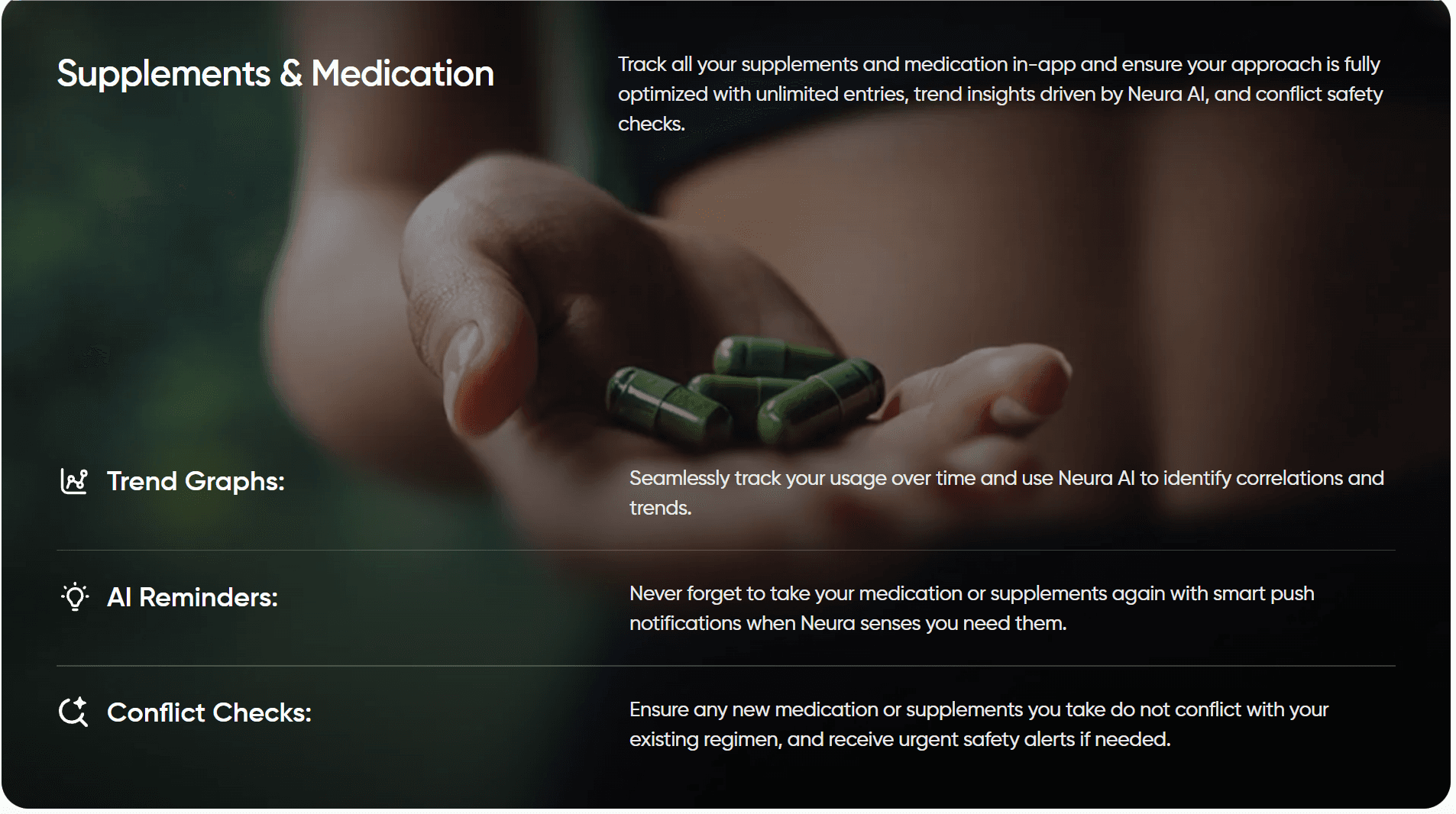
Once you have a responsible stack approach, you need a digital lab notebook. You cannot rely on memory to track subtle shifts in cognition over weeks or months.
You need a centralized system designed to correlate inputs, which are the supplements you take, with outputs, which are how you perform.
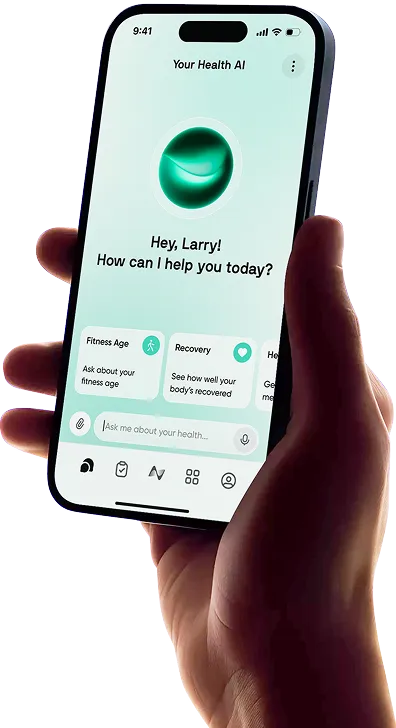
Neura functions as the essential "Health OS" for the biohacker. It solves the problem of data fragmentation by aggregating your disparate health metrics into a single timeline. It moves beyond a simple pill reminder system and acts as an analytical engine for your self-experimentation.
Centralizing Inputs and Outputs
The core value of Neura is its ability to serve as a central hub. In a typical scenario, a biohacker might track their sleep in the Oura app, their food in Cronometer, and their supplement intake in a note on their phone. This makes spotting patterns nearly impossible.
Neura allows you to log your specific stack intake alongside your subjective state. You create a record of exactly what you took and when. Then, throughout the day, you log contextualized outcomes. Did you manage 90 minutes of uninterrupted deep work? Were you distracted every ten minutes? Was your verbal fluency high during a meeting?
By housing the input (the stack) and the output (the performance) in the same ecosystem, Neura creates the conditions necessary for analysis. It turns scattered events into a structured dataset.
Correlating Stack Intake with Biometrics
Cognitive performance is not just about how you feel. It is deeply physiological. Neura’s aggregation engine pulls data from your wearables to provide objective validation of your stack’s efficacy.
For example, you might feel "wired" and productive on a new stimulant-based stack. However, Neura might reveal that on the days you take this stack, your Resting Heart Rate (RHR) spikes by 10 beats per minute and your Heart Rate Variability (HRV) crashes.
This contextual insight is critical. It allows you to see the physiological cost of your cognitive performance. You might decide that the productivity boost is not worth the stress it places on your nervous system. Neura helps you find the "why" behind the data, revealing that your poor sleep score is directly correlated with that specific afternoon dose you added last week.
Tracking Side Effects & Safety
In the pursuit of optimization, it is easy to ignore red flags. We want the stack to work so badly that we rationalize the negatives.
Rigorous tracking is a safety mechanism. You must vigilantly log negative outcomes. Are you experiencing more tension headaches? Has your sleep onset latency increased? Are you feeling emotionally blunted?
Tracking nootropics' side effects is just as important as tracking benefits. A compound might give you incredible focus, but if it ruins your sleep architecture, the net result over a month will be cognitive decline due to fatigue. Neura allows you to spot these slow-creeping negative correlations that you might otherwise miss on a day-to-day basis. The app's ability to visualize long-term trends helps you identify if a specific compound is causing a gradual decline in your overall well-being.
Monitoring Efficacy Over Time
Tolerance is a real issue with many cognitive enhancers. What works on day one might stop working by day thirty as your brain adapts to the new chemical environment.
Neura allows you to monitor efficacy over longer horizons. By looking at your aggregated data over a month, you can objectively see if your focus scores are trending downward despite keeping the dosage the same. This alerts you to the need for a "cycle off" period.
This feature prevents the common trap of endlessly increasing dosages to chase the initial high. Neura keeps you honest. If the data shows the stack has stopped providing a return on investment, you know it is time to adjust the protocol.
The Nootropic App Stack: What Else Do I Need?

Neura is the central hub where you correlate inputs and subjective outputs. However, to create a truly robust dataset, you need objective validation. Your feeling of being "sharper" should ideally be backed up by hard numbers. You need a complete digital ecosystem to support your experiments.
While Neura acts as your primary nootropic stack app for logging and correlation, you should consider integrating objective testing tools to feed more data into your ecosystem.
Objective Cognitive Testing
To validate your subjective feelings of improved focus, use specialized brain-training or testing apps. Tools like Cambridge Brain Sciences or simple reaction-time testers can provide objective scores on working memory, verbal reasoning, and processing speed.
If your stack is truly working, these scores should trend upward over time. You should be able to see a measurable difference in your n-back task performance or your digit span recall. If you feel smarter but your scores remain stagnant, you may be experiencing a placebo effect or a simple mood boost rather than true cognitive enhancement.
Biometric Validation
Cognition does not happen in a vacuum. It is deeply tied to your physiology. Using a wearable like an Oura Ring or Whoop strap is essential. Many stimulating nootropics can silently devastate sleep quality by crushing Deep or REM sleep stages, even if you sleep for eight hours.
By using a wearable alongside Neura as your combined nootropic tracking app system, you can monitor the physiological impact of your regimen. You can see if that new dopamine precursor is raising your nocturnal heart rate or lowering your readiness score. A comprehensive nootropics supplement tracker app setup requires both subjective logs and objective biometric data to tell the whole story.
Nutrition Tracking
Your brain requires raw materials to function. Nootropics are often just catalysts; they deplete nutrient reserves to fuel the increased activity.
Using an app like Neura to track your micronutrient intake ensures you are not burning out your engine. For example, if you are using racetams, your brain consumes choline at a faster rate. If you do not track your dietary choline intake, you may end up with headaches and brain fog. Integrating nutrition data helps you ensure your biological foundation is strong enough to support the enhancements you are adding.
Final Thoughts: Nootropic Stack Tracking
Biohacking is not about popping pills and hoping for the best. It is a disciplined process of self-experimentation. The human brain is the most complex object in the known universe. Tweaking its chemistry should be done with precision and respect.
If you are not tracking, you are not optimizing. By establishing baselines, slowly introducing variables, and rigorously logging both cognitive wins and physiological side effects, you move from placebo-driven guessing to data-driven enhancement.
Neura serves as the essential tool in this process. It connects the dots between your inputs and your outputs. It transforms your daily habits into a clear narrative of cause and effect. With the right data, you become the lead scientist in the most important laboratory in the world: your own mind.
Article FAQ
Are nootropics safe?
The safety depends entirely on the substance. Common compounds like caffeine, L-theanine, and creatine have well-established safety profiles when used correctly. However, synthetic compounds and experimental research chemicals carry higher risks and unknown long-term effects. Always consult a medical professional before adding potent compounds to your routine.
Do nootropics work?
Yes, but efficacy varies significantly by individual. Ingredients like caffeine and creatine have robust clinical support for improving focus and cognitive energy. However, results depend heavily on your unique neurochemistry, sleep quality, and diet. What works for one person may have no effect, or even a negative effect, on another.
What is a nootropic stack?
A stack is a specific combination of two or more cognitive-enhancing supplements taken together. The goal is synergy, where the combined effect of the ingredients is greater than taking them individually. For example, stacking L-theanine with caffeine to smooth out the jittery side effects of the stimulant.
How to create a nootropic stack?
Start by identifying a specific goal, such as improving memory or reducing anxiety. Choose one foundational ingredient and test it for two weeks to establish a baseline. Once you understand how your body reacts, you can slowly add a second complementary ingredient. Never introduce multiple new compounds at the same time.
How long does it take to see results?
It depends on the mechanism of the supplement. Stimulants usually work within 30 to 60 minutes. However, adaptogens and structural compounds like Bacopa Monnieri or Lion's Mane often require 4 to 6 weeks of consistent daily use to build up in your system and demonstrate measurable benefits.
Can I track the effectiveness of my stack?
Yes, and you should. Using a tool like Neura allows you to log your dosage and correlate it with subjective focus scores and objective biometric data. This helps you determine if a stack is providing a real return on investment or if you are simply experiencing a temporary placebo effect.