
Achieving Your Health Goals with Biomarker Tracking from Neura
Health
Key Findings
True health optimization requires more than just passive observation. It demands the active biomarker tracking of critical metrics like Heart Rate Variability and Sleep Architecture; raw data needs context to be useful. By using Neura to aggregate metrics from various devices, you can transform isolated numbers into a clear roadmap for better performance and longevity.
For most of history, health was binary. You were either sick or you were well. If you did not have a fever, a broken bone, or a diagnosis, you were considered healthy.
We navigated our well-being based on vague feelings and annual doctor visits that provided only a momentary snapshot of our internal state.
That approach is no longer sufficient. We now understand that health is a spectrum, and the absence of disease is not the same as the presence of vitality.
You can be free of illness but still be operating at 60% of your potential.
The difference between surviving and thriving lies in the data. Your body is a biological machine that generates thousands of data points every day. These signals, or biomarkers, tell the true story of your physiological state.
They reveal how your diet affects your energy, how your sleep impacts your focus, and how your stress levels dictate your long-term longevity.
By shifting from passive observation to active tracking, you gain control. You stop guessing what works for your body and start knowing. This guide explores how to leverage the power of biomarkers to achieve your specific health and fitness goals.
What is Biomarker Data?
At its core, biomarker data is simply an objective measurement of a biological state. It is the quantifiable evidence of what is happening inside your body.
In the human body, biomarkers range from the simple to the complex. They include standard metrics like blood pressure and body weight, but also dynamic physiological signals like heart rate variability, blood glucose levels, hormone profiles, and sleep cycles.
In the context of modern health tracking, we typically divide these into two categories. First are the static biomarkers, often measured via blood tests, which give you a "state of the union" on things like cholesterol or vitamin D.
Second are the digital biomarkers, collected continuously by wearables, which show the dynamic fluctuations of your biology in real time. Mastering both is the key to optimization.
What Biomarkers Should You Track?
You do not need to measure every single signal your body produces all the time. Data without focus is just noise. To drive real change, you should focus on a core set of high-impact metrics that correlate directly with longevity, performance, and recovery.
Heart Rate Variability (HRV)
If you track only one metric for recovery, make it Heart Rate Variability.
Unlike your resting heart rate, which you generally want to be low, you want your HRV to be high. This metric measures the variation in time between each heartbeat. It acts as a direct line to your autonomic nervous system.
A high HRV indicates that your body is in a "rest and digest" state, capable of adapting to stress and recovering from workouts. A low HRV suggests your system is overloaded, trapped in "fight or flight" mode, and in need of rest.
Blood Glucose Stability
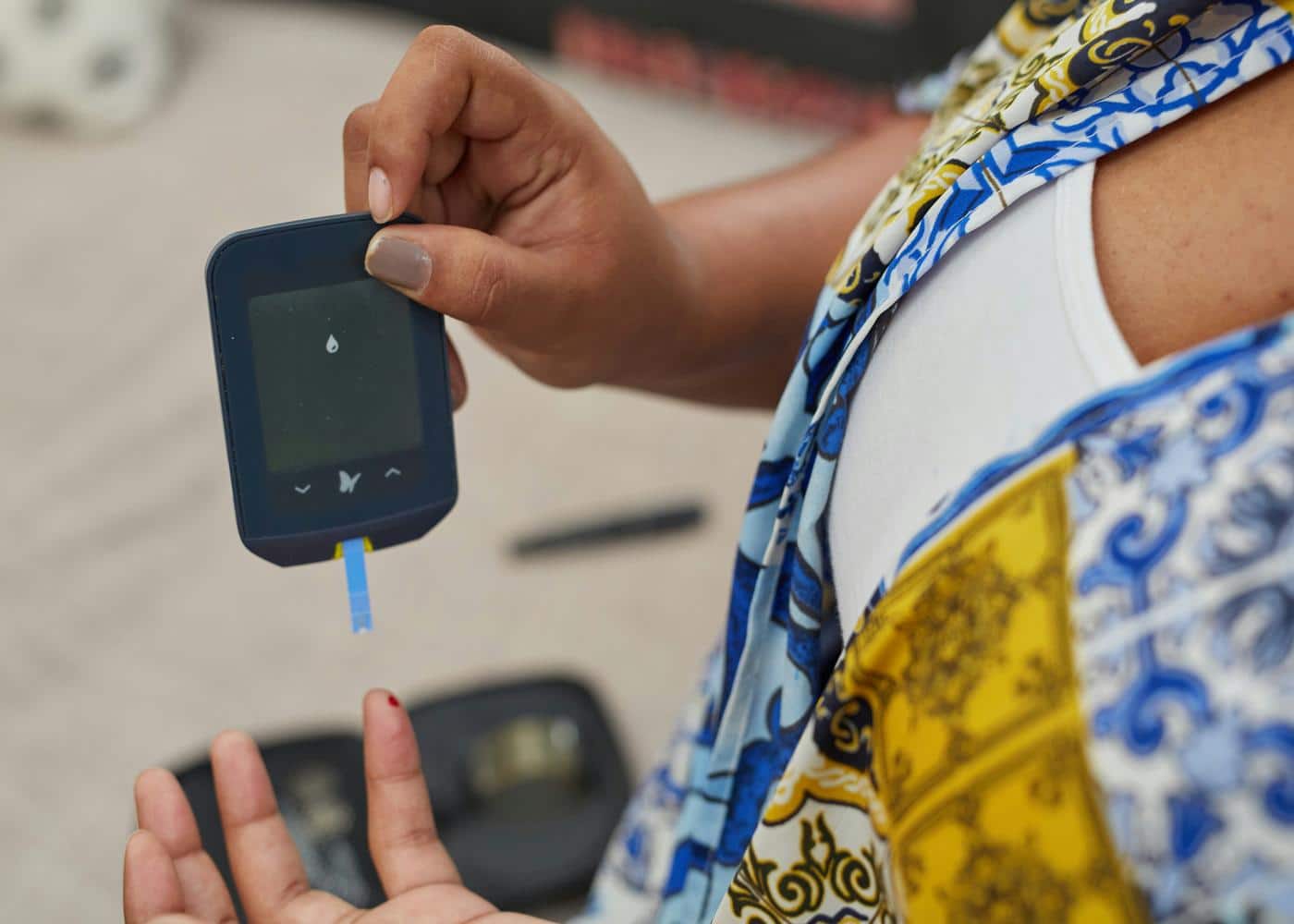
Metabolic health is the foundation of energy. While typically associated with diabetes, tracking blood glucose is crucial for everyone.
Sharp spikes in blood sugar, usually following a high-carb meal, are almost always followed by crash-induced lethargy and brain fog. By monitoring these fluctuations, you can learn exactly which foods rob you of your afternoon focus.
The goal is not a flat line, but a gentle rolling hill. Keeping your glucose stable ensures a steady supply of fuel to the brain and reduces long-term inflammation.
Sleep Architecture
Total time in bed is a misleading metric. You can lie in bed for nine hours and still wake up exhausted if your sleep quality is poor. You need to track your Sleep Architecture.
This breaks down your night into Light, Deep, and REM sleep phases. Deep sleep is when physical repair happens; it is when muscles rebuild and the immune system recharges. REM sleep is for the mind; it is when emotional processing and memory consolidation occur.
Knowing the balance allows you to adjust your habits. If Deep sleep is low, you might need to cool down your room. If REM is low, you might need to cut evening alcohol.
Resting Heart Rate (RHR)
Your Resting Heart Rate is a strong indicator of cardiovascular efficiency and overall fitness. It represents the number of times your heart beats per minute when you are completely at rest.
As your aerobic fitness improves, this number should trend downward, indicating that your heart is becoming stronger and more efficient at pumping blood.
Conversely, a sudden spike in your RHR, even by just a few beats, is often the earliest warning sign of an oncoming illness, dehydration, or overtraining.
VO2 Max
VO2 Max is often cited as one of the strongest predictors of longevity. It measures the maximum amount of oxygen your body can utilize during intense exercise.
While it is a performance metric for athletes, for the general population, it is a proxy for functional aging. A high VO2 Max correlates with a lower risk of all-cause mortality. Tracking this allows you to see if your cardiovascular training is actually effective or if you are just spinning your wheels.
Cortisol and Stress Load
While harder to measure continuously without specialized equipment, estimating your stress load is vital. Chronic cortisol elevation destroys sleep, eats away at muscle mass, and promotes fat storage.
While you cannot easily track cortisol in real-time on a watch, you can track the symptoms of high cortisol through a combination of low HRV, high RHR, and poor sleep quality.
Recognizing the pattern of a stressed nervous system allows you to intervene with breathwork or meditation before you hit burnout.


Neura: How to Track Health Goals Using Biomarker Data
The problem with the modern health landscape is fragmentation. You have sleep data in one app, nutrition data in another, and workout stats in a third.
This creates a disjointed picture where you miss the connections between your habits and your health.
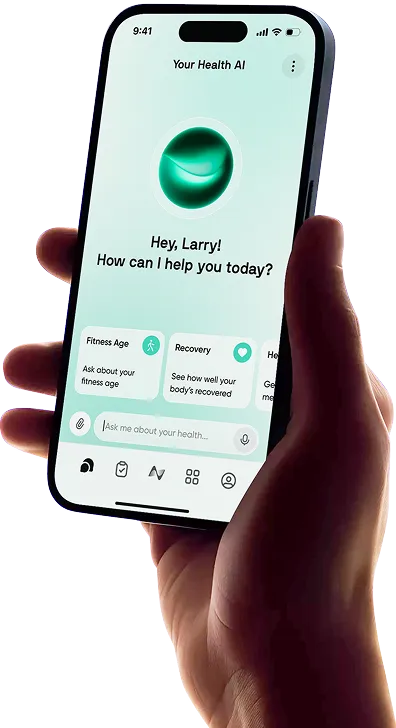
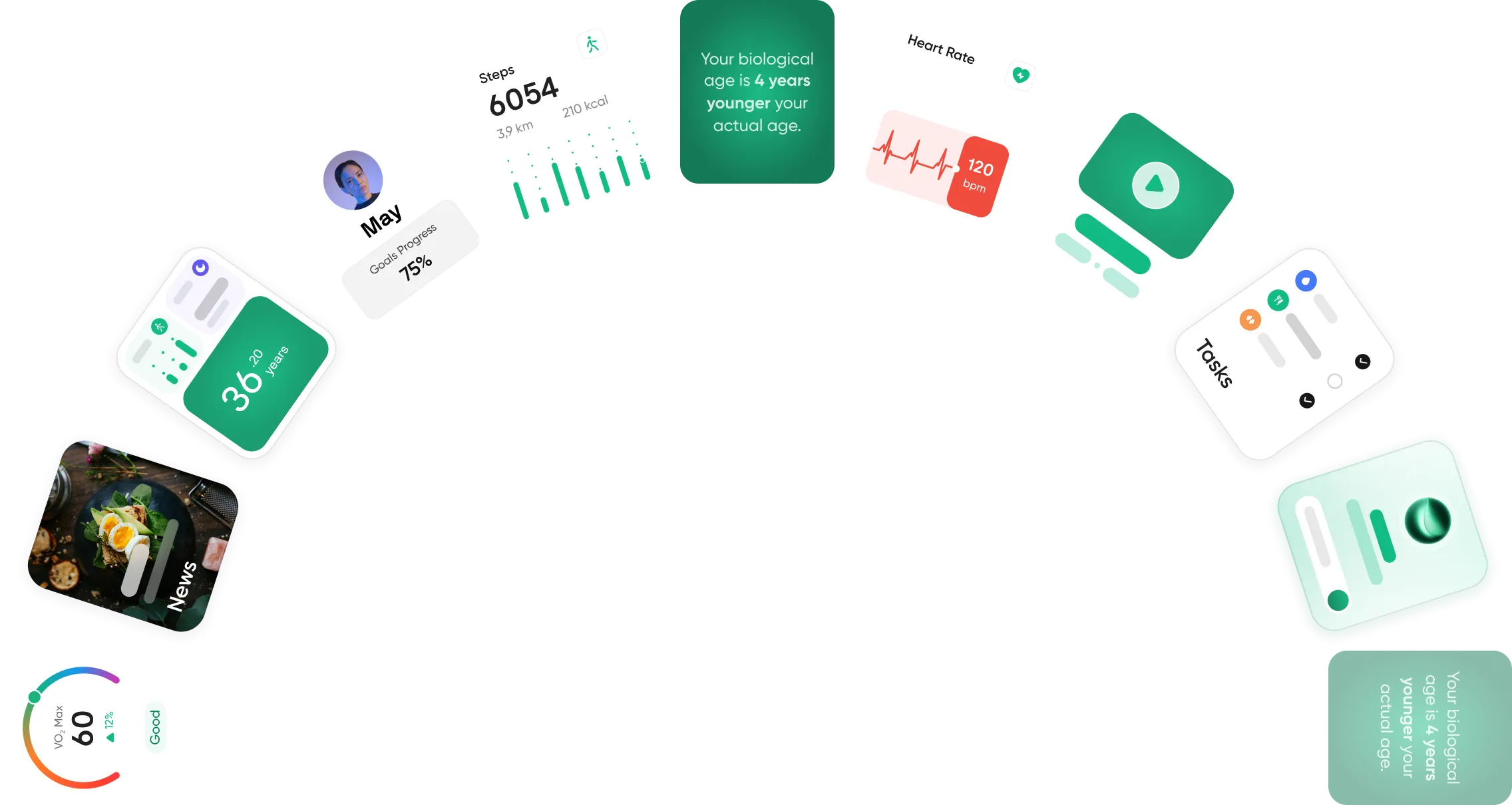
Neura solves this by acting as the central operating system for your biology. It aggregates these disparate data streams into a single, unified timeline. This allows you to move beyond simple monitoring and start using biomarker data tracking to achieve specific goals.
Sorting Through the Noise to Find the Narrative
The first step to achieving your goals is consolidation. Neura pulls data from your Oura Ring, your Apple Watch, your continuous glucose monitor, your nutrition logs, and any other device, app, or wearable you use. Neura then cleans and normalizes this data so it can be viewed in one place.
Instead of toggling between apps to see if your run affected your sleep, Neura presents the data side-by-side. This immediate visual juxtaposition is powerful and supported by personalized insights from your Neura Coach.
The process turns abstract numbers into a cohesive narrative about your day. You stop seeing your health as a series of isolated events and start seeing it as an interconnected system.
Contextual Biomarker Analysis
Raw numbers are useless without context. Knowing your HRV is 40ms means nothing unless you know if that is normal for you and what you did yesterday to cause it.
Neura excels at biomarker analysis by layering context over your raw metrics. It uses correlation engines to find the hidden links between your inputs and your outputs.
For example, it might identify that every time your protein intake drops below 100g (input), your deep sleep score decreases by 15% (output). Or it might find that your stress levels spike consistently at 3:00 PM on days you skip breakfast.
This analysis takes the guesswork out of goal setting. If your goal is to improve sleep, Neura Coach tells you exactly which lever to pull based on your own historical data. It moves you from "I think I should eat better" to "I know I need to eat protein at dinner to sleep well."
Longitudinal Trend Visualization
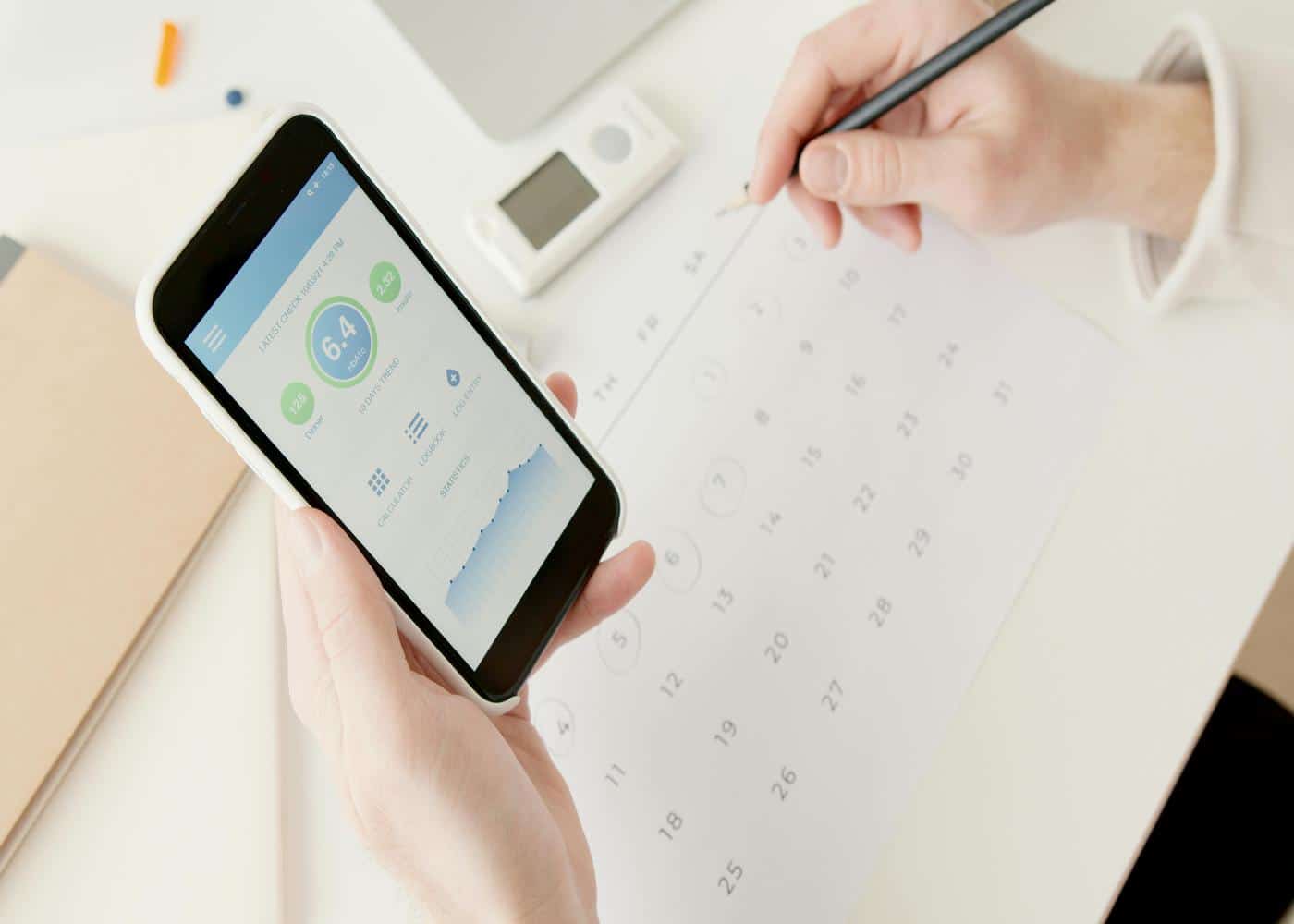
Health does not happen in a day; it happens over months and years. A bad night of sleep is a data point; a month of declining sleep quality is a trend.
Neura focuses heavily on longitudinal tracking. It smooths out the daily noise to show you the true direction of your health. This is critical for motivation and course correction.
If you are trying to improve your cardiovascular health, the daily fluctuations in Resting Heart Rate might be discouraging. However, Neura’s trend view might show a steady decline of 5 beats per minute over the last three months.
This long-term view validates your efforts. It confirms that your lifestyle changes are working even when you cannot feel the difference day-to-day. Conversely, if a trend line is moving in the wrong direction, Neura alerts you early, allowing you to pivot before a minor issue becomes a chronic problem.
Goal-Specific Dashboards
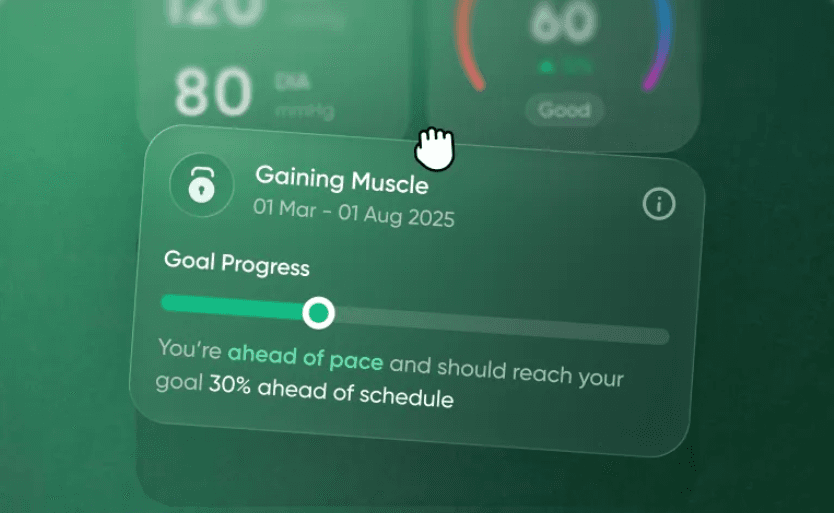
Neura allows you to customize your view based on your current objective. If your goal is marathon training, you can configure your dashboard to prioritize recovery metrics like HRV and Sleep, alongside performance metrics like VO2 Max. If your goal is cognitive focus, you can prioritize Glucose stability and Deep Sleep.
By filtering out the metrics that are not currently relevant, Neura keeps you focused. It prevents data overwhelm and ensures that every time you open the app, you are seeing exactly the information you need to make the next right decision for your specific goal.
More Top Platforms for Tracking Biomarkers
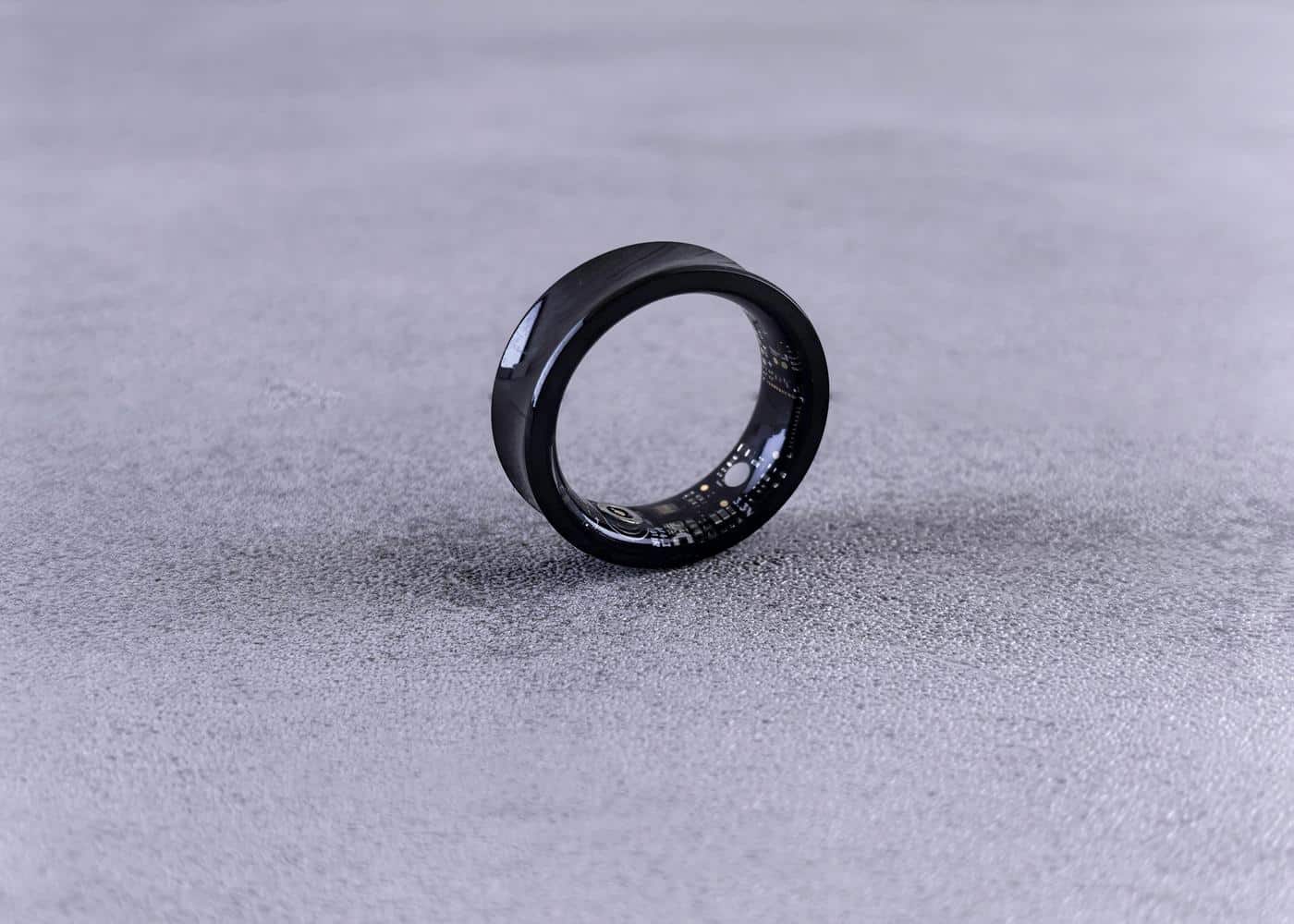
Neura is the aggregator, but it relies on high-quality data sources to function. To build a complete ecosystem, you need the right tools to capture the data in the first place.
InsideTracker:
While wearables are great for digital biomarkers, they cannot see what is in your blood. InsideTracker fills this gap. It provides ultra-comprehensive blood analysis, measuring dozens of biomarkers like ferritin, testosterone, cortisol, and vitamin levels.
This data is the "ground truth" of your biological status. By importing your InsideTracker results into your health ecosystem, you can correlate your blood data with your daily lifestyle choices. It answers the question of whether your diet is actually fixing your iron deficiency or if your stress management is actually lowering your cortisol.
Cronometer:
You are what you eat, and tracking that input is essential. Cronometer is widely regarded as the gold standard for nutrition tracking because of its accuracy and depth. Unlike other apps that focus only on calories, Cronometer tracks micronutrients.
It tells you if you are getting enough magnesium to support your nervous system or enough zinc for your immune health. This level of granularity is essential for biomarker analysis. It allows you to see the direct link between a nutrient deficiency and a drop in performance.
Oura and Whoop:
For continuous data collection, you need a device that is comfortable enough to wear while sleeping. The Oura Ring and the Whoop strap are the leaders in this space.
Oura excels at sleep staging and temperature tracking, providing the most accurate recovery data for the average user. Whoop is more focused on cardiovascular strain and recovery, making it ideal for athletes who want to push their physical limits. Both platforms provide the raw, high-fidelity data streams that Neura uses to build your health profile.
Final Thoughts: Biomarker Data Tracking
We are living in the golden age of personal health. For the first time, we have access to the same level of diagnostic data that was once reserved for elite athletes and laboratory settings.
But access is only the first step. The real power lies in interpretation.
Biomarker data tracking is not about obsessing over every graph or letting a number dictate your mood. It is about awareness. It is about understanding the unique language of your own physiology.
By using tools like Neura to aggregate and analyze these signals, you turn your body from a mystery into a manageable system.
You gain the agency to make informed choices, optimize your daily habits, and ultimately, achieve a level of vitality that goes far beyond just "not being sick."
Article FAQ
What is biomarker analysis?
Biomarker analysis is the process of interpreting biological data to understand your health status. It involves finding patterns in metrics like heart rate or glucose to reveal how lifestyle choices impact your physiology, turning raw numbers into actionable health insights.
How do you track biomarkers?
You track biomarkers using a combination of wearables for real-time data (like sleep and HRV) and blood tests for internal metrics (like vitamins). Aggregating this data into a central app allows you to monitor trends and optimize your daily habits.
What biomarkers should you track?
The most important biomarkers to track are Heart Rate Variability (HRV) and Resting Heart Rate (RHR) for cardiovascular health. You should also monitor Sleep Architecture for recovery and blood glucose stability for energy management to get a complete picture of your vitality.
Can I track biomarkers without a wearable?
Yes, you can track biomarkers without a wearable by logging manual metrics like weight, blood pressure, and subjective mood. However, using a wearable provides deeper insights by capturing continuous physiological data like sleep stages and nervous system recovery.
How often should I check my biomarker data?
Check digital biomarkers like sleep and heart rate daily to guide your immediate decisions. For blood biomarkers, testing quarterly or biannually is sufficient to track long-term progress without obsessing over minor fluctuations.
Is tracking biomarkers only for athletes?
No, biomarker tracking benefits everyone. It provides early warning signs for chronic issues like stress and metabolic dysfunction, empowering anyone to take a proactive approach to longevity and disease prevention.