13 Easy Bed Exercises to Lose Weight & Improve Posture
Fitness

Key Findings
Exercising in bed uses mattress instability to engage deep core muscles and improve spinal alignment. This low-impact approach helps tone the midsection, correct posture, and burn calories without the need for equipment. It is an ideal solution for those with limited mobility, busy schedules, or joint pain seeking a convenient way to build a consistent fitness habit.

Starting a fitness journey does not always require a gym membership or expensive equipment. Sometimes, the most effective way to build a habit is to start exactly where you are.
For many, that place is the comfort of a mattress. While the idea of a workout usually conjures images of sweat-soaked floor mats and heavy weights, exercising in bed is a legitimate way to activate your core, improve alignment, and elevate your heart rate to burn calories without the high impact of traditional floor exercises.
By integrating these movements into a daily routine, anyone can reach their goals by following a clear and actionable plan divided into achievable daily tasks.
Whether the goal is to wake up the muscles in the morning or wind down at night, these movements provide a foundation for long-term health and functional wellbeing.
How Exercising in Bed Can Improve Posture and Bust Belly Fat

The unique environment of a bed offers a surprising benefit: an unstable surface. Unlike a hard floor, a mattress requires stabilizing muscles to work harder to maintain balance.
When performing bed exercises for belly fat, the transverse abdominis and obliques must constantly fire to keep the body steady on the soft cushioning. This consistent engagement helps tone the midsection more effectively than some static floor movements.
Furthermore, posture is often a byproduct of core strength and spinal alignment. Many people suffer from postural issues due to prolonged sitting or poor habits.
By performing targeted movements on a flat, supportive mattress, an individual can focus on opening the chest and strengthening the posterior chain. This creates a baseline for better physical capacity and cardiovascular wellbeing.


13+ Simple Exercises to Do in Bed

If you are looking for exercises to do in bed, the following movements are designed to be accessible yet effective. These range from core-focused drills to full-body activators that help reach fitness goals.
1. Pelvic Tilts
Pelvic tilts are the gold standard for lower back health and core activation. This small, controlled movement helps re-align the pelvis and engage the deep abdominal wall.
Focus Muscles: Transverse abdominis and lower back.
How-To:
Lie on your back with knees bent and feet flat on the mattress.
Exhale as you press the small of your back into the bed, tilting your hips toward your ribs.
Hold for three seconds and release.
Best For: Improving spinal alignment and reducing lower back stiffness.
2. Glute Bridges
This is a powerful movement for the posterior chain. Because the bed is soft, your glutes must work harder to achieve full extension.
Focus Muscles: Gluteus maximus, hamstrings, and core.
How-To:
While lying on your back, keep your feet hip-width apart.
Drive through your heels to lift your hips toward the ceiling until your body forms a straight line from knees to shoulders.
Best For: Building lower body strength and countering the effects of sitting all day.
3. Bed Leg Lifts
Leg lifts are highly effective bed exercises to lose weight because they engage the large muscle groups of the lower body and the lower abs simultaneously.
Focus Muscles: Lower abdominals and hip flexors.
How-To:
Lie flat with your legs straight.
Keep one leg on the bed while raising the other to a 90-degree angle.
Lower it slowly without letting it touch the mattress before repeating.
Best For: Deep core strengthening and hip mobility.
4. Modified Scissor Kicks
Scissor kicks on a mattress challenge your stability. This movement forces the core to stabilize against the shifting weight of your legs.
Focus Muscles: Obliques and lower abdominals.
How-To:
Lift both legs a few inches off the bed.
Cross one over the other in a scissor motion, keeping your core tight and your lower back pressed into the mattress.
Best For: Burning calories and toning the midsection.
5. Supine Spinal Twist
Posture is not just about strength; it is also about flexibility. This twist helps decompress the spine after a long day.
Focus Muscles: Obliques and erector spinae.
How-To:
Lie on your back and hug your knees to your chest.
Drop both knees to one side while keeping your shoulders flat against the bed.
Look in the opposite direction of your knees.
Best For: Spinal mobility and relieving tension in the torso.
6. Cobra Stretch
Borrowed from yoga, this move is essential for anyone who spends time hunched over a computer. It opens the chest and strengthens the upper back.
Focus Muscles: Upper back, chest, and abdominals.
How-To:
Lie face down on the bed.
Place your hands under your shoulders and gently push up, lifting your chest while keeping your hips on the mattress.
Best For: Correcting rounded shoulders and improving lung capacity.
7. Bed Mountain Climbers
For those seeking a bit of cardio, mountain climbers can be adapted for the bed. The soft surface adds a layer of difficulty for the shoulders and core.
Focus Muscles: Full body, specifically shoulders and core.
How-To:
Start in a plank position with your hands on the mattress.
Bring one knee toward your chest, then switch quickly.
Keep your hips level despite the mattress movement.
Best For: Increasing heart rate and metabolic conditioning.
8. Side-Lying Leg Raises
This exercise targets the outer hips, which are crucial for maintaining a stable gait and healthy posture.
Focus Muscles: Glute medius and abductors.
How-To:
Lie on your side with legs stacked.
Lift the top leg as high as possible without tilting your hips back.
Lower with control.
Best For: Hip stability and shaping the lower body.
9. Inner Thigh Squeezes
You can use a pillow as a simple piece of equipment for this move. It is one of the most effective lazy bed exercises for targeting often-neglected muscles.
Focus Muscles: Adductors (inner thighs).
How-To:
Place a firm pillow between your knees while lying on your back with knees bent.
Squeeze the pillow as hard as you can for five seconds, then relax.
Best For: Strengthening the pelvic floor and inner thighs.
10. Knee-to-Chest Pulls
This is a gentle way to start your routine. It stretches the lower back and begins the process of waking up the digestive system.
Focus Muscles: Lower back and glutes.
How-To:
Lie on your back and pull one knee into your chest, holding it with both hands.
Switch legs after thirty seconds.
Best For: Relieving lower back pain and improving flexibility.
11. Modified Dead Bug
The Dead Bug is a classic stability exercise. On a bed, it requires intense focus to keep the limbs moving in coordination without losing spinal contact with the bed.
Focus Muscles: Entire core complex.
How-To:
Raise your arms toward the ceiling and bend your knees to 90 degrees.
Slowly lower the opposite arm and leg toward the bed, then return to center.
Best For: Neuromuscular coordination and core protection.
12. Pillow Crunches
Adding a pillow adds a small amount of weight and a point of focus for your crunches.
Focus Muscles: Upper abdominals.
How-To:
Hold a pillow with both hands above your chest.
Perform a small crunch, reaching the pillow toward your knees.
Best For: Building upper abdominal strength.
13. Reverse Crunches
Reverse crunches are often easier on the neck than traditional crunches, making them ideal for bed-based fitness.
Focus Muscles: Lower abs.
How-To:
Lie on your back with hands at your sides.
Lift your feet off the bed and bring your knees toward your chest, slightly lifting your hips off the mattress.
Best For: Targeting the lower belly area.
Who Are Bed Exercises Good For?
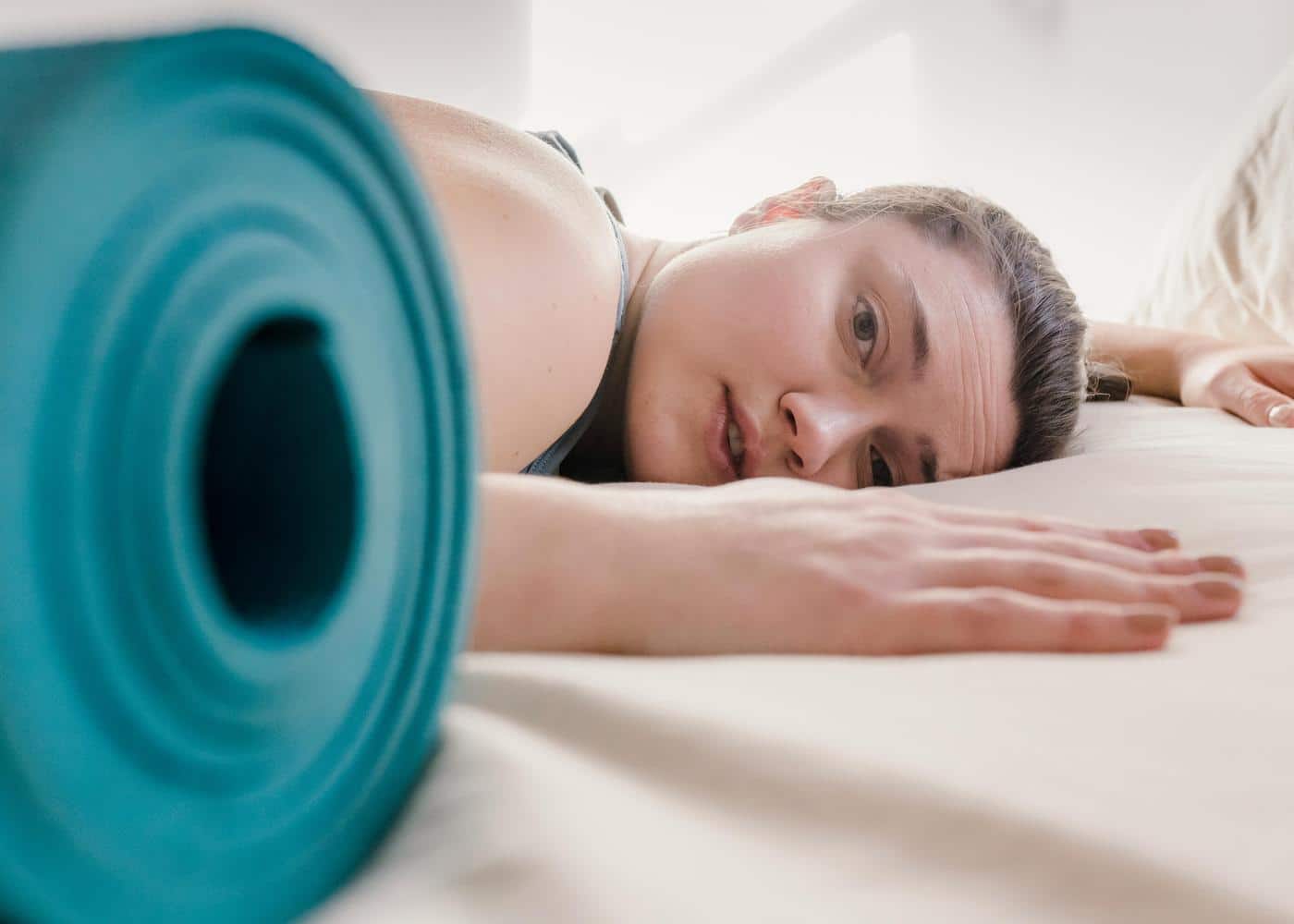
While exercising in bed might sound like a trendy hack for days when you just don't feel like getting up, these movements actually serve a vital, practical purpose. Performing stretches and strengthening routines on a mattress is an incredibly valuable, low-impact tool for specific populations, including:
Older Adults
As we age, getting up and down from the floor for a traditional mat workout can become challenging or even unsafe. A bed provides a supportive, elevated, and easily accessible surface for seniors to maintain muscle tone, joint health, and bone density without the risk of a fall.
People with Mobility Issues and Limited Range of Motion
For individuals who use wheelchairs or manage conditions that restrict their mobility (such as arthritis, multiple sclerosis, or severe joint stiffness), the bed offers a safe environment. It allows them to gently engage their muscles, improve circulation, and build core strength without needing to navigate complex gym equipment.
Active Recovery from Surgery or Injury
Post-operative patients and those in physical therapy often need to start with the most gentle movements possible. Bed exercises are frequently prescribed by clinicians to slowly rebuild strength, maintain flexibility, and prevent muscle atrophy during periods of extended bed rest.
Individuals Managing Chronic Pain
For people living with chronic pain conditions like fibromyalgia, neuropathy, or severe lower back pain, weight-bearing or high-impact floor exercises can be agonizing. The natural cushioning of a mattress reduces joint compression, allowing for pain-free stretching and stabilization on flare-up days.
Pregnant and Postpartum Individuals
Gentle bed exercises can help relieve the pelvic and lower back pressure associated with pregnancy. Postpartum, the bed provides a safe, comfortable starting point for slowly re-engaging the pelvic floor and deep transverse abdominal muscles before transitioning back to standard workouts.
More Bed Tips for Improving Posture
Beyond exercising in bed, your daily habits and environment play a massive role in your overall musculoskeletal health. Monitoring foundations like rest and recovery is essential for long-term success.
Sleep Position Matters
To maintain a neutral spine, back sleepers should place a small pillow under their knees. Side sleepers should place a pillow between their knees to keep the hips square and prevent lower back rotation.
Mattress Firmness
A mattress that is too soft can lead to a hammock effect where the spine sags. If your bed is very soft, focus on exercises that involve lying on your stomach, like the Cobra Stretch, to counteract the forward rounding of the spine.
Use a Lumbar Support
If you sit up in bed to read or work, use a dedicated lumbar pillow. Leaning against a headboard without support is a leading cause of neck strain and slumped posture.
Monitor Your Screen Time
Tech neck occurs when you look down at a phone or tablet while in bed. Try to keep your devices at eye level to prevent your cervical spine from being pulled out of alignment.
Morning Stretching Protocol
Before getting out of bed, perform three minutes of full-body reaching. This simple habit signals to your nervous system that it is time to transition from a state of rest to a state of activity, improving blood flow to your extremities.

Final Thoughts: Exercising in Bed
Ultimately, exercising in bed is about consistency over intensity. Small, daily actions can make abstract long-term goals achievable. By utilizing your time in bed to strengthen your core and improve posture, you are taking a proactive step toward a more holistic health journey.
Focusing on these foundational metrics helps prepare you for actionable short-term and long-term goals. Start small, stay consistent, and maintain a focus on your personal progress to stay motivated.
Article FAQ
Can you do exercises in bed?
Yes, you can perform many effective movements without leaving your mattress. Exercise in bed is a great way to improve mobility and strength, especially if you have a busy schedule or limited space. The soft surface actually forces your core to work harder to stay balanced.
Is it good to exercise before bed?
It is beneficial as long as you keep the intensity low. Gentle exercising in bed helps lower cortisol and release physical tension. Avoid high-intensity cardio right before sleep, as it can raise your heart rate and make it harder to fall asleep.
Will bed exercises for belly fat actually work?
While you cannot target fat loss in one specific spot, bed exercises are excellent for toning and losing weight. Because the mattress is unstable, it engages deep core muscles more effectively than a flat floor, helping to build a stronger, leaner midsection.
What are the best bed exercises to lose weight?
The most effective bed exercises to lose weight involve large muscle groups. Movements like glute bridges, leg lifts, and bed mountain climbers burn the most calories by engaging the entire body while still being gentle on your joints.
Are lazy bed exercises effective?
Yes, lazy bed exercises are highly effective for seniors or those recovering from injury. They provide a low-impact way to maintain bone density and joint health without the risk of falls or the strain of standing workouts.
How many calories can I burn by exercising in bed?
A typical 15-minute session of exercises to do in bed can burn between 50 and 100 calories depending on your effort. Beyond the burn, these movements boost your metabolism and improve your posture for the rest of the day.