Relaxin: Pregnancy, Pelvic Support, Testing, and Vascular Effects
Overview
Relaxin is a hormone that rises in pregnancy and helps the body adapt to carrying and delivering a baby. It softens ligaments, especially around the pelvis, and influences blood vessels and kidneys so that blood flow can increase and blood pressure stays in a safe range for both parent and baby. Smaller amounts can be present outside pregnancy, but most of the clinical focus on relaxin comes from its role during gestation.
Clinicians usually consider relaxin in the background when they discuss pelvic changes and joint symptoms in pregnancy and may review it conceptually alongside Progesterone, which also supports pregnancy and affects smooth muscle and vessels.

What Relaxin is and where it is made
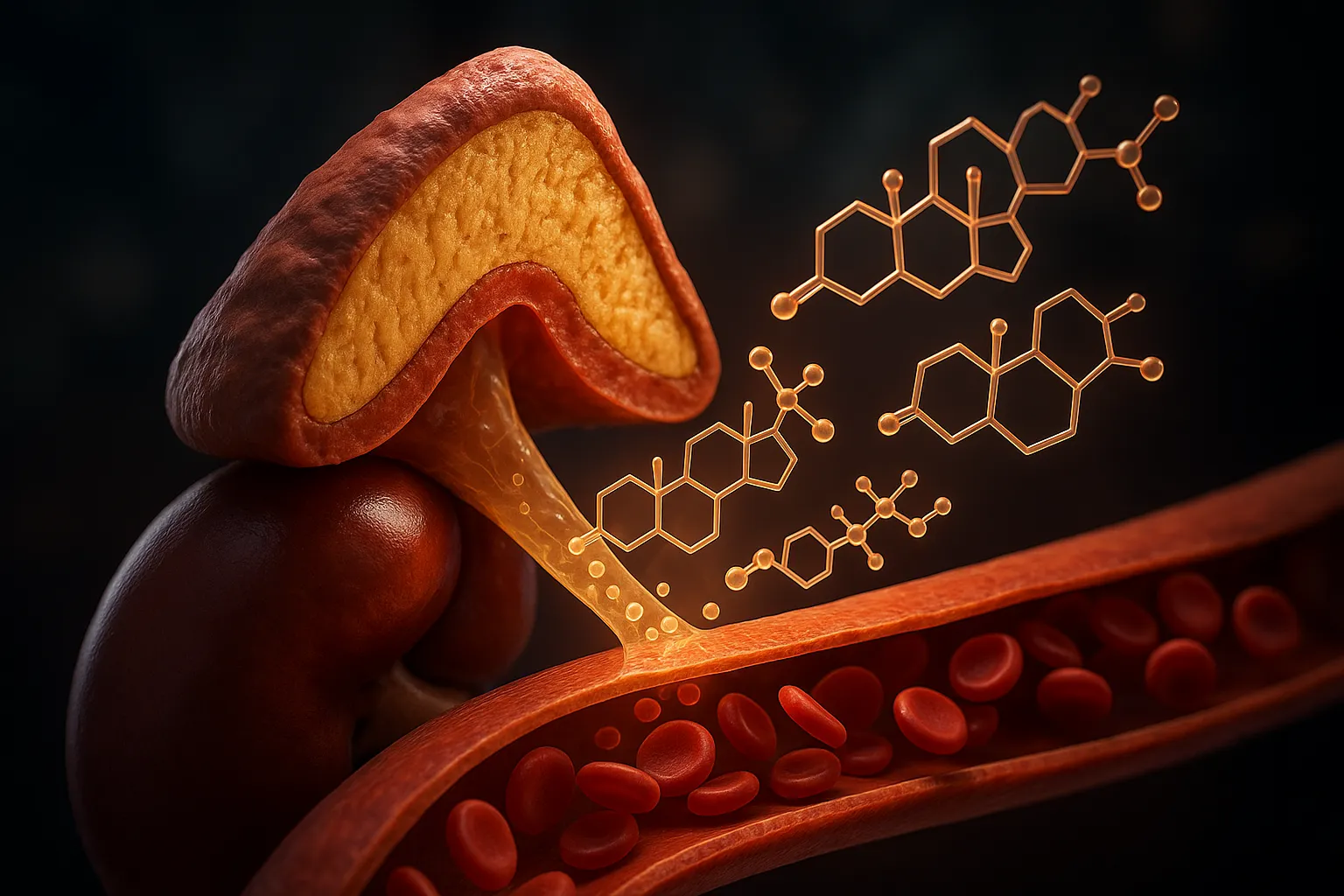
Relaxin is a peptide hormone produced mainly by the corpus luteum early in pregnancy and later by the placenta and uterine tissues.
Smaller amounts can be made in other tissues, including the reproductive tract and sometimes the heart and blood vessels.
Levels rise in early pregnancy and can have several peaks depending on gestational timing and individual variation.
What Relaxin does in your body
Softens and increases the flexibility of ligaments and connective tissue around the pelvis to help prepare for delivery.
Influences blood vessels, promoting vasodilation and helping total blood volume and cardiac output adapt in pregnancy.
Affects kidney blood flow and filtration, which normally increase in healthy pregnancy.
May have protective effects on the heart and blood vessels in some contexts, although research is still evolving.
Can contribute to a feeling of increased joint looseness or instability in some pregnant people.
When testing Relaxin makes sense
Relaxin testing is not part of routine pregnancy or endocrine panels and is rarely ordered in standard clinical practice. It may be considered in:
Research settings studying joint laxity, pelvic pain, or cardiovascular changes in pregnancy.
Selected fertility or pregnancy complication studies where relaxin patterns are of interest to investigators.
Occasional specialist contexts looking at unusual connective tissue or vascular changes, usually as part of a research protocol.
For most patients, relaxin is something clinicians consider conceptually when explaining pelvic and vascular changes, rather than a hormone they follow with serial blood tests.
How to think about high and low Relaxin activity
This information is general and does not replace lab specific reference ranges or medical evaluation.
Because relaxin testing is uncommon and reference ranges are not standardized in the same way as many other hormones, clinicians focus more on patterns of symptoms and imaging than on a single relaxin value.
Lower than expected relaxin activity might be associated with:
Less pelvic ligament softening than usual, although this is hard to separate from individual anatomy and other hormones.
Possible contribution to pelvic stiffness or limited adaptation in some pregnancy related conditions, mainly in research discussions.
Higher or more impactful relaxin activity might be associated with:
Increased joint looseness or a sense of instability, especially around the pelvis, hips, and lower back.
Greater susceptibility to certain ligament strains or pelvic girdle pain during pregnancy.
More pronounced drops in blood pressure or changes in vascular tone in some pregnant individuals.
Because many factors beyond relaxin influence joints and blood pressure in pregnancy, any such symptoms need broad evaluation rather than being attributed to relaxin alone.
What can influence your Relaxin levels or effects
Pregnancy stage, since relaxin changes across trimesters.
Corpus luteum function in early pregnancy and placental health later on.
Overall hormone environment, including estrogen and progesterone levels.
Individual connective tissue biology and any underlying joint or ligament conditions.
Multiple pregnancies or higher order gestations, which may change the hormonal environment.
Certain medications or assisted reproduction protocols that alter corpus luteum support, mainly in specialist contexts.

When to talk to a healthcare provider about Relaxin related issues
Pelvic girdle pain, hip or low back pain, or a feeling that joints are giving way during pregnancy.
Difficulty walking, climbing stairs, or turning in bed due to pelvic or joint discomfort.
New or concerning changes in blood pressure, dizziness, or swelling in pregnancy.
Questions about safe exercise, stretching, and joint protection while pregnant.
Concerns that past pelvic or joint problems might interact with current or future pregnancies.
A clinician, often an obstetrician or physiotherapist with pregnancy experience, can help separate what is likely due to normal relaxin related changes from issues that need imaging, targeted therapy, or more structured support.
Relaxin in one view
Relaxin is a pregnancy related hormone that softens ligaments and helps the cardiovascular and kidney systems adapt so the body can carry and deliver a baby. It is not usually tracked with routine blood tests, so its effects are best understood through symptoms, examination, and imaging, often alongside broader pregnancy hormone patterns such as those driven by Progesterone, rather than used as a stand alone lab target.