Free T4: Low vs High Signs, Testing, Metabolism, and Thyroid Health
Overview
Free T4 is the main circulating form of thyroid hormone that the thyroid gland releases into the bloodstream. It acts as a reservoir that can be converted into the more active Free T3 inside tissues, so it is a key marker of thyroid output and overall metabolic drive. Clinicians usually start with Free T4 and TSH to understand whether the thyroid is underactive, overactive, or in a healthy range for your situation.
Free T4 is commonly interpreted alongside Thyroid-Stimulating Hormone so that the brain signal and the thyroid hormone level can be viewed together.
What Free T4 is and where it is made
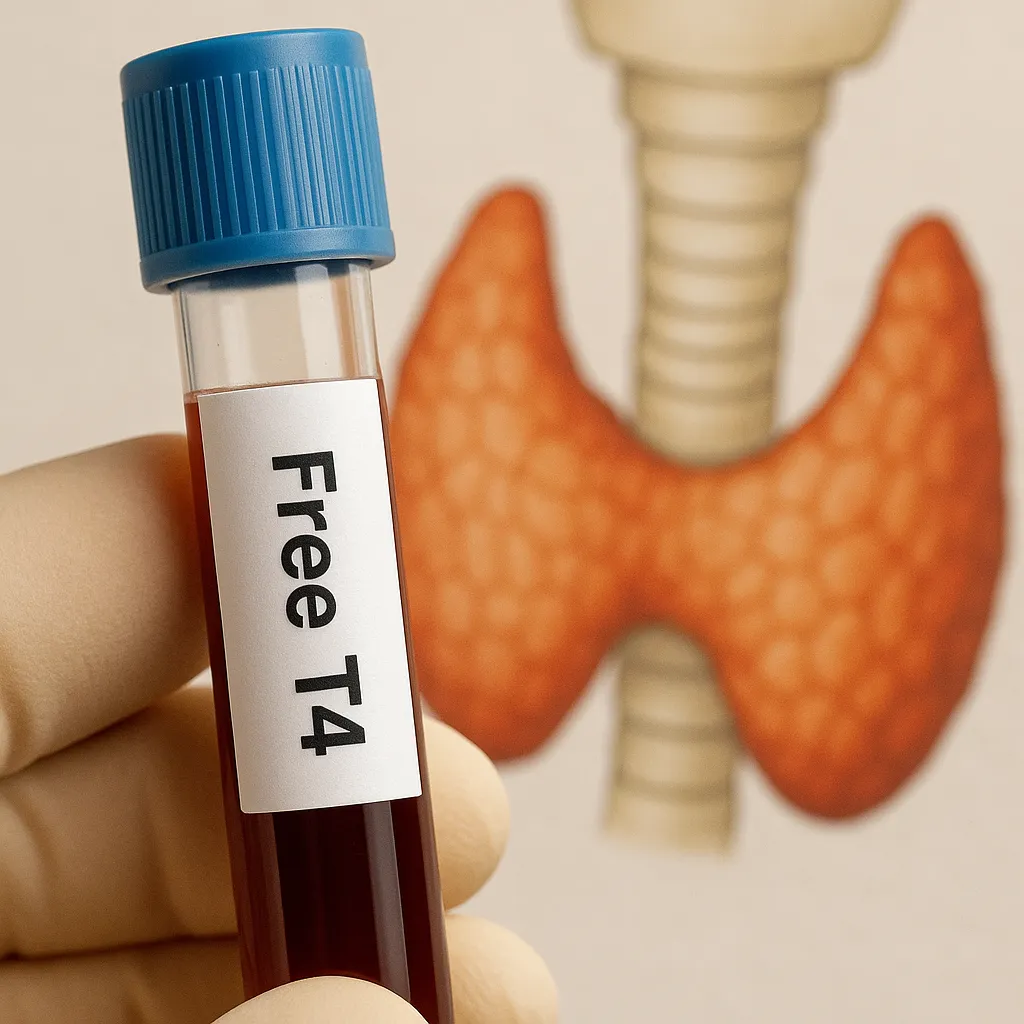
T4, or thyroxine, is one of the main hormones produced by the thyroid gland in the neck.
Most T4 in blood is bound to carrier proteins. Free T4 refers to the unbound fraction that is available for tissues and for conversion to T3.
The thyroid makes T4 in response to TSH from the pituitary, and Free T4 provides feedback to the brain to help keep the system in balance.
What Free T4 does in your body
Serves as the primary thyroid hormone released into circulation and a source for local conversion to active T3.
Helps set the overall pace of metabolism, influencing how the body uses energy and oxygen.
Affects body temperature, heart rate, and how the cardiovascular system responds to activity.
Supports brain function, mood, and cognitive speed when in a healthy range.
Influences digestion speed, bowel regularity, and cholesterol handling.
When testing Free T4 makes sense
Symptoms that suggest low thyroid function, such as fatigue, feeling cold, weight gain, constipation, dry skin, or hair thinning.
Symptoms that suggest high thyroid activity, such as palpitations, anxiety, tremor, heat intolerance, or unexplained weight loss.
TSH results that are outside the reference range, where Free T4 helps clarify whether thyroid hormone levels are truly low or high.
Monitoring thyroid replacement therapy to see whether the dose is appropriate for your needs.
Evaluation of thyroid disease in pregnancy or in people with autoimmune conditions or a strong family history of thyroid problems.
How to think about high and low Free T4 results
This information is general and does not replace lab specific reference ranges or medical evaluation.
Low Free T4 might be associated with:
Underactive thyroid states, especially when TSH is high.
Fatigue, feeling slowed down, cold intolerance, weight gain, constipation, and brain fog in many people.
Primary hypothyroidism from autoimmune disease, iodine imbalance, thyroid surgery, or radioiodine treatment.
Less commonly, pituitary or hypothalamic problems where both TSH and Free T4 are low or inappropriately normal.
High Free T4 might be associated with:
Overactive thyroid states, especially when TSH is low.
Symptoms such as palpitations, anxiety, heat intolerance, tremor, and weight loss despite normal or increased appetite.
Autoimmune hyperthyroidism such as Graves disease, thyroiditis, or thyroid nodules that produce excess hormone.
Excess thyroid medication or errors in dosing.
Borderline or conflicting patterns, such as normal Free T4 with abnormal TSH, need individualized interpretation rather than automatic treatment decisions.
What can influence your Free T4 levels
Thyroid gland health, including autoimmune thyroid disease, nodules, or prior surgery.
Thyroid medication type, dose, and timing relative to blood draws.
Iodine intake from diet and supplements, both very low and very high.
Other drugs, such as high dose steroids, amiodarone, lithium, some seizure medicines, and estrogen containing therapies.
Acute or chronic illness, which can temporarily change how thyroid hormones are handled.
Pregnancy and the postpartum period, when protein binding and thyroid demands shift.
Large changes in weight, severe calorie restriction, or major stressors.

When to talk to a healthcare provider about Free T4
Free T4 results that are clearly outside the reference range, especially when you also have symptoms of low or high thyroid function.
TSH values that do not match how you feel, where Free T4 may help clarify the picture.
New palpitations, chest discomfort, shortness of breath, or significant changes in heart rate.
Persistent fatigue, temperature intolerance, or weight change that does not respond to basic lifestyle changes.
Questions about how and when to take thyroid medication or whether a dose change makes sense.
A clinician can interpret Free T4 in context with TSH, Free T3, symptoms, and your broader medical history to decide whether more testing, watchful waiting, or treatment is appropriate.
Free T4 in one view
Free T4 is the main thyroid hormone released into the bloodstream and a key driver of metabolic pace, temperature, and heart function. On its own it is only part of the story, so it is most useful when interpreted alongside TSH and symptoms to see whether thyroid output matches how you feel. For many people it is one of the core labs in a broader metabolic check in, often combined with structured habits such as a Metabolic Reset approach rather than changing thyroid doses without guidance.