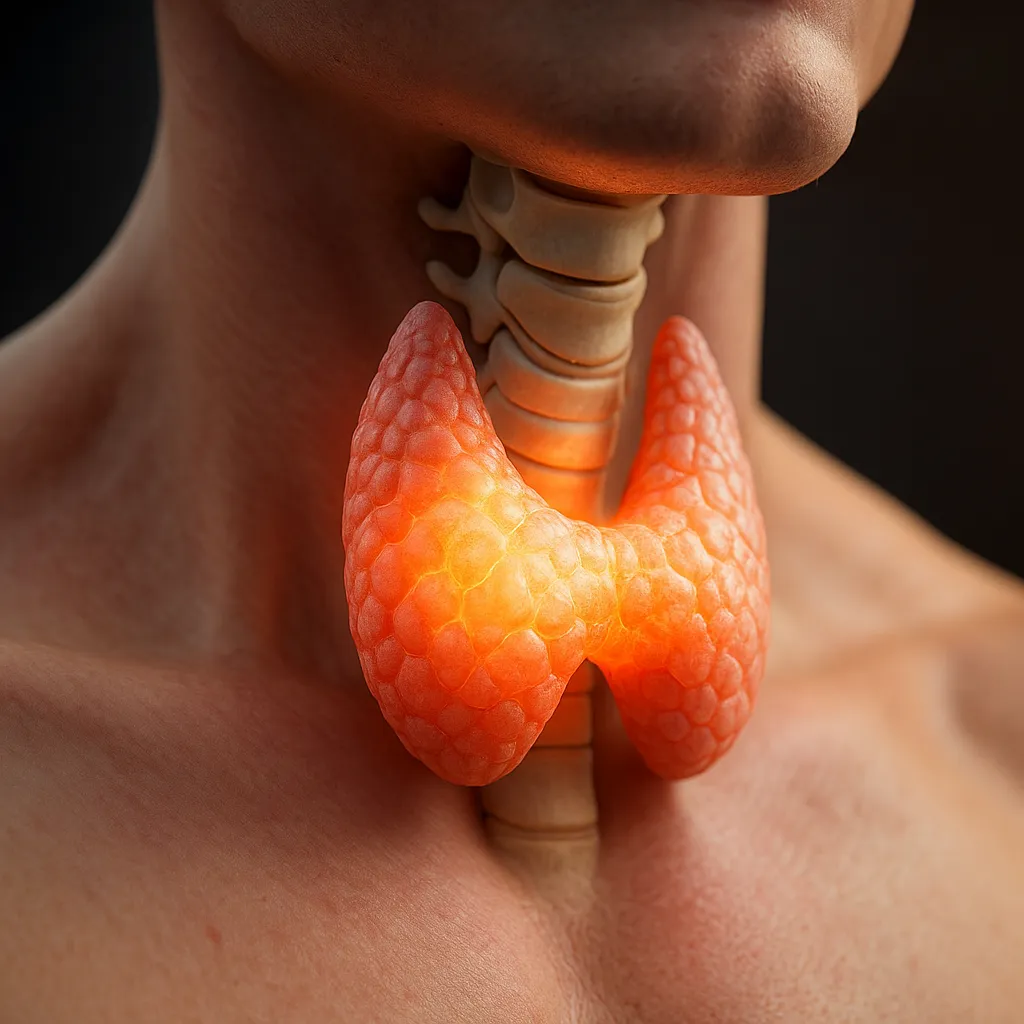
Free T3: Low vs High Signs, Testing, Metabolism, and Energy
Overview
Free T3 is the active form of thyroid hormone that can enter cells and directly drive metabolism, body temperature, heart rate, and brain function. It reflects how much usable thyroid hormone is available at the tissue level, beyond what the gland is producing in total. Clinicians often pay attention to Free T3 when TSH and Free T4 do not fully explain symptoms such as fatigue, brain fog, or feeling too hot or too cold.
Free T3 is usually interpreted together with Thyroid-Stimulating Hormone so that the pituitary signal and the active hormone in the bloodstream can be viewed side by side.
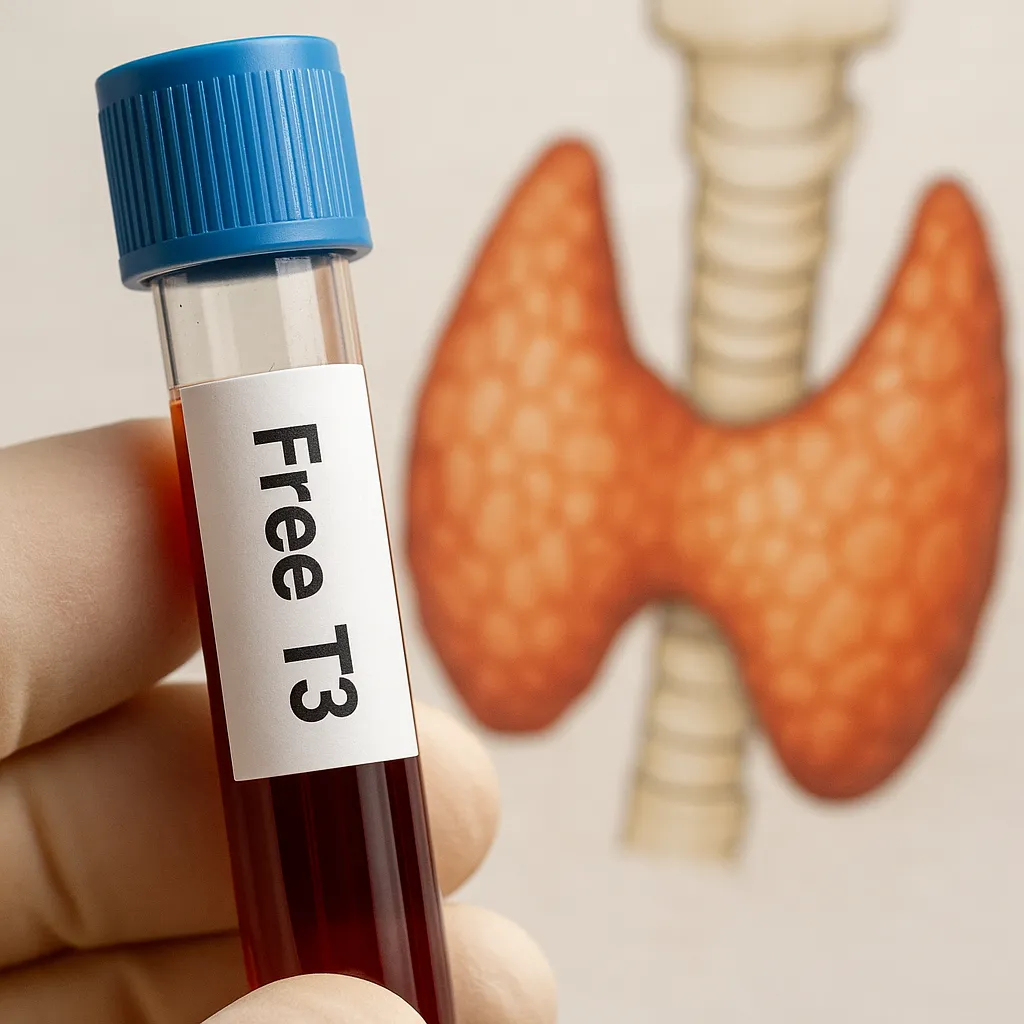
What Free T3 is and where it is made
T3 is one of the main thyroid hormones, and Free T3 is the unbound fraction that can move into cells and bind receptors.
Most T3 in the body is made by converting T4 into T3 in the liver, kidneys, and other tissues rather than being produced directly by the thyroid gland.
In the bloodstream, much of T3 is bound to carrier proteins. Free T3 reflects the portion that is immediately available to tissues.
What Free T3 does in your body
Regulates how quickly cells use energy and oxygen, shaping metabolic rate.
Helps control body temperature, heat production, and cold or heat tolerance.
Influences heart rate, the force of heart contraction, and circulation.
Supports alertness, attention, and cognitive speed when in a healthy range.
Affects mood and can contribute to low mood or anxiety when thyroid function is off.
Plays a role in digestion speed, bowel regularity, and cholesterol handling.
When testing Free T3 makes sense
Symptoms of low thyroid function such as fatigue, feeling cold, weight gain, constipation, or dry skin when TSH and Free T4 are not clearly abnormal.
Symptoms of high thyroid activity such as palpitations, anxiety, tremor, heat intolerance, or unexplained weight loss.
Follow up when TSH is borderline high or low and a clinician wants a more detailed picture of thyroid hormone balance.
Monitoring some forms of thyroid treatment, especially when T3 containing medications are used.
Evaluation of complex metabolic or mood symptoms where thyroid function may play a part.
How to think about high and low Free T3 results
This information is general and does not replace lab specific reference ranges or medical evaluation.
Low Free T3 might be associated with:
Underactive thyroid states where TSH is high and Free T4 is low or low normal.
Fatigue, feeling slowed down, cold intolerance, weight gain, constipation, and brain fog in many people.
Illness related changes known as low T3 patterns, where the body reduces T3 during severe or chronic illness without classic thyroid disease.
Possible contributors include primary hypothyroidism, inadequate thyroid hormone replacement, chronic illness, severe calorie restriction, or extreme stress. Interpretation depends heavily on TSH, Free T4, and clinical context.
High Free T3 might be associated with:
Overactive thyroid states, especially when TSH is low and Free T4 is also high or high normal.
Palpitations, anxiety, heat intolerance, tremor, and weight loss despite normal or increased appetite.
Some thyroid nodules or autoimmune hyperthyroidism patterns where T3 is elevated more than T4.
High Free T3 can also appear with excess thyroid medication or rare testing issues. Decisions about treatment or dose changes should be made with a clinician, not from a single value.
What can influence your Free T3 levels
Thyroid gland health, including autoimmune thyroid disease and nodules.
Conversion of T4 to T3 in the liver and other tissues, which can be affected by illness, nutrition, and some medications.
Thyroid medication type and dose, especially when T3 containing preparations are used.
Severe physical stress, infections, major surgery, and long hospital stays.
Very low calorie diets, eating disorders, or extreme endurance training without adequate fuel.
Some drugs such as high dose steroids, amiodarone, and others that influence thyroid hormone production or conversion.
Iodine intake extremes, both very low and very high.
Testing method, time of day, and whether medication was taken shortly before the blood draw.

When to talk to a healthcare provider about Free T3
Free T3 results that are clearly outside the reference range, especially when symptoms of low or high thyroid activity are present.
TSH or Free T4 patterns that do not match how you feel, where Free T3 may add useful context.
New palpitations, chest discomfort, or shortness of breath that could be related to overactive thyroid states.
Marked fatigue, cold intolerance, or weight change that persists despite lifestyle adjustments.
Questions about how to time thyroid medication or whether a change in dose or preparation is appropriate.
A clinician can interpret Free T3 alongside TSH, Free T4, symptoms, and other health factors to decide whether observation, more testing, or treatment makes sense.
Free T3 in one view
Free T3 is the active thyroid hormone that directly drives how fast or slow your body runs, from energy and temperature to heart rate and thinking speed. On its own, the number can be confusing, so it is most helpful when viewed with TSH, Free T4, and your symptoms, often as part of a broader metabolic plan that may include a steady eating window such as Time-Restricted Eating. If your Free T3 result does not match how you feel, it is a prompt for a focused conversation with a clinician rather than a reason to adjust thyroid medication on your own.