Do You Suffer From Orthosomnia? The Rise of Sleep Tracker Anxiety
Sleep

Key Findings
Obsessive tracking of rest metrics can paradoxically damage the very sleep quality you are trying to improve. This digital preoccupation often fosters a deep-seated anxiety that replaces natural body intuition with a reliance on numerical scores. When users prioritize data over how they actually feel, the resulting stress can keep the brain in a state of high alert, making true relaxation impossible. Recovering from this cycle requires setting healthy boundaries with technology and shifting focus toward long-term lifestyle patterns rather than daily performance.
We live in an era of unprecedented health visibility. From the steps we take to the calories we burn, every movement is quantified. For many, sleep is the final frontier of this data-driven lifestyle. We strap on watches, rings, and chest straps, hoping to unlock the secret to a perfect night of rest.
However, for a growing number of people, the very tools meant to improve sleep are actually destroying it. This paradox has led to a rise in sleep tracker anxiety, a phenomenon where the pursuit of "perfect" data becomes a barrier to actual recovery.
The irony of modern health technology is that while we have more information than ever before, we often have less peace. When we outsource our sense of well being to a digital score, we risk losing touch with our internal biological signals.
This disconnect is at the heart of a new struggle that clinicians are seeing more frequently in the digital age.
What is Orthosomnia?

To understand this modern struggle, we must first look at what orthosomnia is and why it has become such a prominent topic in sleep medicine.
The term was coined in 2017 by researchers from Rush University Medical School and Northwestern University. It is derived from the Greek "ortho," meaning straight or correct, and "somnia," meaning sleep. Much like orthorexia describes an unhealthy obsession with healthy eating, orthosomnia refers to an obsessive pursuit of optimal sleep driven by wearable data.
The orthosomnia definition centers on a preoccupation with perfecting sleep metrics, such as deep sleep percentages or sleep scores, often to the point where the preoccupation itself causes physiological stress.
While exact global statistics vary, sleep specialists have reported a significant uptick in patients seeking clinical help not because they feel tired, but because their wearable device told them they should be. This highlights a shift from internal body awareness to external data reliance.
Historically, if someone woke up feeling refreshed, they assumed they had slept well. Today, that same person might wake up, feel great, check their phone, see a "Fair" sleep score of 62, and suddenly feel their mood plummet. This psychological shift creates a "nocebo" effect, where the belief that one is poorly rested actually induces the symptoms of fatigue and brain fog.
Orthosomnia Symptoms
Identifying this condition requires looking beyond the data on a screen and examining the user's behavior. Primary orthosomnia symptoms include a persistent and obsessive need to check sleep data immediately upon waking. Users may feel a sense of failure or intense irritability if their "sleep score" is low, regardless of whether they actually feel refreshed.
Other signs include a refusal to trust one's own body. For example, a person might wake up feeling energetic but, after seeing a low recovery score on their app, decide they are too tired to exercise or perform well at work.
This psychological feedback loop creates a self-fulfilling prophecy where the anxiety of poor data prevents the relaxation required for future rest.
Common behavioral indicators include:
Spending excessive time researching sleep stages and trying to force the body into specific ratios of REM or Deep sleep.
Feeling a sense of "tracker guilt" if a night goes unrecorded or if the device malfunctions.
Adjusting daily life and social commitments solely based on the morning's data rather than physical capability.
Developing a rigid, high-pressure bedtime routine that ironically makes it harder to fall asleep due to the "performance anxiety" of achieving a high score.
How is Orthosomnia Different from Insomnia?
While both conditions result in poor sleep, their origins are distinct. Traditional insomnia is often characterized by a struggle to fall or stay asleep due to stress, environment, or biological factors.
Orthosomnia, however, is a "perfectionist" disorder. A person with orthosomnia might actually be getting eight hours of sleep but remains distressed because the device indicates they did not spend enough time in the REM phase.
Unlike insomnia, where the goal is simply to sleep, the orthosomniac is chasing a specific, often arbitrary, numerical target.
In many cases, the anxiety caused by trying to "win" at sleep actually triggers secondary insomnia. The brain becomes hyper-aroused because it is monitoring its own performance, which is the exact opposite of the state required for rest.


The Role of Sleep Trackers
Sleep trackers are not inherently bad. They provide the raw data necessary for a centralized health view. The issue arises from the "fragmented data landscape" that most users navigate.
Many users have access to abundant data via separate devices like smart rings, watches, and smartphones. However, understanding what all that data means, particularly how data points intersect and correlate, is difficult without the right tools.
Traditional apps often function primarily as data repositories; they store data but do not interpret it in a way that is actionable or empathetic. They show a graph of sleep data but fail to explain why it changed. This leaves the user in a state of helpless observation.
When a user looks at a single metric in a vacuum, such as a dip in sleep quality, without understanding the broader context of their life, it is easy to spiral into anxiety. This "all-or-nothing" failure state is a primary driver of tracker anxiety.
Neura’s Healthier Approach to Tracking Sleep

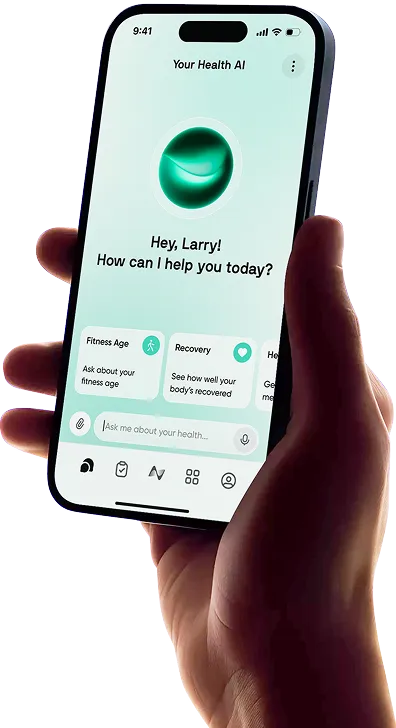
Neura Health is designed as a "Health Operating System" (HealthOS) to move users away from this narrow, stressful view of health data. Instead of viewing sleep as an isolated event, Neura integrates it into a 360° Health Sync environment. This means your sleep data is cross-referenced with your diet, activity levels, and medication history.
By using Neura, you can spot long-term trends rather than obsessing over a single bad night. If your sleep quality has deteriorated over the past week, Neura Al can highlight a direct correlation between that data and other factors, such as a new supplement you have been trialing.
This context-aware analysis ensures that questions are not seen in a vacuum. It cross-references historical data and current biometrics to provide answers tailored to your specific situation.
Neura’s approach prioritizes holistic integration, recognizing that sleep is deeply influenced by external factors like protein intake and exercise windows. This is supported by PhD-grade intelligence grounded in peer-reviewed research to ensure all guidance is evidence-based.
The system also provides proactive insights by analyzing data trends to generate smart notifications that keep users on track.
Finally, the platform maintains a hardware-agnostic strategy, integrating with over 100 devices to ensure users are never locked into a single brand's ecosystem.
Overcoming Sleep Tracker Anxiety
To break the cycle of data-induced stress, it is essential to reframe your relationship with technology and return to subjective self-assessment.
The primary goal is to shift from viewing data as a daily grade to viewing it as a broad trend. One effective strategy is to implement a "data blackout" period immediately upon waking.
By waiting at least an hour before checking your device, you allow your brain to register how it actually feels, free from the bias of a numerical score. This simple boundary helps re-establish the connection between your mind and your physical state.
Another vital step is education regarding the limitations of consumer technology. Most wearables are not medical-grade polysomnography machines; they estimate sleep stages based on movement and heart rate. Understanding that these numbers are approximations can reduce the pressure to achieve 100% accuracy.
If the data starts to dictate your mood or your willingness to engage in daily activities, it may be time to take a break from the tracker entirely for a week.
This "reset" allows you to practice sleep hygiene, such as maintaining a cool room and limiting blue light, without the looming threat of a digital judgment in the morning.

Final Thoughts: Overcoming Orthosomnia
Navigating the modern world of health data requires a delicate balance between being informed and being overwhelmed. The most effective orthosomnia treatment often involves a return to the basics of human intuition.
While technology provides a window into our biology, that window should not become a cage. Learning to ignore a "poor" score when you feel vibrant, or honoring a "good" score by resting when you feel depleted, is the ultimate act of health autonomy.
Achieving restorative rest is as much a psychological process as it is a physiological one. By setting strict boundaries on when and how you interact with your sleep metrics, you reduce the "performance pressure" that keeps the nervous system in a state of high alert.
True recovery happens in the absence of judgment. When we stop viewing sleep as a task to be optimized and start viewing it as a natural rhythm to be respected, the symptoms of anxiety begin to fade.
Ultimately, the best indicator of health is not a number on a dashboard but the quality of your waking life. If your tracker helps you identify a caffeine sensitivity or the benefits of a consistent bedtime, it is a valuable tool. However, if it causes you to lie awake worrying about your REM cycles, its utility has ended.
By prioritizing your own internal feedback over digital algorithms, you can reclaim the night and rediscover the simple, unquantified joy of a good night's sleep. Success in health is not about perfect data; it is about finding a sustainable harmony between the insights of science and the wisdom of your own body.
This transition from data-obsessed to data-informed is the final step in moving past the digital noise and into a life of genuine well-being.
Article FAQ
What is orthosomnia?
Orthosomnia is an unhealthy obsession with achieving "perfect" sleep data from wearables. Driven by a pursuit of digital metrics rather than how you actually feel, this fixation can cause enough stress to trigger secondary insomnia.
What is a sleep tracker?
A sleep tracker is a wearable device or application, such as a smart ring, watch, or smartphone app, that monitors rest patterns. These tools use sensors to track movement and heart rate to estimate the duration and quality of various sleep stages.
Which sleep tracker is most accurate?
Accuracy varies significantly by brand and sensor type. Most consumer devices are not medical-grade machines; they provide approximations based on movement and heart rate. It is often more effective to look at long-term trends across any reliable device rather than focusing on a single night's data.
How do I know if I have orthosomnia?
Signs include feeling failure when a sleep score is low even if you feel refreshed, or adjusting your daily life solely based on tracker data. It often involves a persistent need to reach specific numerical targets for REM or deep sleep.
Can a sleep tracker actually improve my sleep?
Yes, if the data is used to identify lifestyle patterns. For example, trackers can help you spot how late-night caffeine or stress impacts your rest, allowing you to make strategy-based changes to your evening routine.
How can I stop worrying about my sleep data?
Shift your focus from daily scores to broad weekly trends. Try implementing a "data blackout" by waiting an hour after waking before checking your device, allowing your brain to register how it actually feels without digital bias.