
How can I improve my sleep architecture? Actionable Insights with Neura
Sleep
Key Findings
Effective rest is defined by quality, not just duration. This guide breaks down sleep architecture into its critical components: Deep sleep for physical repair and REM for cognitive maintenance. The key insight is that specific habits drive these stages. By using Neura to correlate lifestyle choices with sleep data, users can engineer a night that truly restores them.

We spend one-third of our lives asleep, yet for many of us, that time feels like a locked black box. You close your eyes, time passes, and you wake up. Sometimes you feel refreshed, ready to conquer the world. Other times, despite clocking a solid eight hours, you wake up feeling like you were hit by a truck.
The difference lies not in the quantity of your sleep, but in the quality. It is about the structure of that rest, what is known as your sleep architecture.
Your sleep needs specific cycles to restore your body and mind. If the architectural structure is weak, the whole thing collapses.
Improving this structure is the single most effective lever you can pull for better cognitive performance, emotional stability, and physical longevity. This guide breaks down the mechanics of a perfect night and provides actionable steps to engineer your rest.
What is Sleep Architecture?

Sleep is not a uniform state of unconsciousness. It is a dynamic, active process where your brain cycles through distinct phases of electrical activity. This structural pattern is what scientists refer to as sleep architecture.
A healthy night consists of four to five complete sleep cycles, each lasting roughly 90 minutes. These cycles are composed of two main types of sleep: Rapid Eye Movement (REM) and Non-Rapid Eye Movement (NREM).
The flow between these stages is orchestrated by a complex interplay of neurotransmitters and hormones.
When this flow is uninterrupted, you wake up restored. When it is disrupted, you experience altered sleep architecture, leading to grogginess and cognitive deficits.
Sleep Architecture Stages Explained
Understanding the distinct roles of the sleep architecture stages is the first step toward optimization. Each stage serves a unique biological purpose.
Stage 1 (NREM 1): The Bridge
This is the lightest stage of sleep. It is the transition zone between wakefulness and slumber. Your brain waves begin to slow down from beta to alpha and theta. It usually lasts only 5 to 10 minutes. If you are easily awakened by a noise, you are likely in Stage 1.
Stage 2 (NREM 2): The Stabilizer
This is where you spend about 50% of your total sleep time. Your heart rate slows, your body temperature drops, and your brain produces "sleep spindles”, bursts of rapid rhythmic brain wave activity. These spindles are thought to play a key role in memory consolidation and protecting the brain from external noise.
Stage 3 (NREM 3): Deep Sleep
Also known as Slow Wave Sleep (SWS), this is the physical restoration stage. Your brain produces slow, high-amplitude delta waves. This is when the magic happens for your body. Growth hormone is released, tissues are repaired, and the glymphatic system flushes out toxins (like beta-amyloid) that accumulate during the day. If you wake up feeling physically broken, you likely missed out on this stage.
REM Sleep: The Therapist
Rapid Eye Movement sleep is the stage of vivid dreaming. Your brain becomes highly active, almost resembling a waking state, while your body remains paralyzed. REM is crucial for emotional regulation, learning, and creativity. It is when your brain processes the events of the day and files them away into long-term memory.


Sleep Architecture Tips & Hacks

You cannot force your brain into a specific stage, but you can create the perfect environment for it to happen naturally. Here are actionable sleep architecture hacks to optimize your cycles.
Master Thermal Regulation
Your core body temperature needs to drop by about 2-3 degrees Fahrenheit to initiate and maintain sleep. If your room is too warm, your body struggles to reach Deep sleep.
Set your thermostat between 65-68°F (18-20°C). Taking a warm bath 90 minutes before bed can also help; the rapid cooling effect when you get out signals to your body that it is time to sleep.
The Caffeine Cutoff
Caffeine has a half-life of roughly 5 to 6 hours. This means if you drink a coffee at 4 PM, half of that caffeine is still in your system at 10 PM.
While you might still be able to fall asleep, the presence of caffeine blocks adenosine receptors, which can significantly reduce the depth of your Deep sleep. Implement a strict cutoff at 12 PM or 2 PM to protect your architecture.
Light Hygiene
Light is the primary zeitgeber (time-giver) for your circadian rhythm. Blue light from screens suppresses melatonin production, tricking your brain into thinking it is still daytime. This delays sleep onset and reduces REM sleep.
Use blue-light blocking glasses after sunset and try to keep your bedroom pitch black. Even a small amount of light pollution can lead to fragmented sleep architecture.
Alcohol is Not a Sleep Aid
Many people use a "nightcap" to help them drift off. While alcohol acts as a sedative and can help you fall asleep faster (reduce sleep latency), it is disastrous for sleep quality.
As your body metabolizes the alcohol, it creates a rebound effect that fragments your sleep in the second half of the night and severely suppresses REM sleep.
Consistency is King
Your body loves routine. Going to bed and waking up at the same time every day, even on weekends, anchors your circadian rhythm.
This regularity trains your body to expect sleep at a certain time, allowing it to transition through the stages more efficiently. "Social jetlag," where you stay up late on Fridays and sleep in on Saturdays, confuses your biological clock.
Exercise Timing
Physical activity is excellent for increasing Deep sleep pressure. However, intense exercise too close to bedtime can raise your core temperature and cortisol levels, making it harder to fall asleep.
Aim to finish vigorous workouts at least 3 hours before bed. Gentle stretching or yoga in the evening can help transition the nervous system into a relaxed state.
The Wind-Down Protocol
You cannot go from 100 mph to zero in an instant. You need a buffer zone.
Dedicate the last hour of your day to a wind-down routine that does not involve work or stress. Read a fiction book, practice breathwork, or journal. This signals to your parasympathetic nervous system that it is safe to power down.
Improve Sleep Architecture with Neura
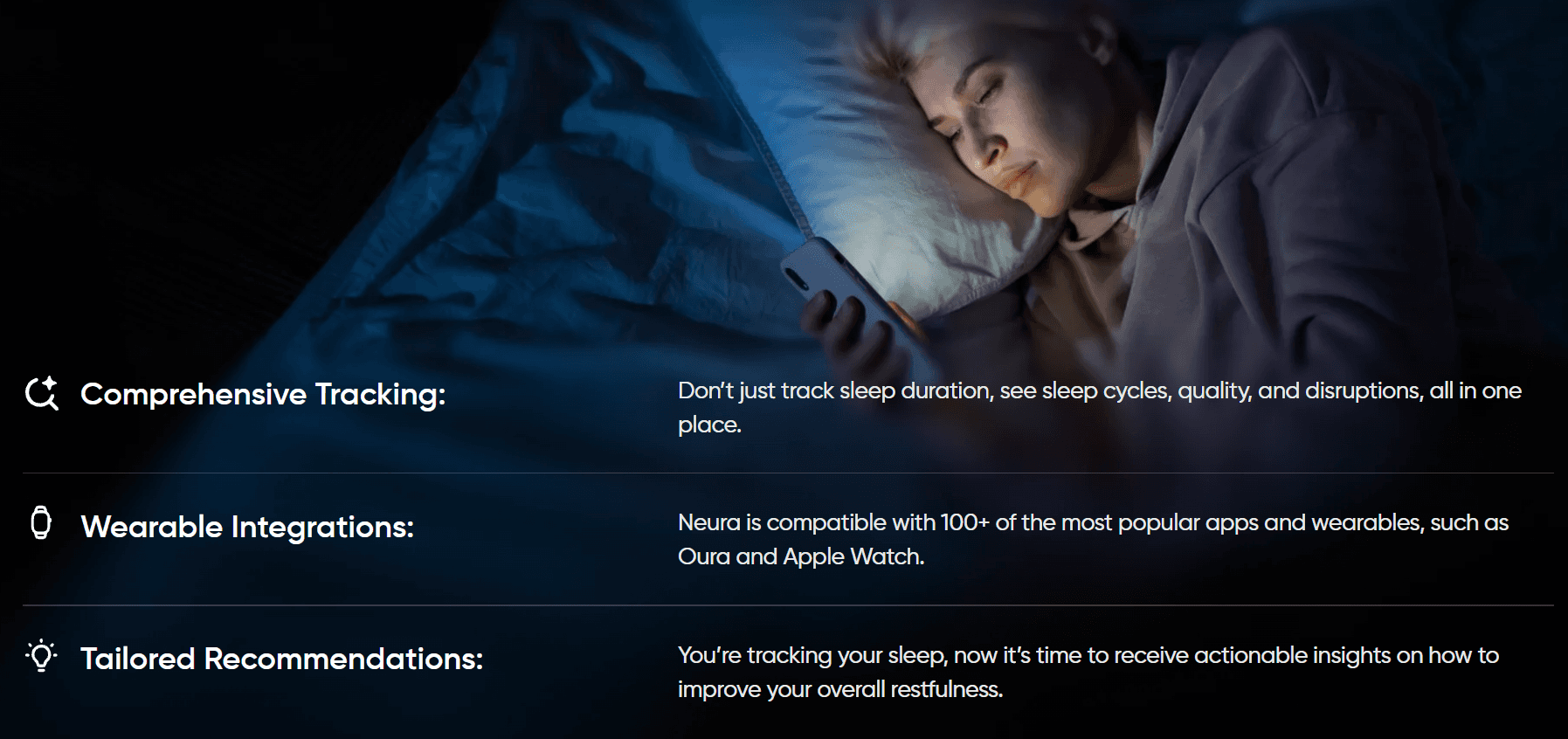
Improving your sleep is an engineering problem. To solve it, you need data. This is where Neura transforms from a passive tracker into an active sleep coach.
Aggregating the Full Picture
Neura pulls data from your sleep trackers (like Oura or Whoop) and combines it with your lifestyle inputs. This allows you to see the complete picture. You stop looking at your sleep score in isolation and start understanding the variables that influence it.
Correlating Habits with Stages
Neura’s ability to algorithmically identify correlations between diverse datasets is one of its most powerful features, revealing specific connections that you might otherwise overlook.
Neura might show you that on days you perform Zone 2 cardio, your Deep sleep increases by 15 minutes. Or it might reveal that eating dinner after 8 PM consistently reduces your HRV and delays REM onset. This transforms generic advice into personalized insights.
Tracking Trends Over Time
One bad night does not define your health. Neura helps you focus on the long-term trends. By viewing your sleep architecture data over weeks and months, you can see if your new "hacks" are actually working.
Are you consistently getting more REM sleep since you stopped drinking alcohol on weekdays? Neura provides the visual proof you need to stick to your new habits.



Final Thoughts: The Architecture of Sleep
Sleep is not a passive activity. It is a complex biological performance that requires preparation and respect. By understanding the architecture of sleep, you move from being a victim of your biology to being its master.
You do not have to accept grogginess as a normal part of life. By monitoring your stages, optimizing your environment, and using data to guide your decisions, you can build a structure of rest that supports high performance, emotional resilience, and long-term health.
The foundation of a great life is built in the bedroom, one cycle at a time.
Article FAQ
What is normal sleep architecture?
Normal sleep architecture consists of four to five distinct cycles per night, each lasting roughly 90 minutes. A healthy breakdown typically includes about 5% Stage 1 (light sleep), 50% Stage 2, 20% to 25% Deep Sleep (Stage 3), and 20% to 25% REM sleep.
What is abnormal sleep architecture?
Abnormal sleep architecture refers to disruptions in the natural flow of sleep cycles. This usually involves fragmented sleep, a significant reduction in Deep or REM stages, or frequent awakenings. It is often caused by disorders like sleep apnea, insomnia, or lifestyle factors like alcohol use.
How can you improve sleep architecture?
You can improve sleep architecture by maintaining a consistent wake-up time and keeping your bedroom cool and dark. Avoiding caffeine after 12 PM, limiting alcohol before bed, and establishing a relaxing wind-down routine are also proven methods to increase the quality of Deep and REM sleep.
Does age affect sleep architecture?
Yes, sleep architecture changes naturally as you age. Older adults typically experience a decrease in the amount of Deep sleep (Slow Wave Sleep) and REM sleep they get each night. They also tend to have more fragmented sleep with more frequent awakenings compared to younger adults.
What causes poor sleep architecture?
The most common causes include poor sleep hygiene, such as irregular schedules and blue light exposure at night. Substance use, particularly alcohol and caffeine, is a major disruptor. Medical conditions like sleep apnea, depression, and chronic pain also frequently alter natural sleep cycles.
Why is Deep sleep important?
Deep sleep is crucial for physical restoration. During this stage, the body repairs muscle tissue, strengthens the immune system, and releases growth hormones. It is also the phase where the brain's glymphatic system clears out metabolic waste, making it vital for long-term cognitive health.