Sex Hormone-Binding Globulin: Low vs High Signs, Testing, and Free Hormone Balance
Overview
Sex hormone-binding globulin, often shortened to SHBG, is a protein made by the liver that carries sex hormones like testosterone and estrogen through the bloodstream. It controls how much of these hormones are free and active versus bound and less available to tissues. When SHBG is too low or too high, free hormone levels can shift even if total hormone levels look normal.
Clinicians usually look at SHBG together with Testosterone and other sex hormone markers when they are trying to understand libido changes, androgen or estrogen symptoms, unexpected lab results, or metabolic health patterns.
What Sex Hormone-Binding Globulin is and where it is made
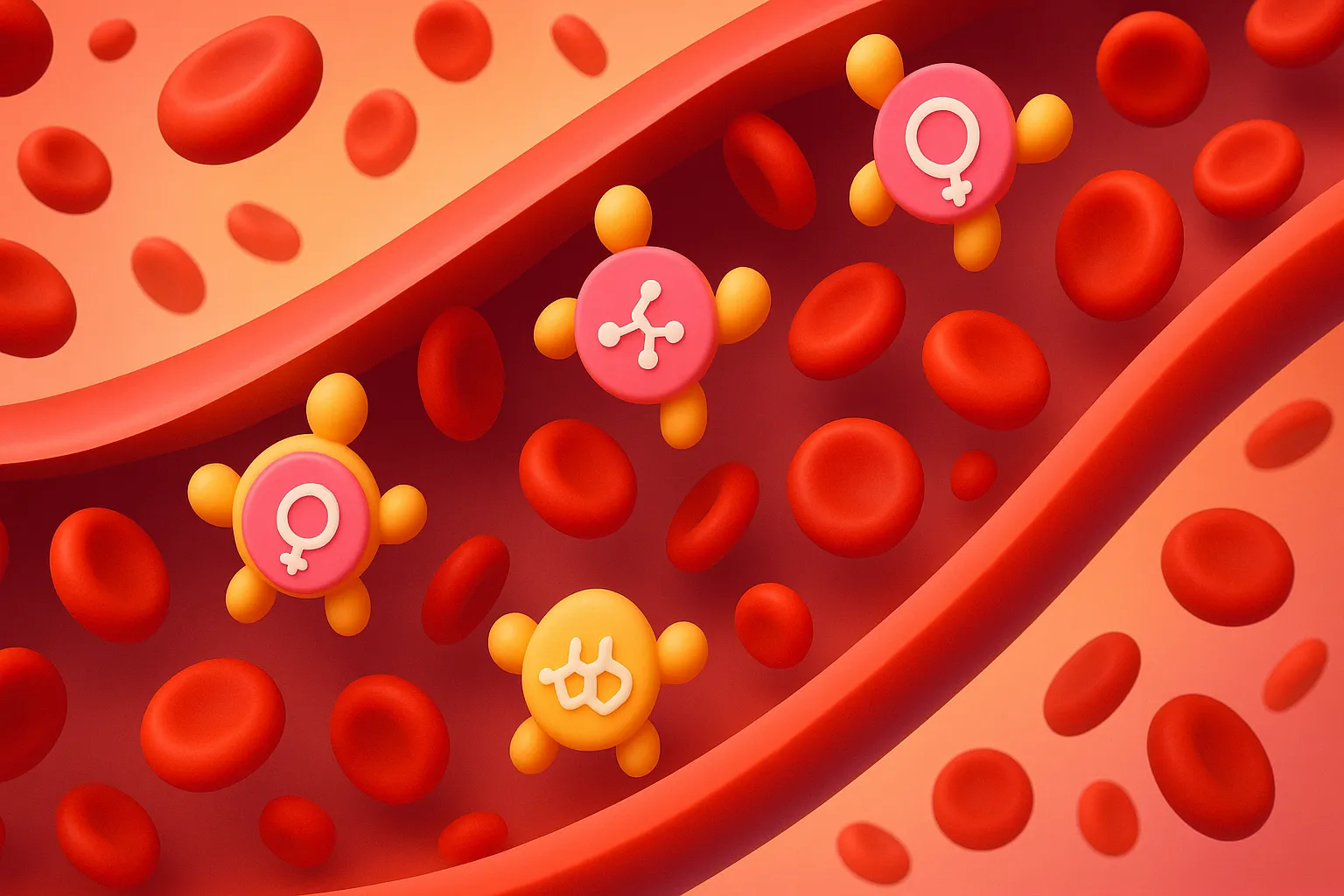
SHBG is a carrier protein made mainly by the liver.
It binds tightly to sex hormones such as testosterone and estradiol in the blood.
By binding hormones, SHBG limits how much is free to enter cells and signal tissues.
What Sex Hormone-Binding Globulin does in your body
Regulates the balance between total and free testosterone and estrogen.
Helps stabilize hormone delivery to tissues over time.
Influences libido, sexual function, and some symptoms of low or high androgens.
Affects metabolic health, since low SHBG often tracks with insulin resistance and higher cardiometabolic risk.
Provides extra context when total hormone levels do not match symptoms.
When testing Sex Hormone-Binding Globulin makes sense
Testosterone levels do not match symptoms, for example low libido with normal total testosterone.
Signs of androgen excess or deficiency in women, such as acne, excess hair growth, or hair thinning.
Evaluation of suspected polycystic ovary syndrome or metabolic syndrome.
Workup of low testosterone patterns in men, including suspected obesity or insulin resistance related changes.
Monitoring hormone therapy when free hormone levels need to be estimated more accurately.
Assessment of liver or thyroid related changes that could be affecting hormone binding.
How to think about high and low Sex Hormone-Binding Globulin results
This information is general and does not replace lab specific reference ranges or medical evaluation.
Low SHBG might be associated with:
Higher free testosterone for a given total level.
Features of insulin resistance, metabolic syndrome, or central weight gain.
Androgen excess symptoms in women when combined with high free androgens.
Increased long term risk of type 2 diabetes and cardiovascular disease in some studies.
Possible contributors include obesity, insulin resistance, type 2 diabetes, hypothyroidism, androgen therapy, some glucocorticoids, and liver conditions.
High SHBG might be associated with:
Lower free testosterone or estrogen for a given total level.
Symptoms of low androgens in men, such as reduced libido, erectile changes, or low energy, even if total testosterone looks normal.
Lighter periods or low estrogen symptoms in some women when free estrogen is low.
Possible contributors include hyperthyroidism, low body weight, some liver diseases, estrogen therapy, aging, and certain medications. Interpretation depends on how SHBG lines up with total hormone levels, symptoms, and other health factors.
What can influence your Sex Hormone-Binding Globulin levels
Body weight and fat distribution, especially central or visceral fat.
Insulin resistance, prediabetes, and type 2 diabetes.
Thyroid function, including both hypo and hyperthyroidism.
Liver health, since SHBG is made in the liver.
Sex hormones themselves, such as estrogen and androgens, and related therapies.
Age and sex, with SHBG often rising with age.
Medications including oral estrogens, some anticonvulsants, and androgens.
Nutrition patterns, very low calorie intake, and significant weight loss or gain.
When to talk to a healthcare provider about Sex Hormone-Binding Globulin
SHBG results that are well outside the reference range, especially when total hormone levels and symptoms do not match.
Persistent low libido, sexual dysfunction, or energy changes with unclear hormone patterns.
Signs of androgen excess in women or low testosterone symptoms in men.
Known thyroid, liver, or metabolic disease where SHBG may add useful context.
Questions about how to interpret free versus total testosterone or estrogen in your specific situation.
A clinician can combine SHBG, total hormone levels, calculated or measured free hormones, and your health history to decide whether observation, lifestyle changes, more testing, or treatment is appropriate.
Sex Hormone-Binding Globulin in one view
Sex hormone-binding globulin is a liver made carrier protein that shapes how much testosterone and estrogen are free and active at any moment. Low SHBG often travels with insulin resistance and higher free androgens, while high SHBG can mask low free hormone states even when total levels look normal. Because of this, SHBG is most useful when read alongside testosterone and related markers such as Testosterone and your symptoms, rather than being treated as a standalone target.