Parathyroid Hormone: Low vs High Signs, Testing, Calcium, and Bone Health
Overview
Parathyroid hormone, often shortened to PTH, is the main hormone that keeps blood calcium in a narrow range and coordinates how calcium moves between bone, kidneys, and the gut. When blood calcium drops, PTH rises to pull more calcium into the bloodstream and reduce losses in urine. When calcium is high, PTH normally falls. Over time, abnormal PTH levels can affect bone density, kidney stone risk, and aspects of cardiovascular health.
In practice, PTH is almost always interpreted together with Calcium so that changes in PTH can be matched to how stable or unstable blood calcium has been over time.
What Parathyroid Hormone is and where it is made
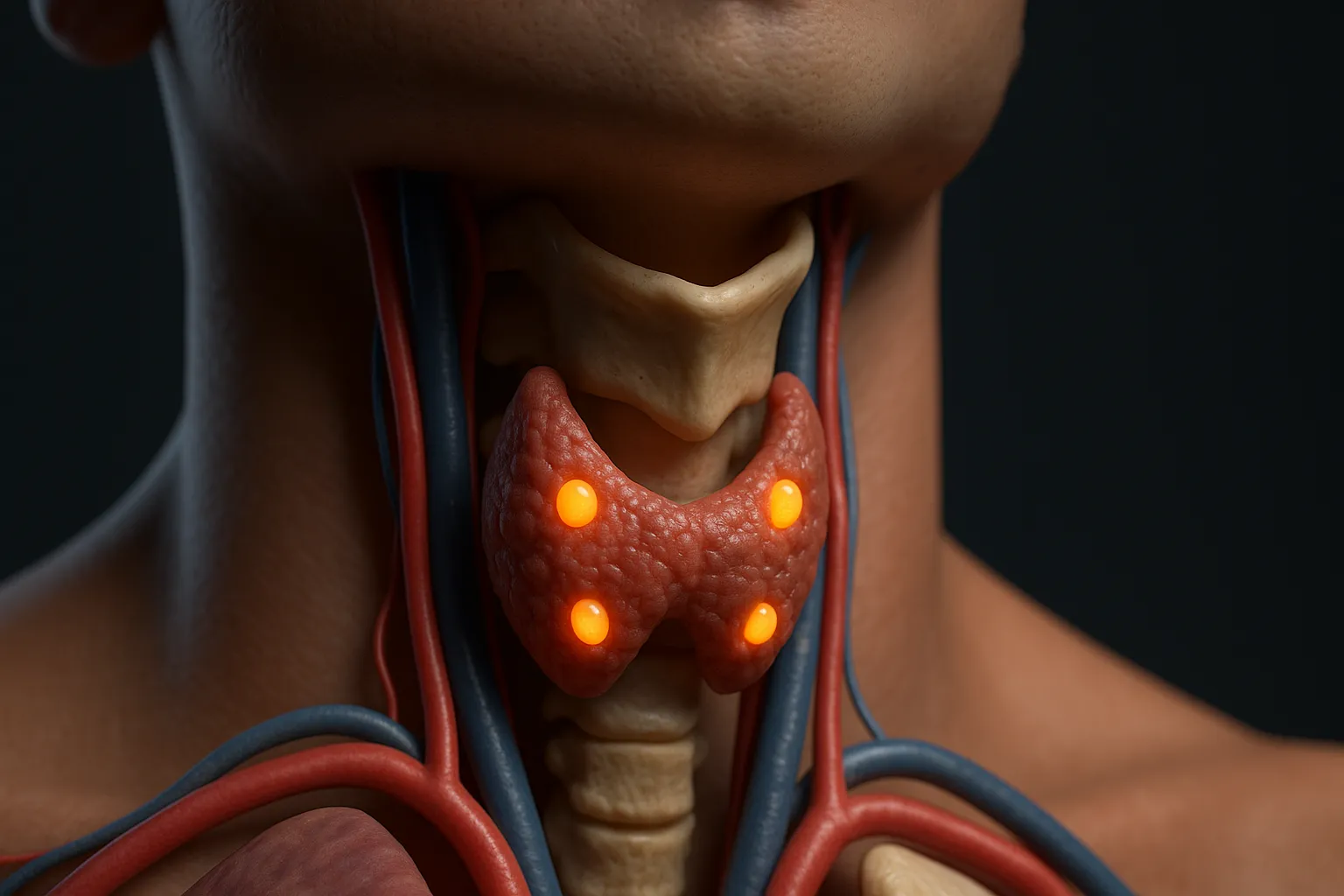
PTH is a peptide hormone produced by the parathyroid glands, which are small glands located behind the thyroid in the neck.
Its release is controlled mainly by the level of ionized calcium in the blood sensed by calcium sensitive receptors on parathyroid cells.
When blood calcium falls, PTH secretion increases. When calcium rises, PTH secretion normally decreases.
What Parathyroid Hormone does in your body
In bone, PTH increases bone turnover and releases calcium and phosphorus into the bloodstream.
In the kidneys, PTH reduces calcium loss in urine and increases phosphorus excretion.
PTH helps stimulate activation of vitamin D in the kidneys, which in turn allows the gut to absorb more calcium from food.
Through these actions, PTH keeps blood calcium in a tight range that is critical for nerve function, muscle contraction, and heart rhythm.
When testing Parathyroid Hormone makes sense
High or low blood calcium on routine labs, especially when confirmed on repeat tests.
Suspected primary hyperparathyroidism, such as high calcium with inappropriately high or normal PTH.
Evaluation of low calcium, including after neck surgery, in kidney disease, or with possible vitamin D deficiency.
Workup of low bone density, osteoporosis, or recurrent fractures when secondary causes are considered.
Assessment of mineral and bone disorders in chronic kidney disease.
How to think about high and low Parathyroid Hormone results
This information is general and does not replace lab specific reference ranges or medical evaluation.
Low PTH might be associated with:
Low calcium levels when the parathyroid glands are underactive or injured, such as after thyroid or neck surgery.
Genetic conditions or autoimmune disease that affect parathyroid gland development or function.
Excess calcium or vitamin D intake in some situations, where feedback suppresses PTH.
Symptoms of low calcium can include tingling around the mouth or in fingers, muscle cramps, or in more severe cases serious neuromuscular or cardiac issues.
High PTH might be associated with:
Primary hyperparathyroidism, usually with high calcium and inappropriately high or normal PTH, often from a benign parathyroid adenoma.
Secondary hyperparathyroidism, where PTH is high but calcium is normal or low, commonly due to vitamin D deficiency or chronic kidney disease.
Tertiary patterns in long standing kidney disease where parathyroid glands become overactive and PTH stays high even when calcium is normalized.
High PTH over time can contribute to reduced bone density, bone pain in some cases, and increased risk of kidney stones when calcium is also high.
What can influence your Parathyroid Hormone levels
Blood calcium levels, including changes from diet, supplements, or illness.
Vitamin D status and sun exposure or supplementation.
Kidney function, since the kidneys are involved in vitamin D activation and phosphorus handling.
Medications such as lithium, some diuretics, and high dose calcium or vitamin D products.
Prior neck surgery, radiation, or conditions affecting the thyroid and parathyroid area.
Chronic kidney disease related mineral and bone disorders.

When to talk to a healthcare provider about Parathyroid Hormone
PTH results that are outside the reference range together with abnormal calcium levels.
Persistent high calcium, kidney stones, or low bone density where primary hyperparathyroidism is a concern.
Low calcium symptoms such as tingling, cramping, or spasms, especially after neck surgery.
Chronic kidney disease with changing PTH, calcium, or phosphorus levels.
Questions about calcium and vitamin D supplement use when PTH or calcium are not in the ideal range.
An endocrinologist or kidney specialist can interpret PTH alongside calcium, vitamin D intake, kidney function, and imaging to decide whether observation, medication, or surgery is appropriate.
Parathyroid Hormone in one view
Parathyroid hormone is the central regulator of blood calcium, coordinating how bone, kidneys, and the gut respond when calcium drifts up or down. High or low PTH becomes most meaningful when viewed next to Calcium and trends over time, so decisions about treatment or surgery are best made with a specialist rather than based on a single isolated result.