Aldosterone: Low vs High Signs, Testing, Blood Pressure, and Electrolytes
Overview
Aldosterone is a hormone made by the adrenal glands that helps control blood pressure, blood volume, and key electrolytes such as sodium and potassium. It is part of the renin angiotensin aldosterone system that responds when blood pressure or blood volume drops and when sodium or potassium levels change. Too little or too much aldosterone over time can contribute to low blood pressure, high blood pressure, and shifts in potassium that affect muscles and the heart.
Clinicians usually interpret aldosterone together with Renin and blood pressure readings to understand how the renin angiotensin aldosterone system is behaving.
What Aldosterone is and where it is made
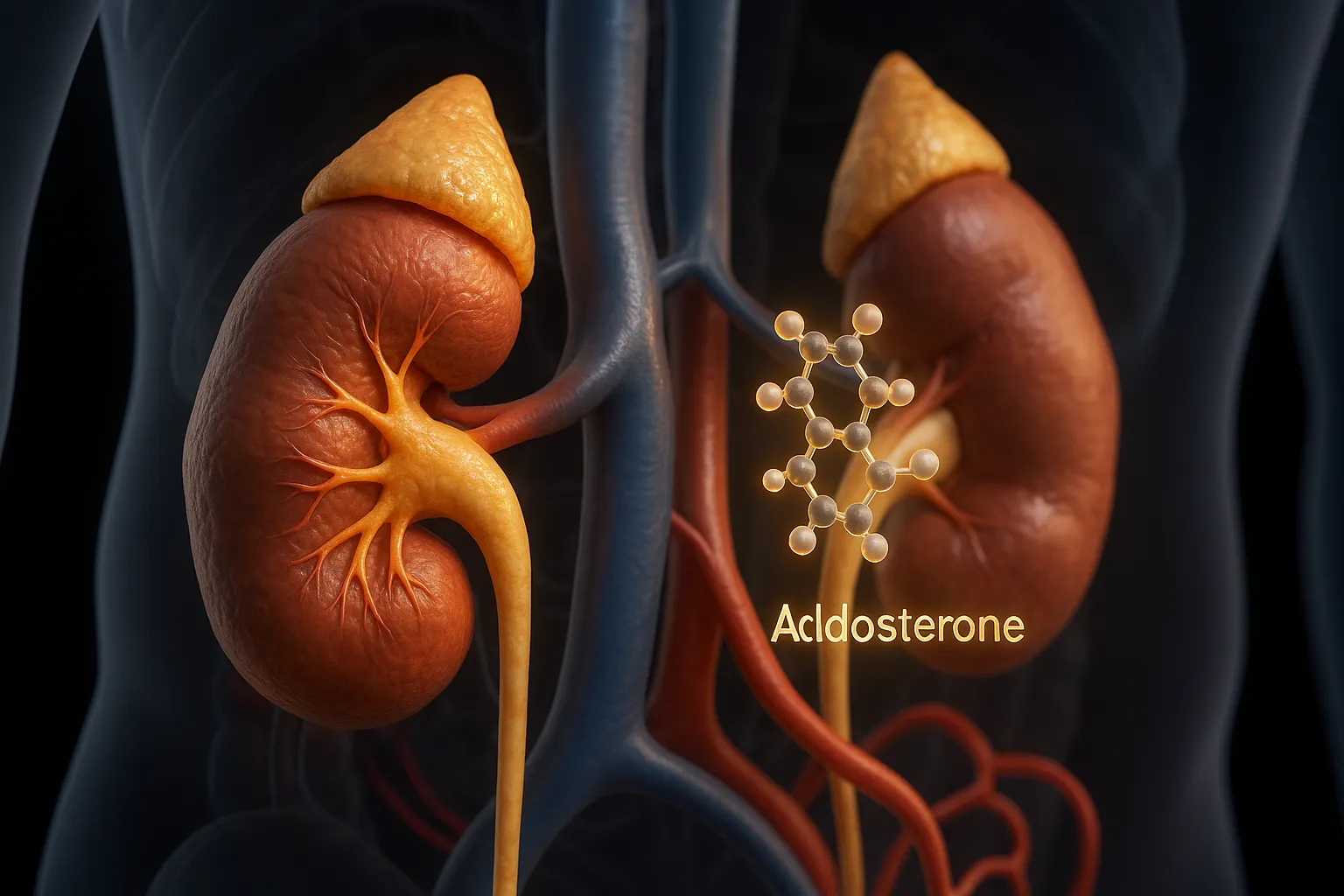
Aldosterone is a steroid hormone produced by the zona glomerulosa of the adrenal cortex on top of the kidneys.
Its release is mainly controlled by the renin angiotensin system, blood potassium levels, and to a lesser extent by ACTH from the pituitary.
Aldosterone acts mostly on the kidney tubules, where it adjusts how much sodium and potassium are kept or lost in urine.
What Aldosterone does in your body
Increases sodium reabsorption in the kidneys, helping retain salt and water and support blood volume and blood pressure.
Increases potassium excretion in urine, helping keep blood potassium in a safe range.
Influences acid base balance through effects on hydrogen ion handling in the kidneys.
Plays a role in long term blood pressure patterns and can contribute to hypertension when chronically high.
When testing Aldosterone makes sense
Evaluation of difficult to control or early onset high blood pressure, especially with low potassium.
Workup of suspected primary aldosteronism, where the adrenal glands make too much aldosterone.
Assessment of low blood pressure, dizziness, or salt craving when adrenal or renin aldosterone problems are suspected.
Follow up of known adrenal nodules or hyperplasia that may secrete aldosterone.
Monitoring after treatment for primary aldosteronism, such as adrenal surgery or targeted medications.
How to think about high and low Aldosterone results
This information is general and does not replace lab specific reference ranges, posture and salt intake rules, or medical evaluation.
Low aldosterone might be associated with:
Low blood pressure, dizziness on standing, and sometimes salt craving.
High potassium and low sodium in some adrenal related conditions.
Primary adrenal insufficiency or certain genetic or drug induced blocks in aldosterone production.
These patterns usually require careful endocrine and electrolyte evaluation and are not for self management.
High aldosterone might be associated with:
High blood pressure that is resistant to usual medications.
Low blood potassium, muscle weakness, cramps, or heart rhythm changes.
Primary aldosteronism, often from an adrenal adenoma or bilateral adrenal hyperplasia.
Secondary hyperaldosteronism in conditions that strongly activate the renin angiotensin system, such as some kidney or heart problems.
Because posture, salt intake, medications, and renin levels all affect aldosterone, abnormal results are often followed by repeat testing under standardized conditions and sometimes confirmatory tests.
What can influence your Aldosterone levels
Salt intake and overall sodium balance in the diet.
Blood volume and blood pressure, including dehydration or diuretic use.
Kidney function and renin production, which help drive aldosterone release.
Medications, especially blood pressure drugs such as ACE inhibitors, ARBs, diuretics, beta blockers, and mineralocorticoid receptor blockers.
Body position and time of day at the time of testing, which can change renin and aldosterone.
Adrenal gland health, including nodules, hyperplasia, or prior surgery.
Chronic heart, liver, or kidney conditions that alter fluid and hormone regulation.

When to talk to a healthcare provider about Aldosterone
High blood pressure that is hard to control or appears at a younger age than expected.
High blood pressure with low potassium on repeated tests.
Unexplained low blood pressure, dizziness on standing, or strong salt craving.
Aldosterone or aldosterone to renin ratio results that are outside the reference range.
Known adrenal nodules or prior adrenal surgery with new blood pressure or electrolyte changes.
A clinician, often an endocrinologist or hypertension specialist, can interpret aldosterone together with renin, electrolytes, blood pressure patterns, imaging, and medications to decide whether lifestyle changes, targeted drugs, further testing, or surgery are needed.
Aldosterone in one view
Aldosterone is an adrenal hormone that fine tunes sodium, potassium, and fluid balance to support blood pressure and organ perfusion. Problems arise when it is chronically too high or too low, which can drive resistant hypertension or low blood pressure and potassium shifts. Because aldosterone sits inside the renin angiotensin aldosterone system, it is most useful when read together with Renin, electrolytes, and blood pressure rather than treated as a stand alone target.