Growth Hormone: Low vs High Signs, Testing, Recovery, and Metabolic Health
Overview
Growth hormone is a pituitary hormone that helps drive tissue repair, muscle and bone building, and healthy body composition. It is released in pulses across the day, with large bursts during deep sleep and after some types of exercise. Clinicians usually think about growth hormone in the context of growth problems in children, suspected deficiency or excess in adults, changes in body composition, and some metabolic or performance concerns.
In practice, growth hormone status is often interpreted using IGF-1 levels, since IGF-1 reflects the longer term effect of growth hormone signaling rather than a single pulse in time.
What Growth Hormone is and where it is made
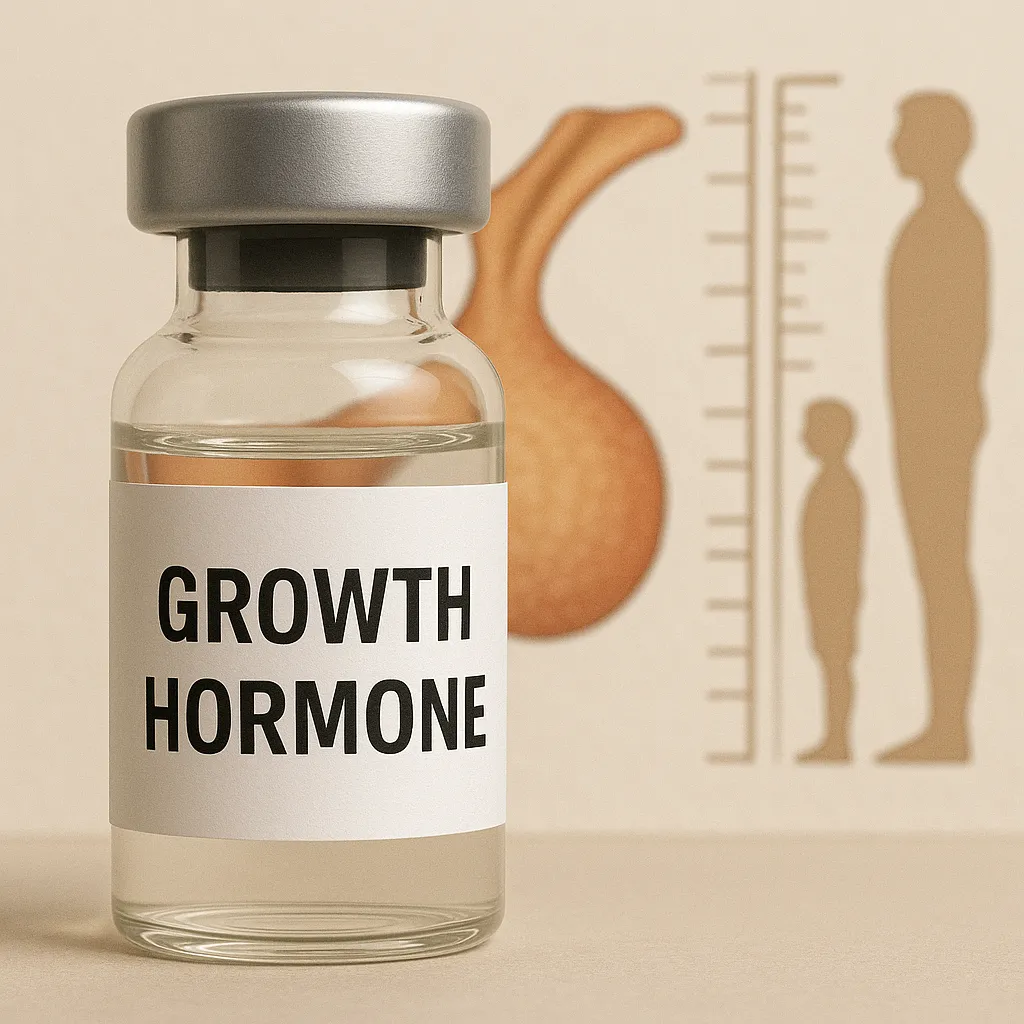
Growth hormone is a peptide hormone made by the pituitary gland at the base of the brain.
Its release is controlled by growth hormone releasing hormone and somatostatin from the hypothalamus and by feedback from IGF-1 and blood sugar.
It is secreted in pulses, with larger surges during deep sleep, after some forms of exercise, and in response to certain metabolic cues.
What Growth Hormone does in your body
Supports linear growth in children and adolescents by acting on bone and cartilage.
Helps maintain muscle mass and strength and supports tissue repair after training or injury.
Influences body composition by promoting fat breakdown and supporting lean mass.
Works with IGF-1 to support bone density and skeletal integrity.
Affects metabolic health, including how the body handles glucose and lipids.
Plays a role in how you recover from physical stress, illness, and regular training.
When testing Growth Hormone makes sense
Evaluation of short stature or growth delay in children when other causes have been considered.
Suspected growth hormone deficiency in adults, with symptoms such as reduced muscle mass, low exercise capacity, increased fat mass, or low bone density.
Suspected growth hormone excess, for example with changes in facial features, hand or foot size, sweating, or joint symptoms.
Workup of pituitary disease when other pituitary hormones are affected or imaging shows a pituitary lesion.
Follow up of known growth hormone related conditions or monitoring of prescribed growth hormone therapy.
Because growth hormone is released in pulses, random blood levels are often hard to interpret and are usually supported by IGF-1 and sometimes formal stimulation or suppression tests chosen by a specialist.
How to think about high and low Growth Hormone results
This information is general and does not replace lab specific reference ranges or medical evaluation.
Low growth hormone might be associated with:
Slower than expected height gain in children when compared with growth charts and family heights.
Reduced muscle mass or strength, increased fat mass, or low exercise capacity in adults.
Lower bone density or a history of low impact fractures, especially with other risk factors.
Low energy or reduced quality of life scores in some people with confirmed deficiency.
Possible contributors include pituitary damage from tumors, surgery, radiation, head injury, or genetic conditions that affect hormone production. Diagnosis usually relies on more than one simple blood test and is best handled by an endocrinologist.
High growth hormone might be associated with:
Accelerated growth in children when growth plates are still open.
Acromegaly in adults, with enlargement of hands, feet, jaw, or facial features, and sometimes joint pain or headaches.
Metabolic changes such as altered glucose handling, sweating, or changes in blood pressure.
High growth hormone is most often related to benign pituitary tumors that secrete hormone and needs careful endocrine and imaging evaluation. Random results alone can be misleading because of normal pulses, so confirmation with IGF-1 and specific suppression tests is typical.
What can influence your Growth Hormone levels
Sleep quality and duration, especially the amount of deep slow wave sleep.
Exercise type and intensity, particularly resistance training and some interval work.
Age, since growth hormone production naturally declines across adulthood.
Nutrition status, including undernutrition, very low calorie intake, or some patterns of fasting.
Blood sugar levels, since high glucose can suppress growth hormone release.
Obesity and insulin resistance, which can alter growth hormone secretion patterns.
Pituitary and hypothalamic health, including tumors, surgery, radiation, or trauma.
Certain medications and medical conditions that affect the pituitary or metabolic state.

When to talk to a healthcare provider about Growth Hormone
Concerns that a child is significantly shorter or growing more slowly than expected for age and family height.
Adult symptoms that suggest growth hormone deficiency or excess, such as major changes in body composition or enlargement of hands, feet, or facial features.
Known pituitary disease or prior brain or pituitary treatment with new symptoms like headaches, vision changes, or fatigue.
Questions about whether growth hormone or related therapies are appropriate, safe, or correctly dosed.
An endocrinologist can decide which tests to use, including IGF-1 and possible stimulation or suppression tests, and interpret results in context with imaging and other hormones.
Growth Hormone in one view
Growth hormone is a pituitary signal that supports growth in childhood and helps maintain muscle, bone, and body composition in adult life. Because it is released in pulses, its status is usually judged through patterns, IGF-1 levels, and specialized tests rather than a single random number, and any concern is best reviewed with an endocrinologist, often alongside structured training habits such as a Zone 2 endurance plan and adequate sleep and nutrition.