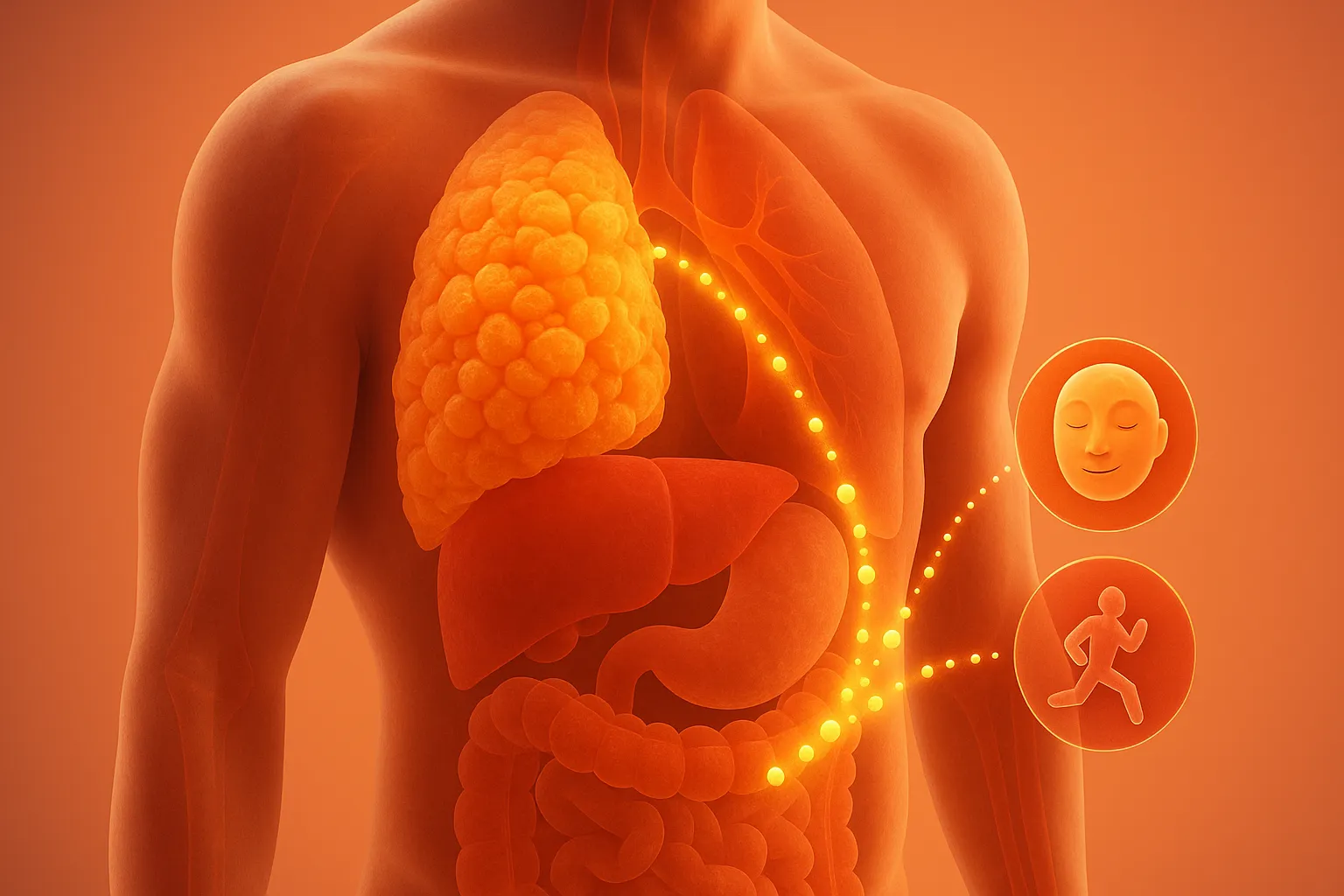
Cholecystokinin (CCK): Role, Appetite, Digestion, and When It Matters
Overview
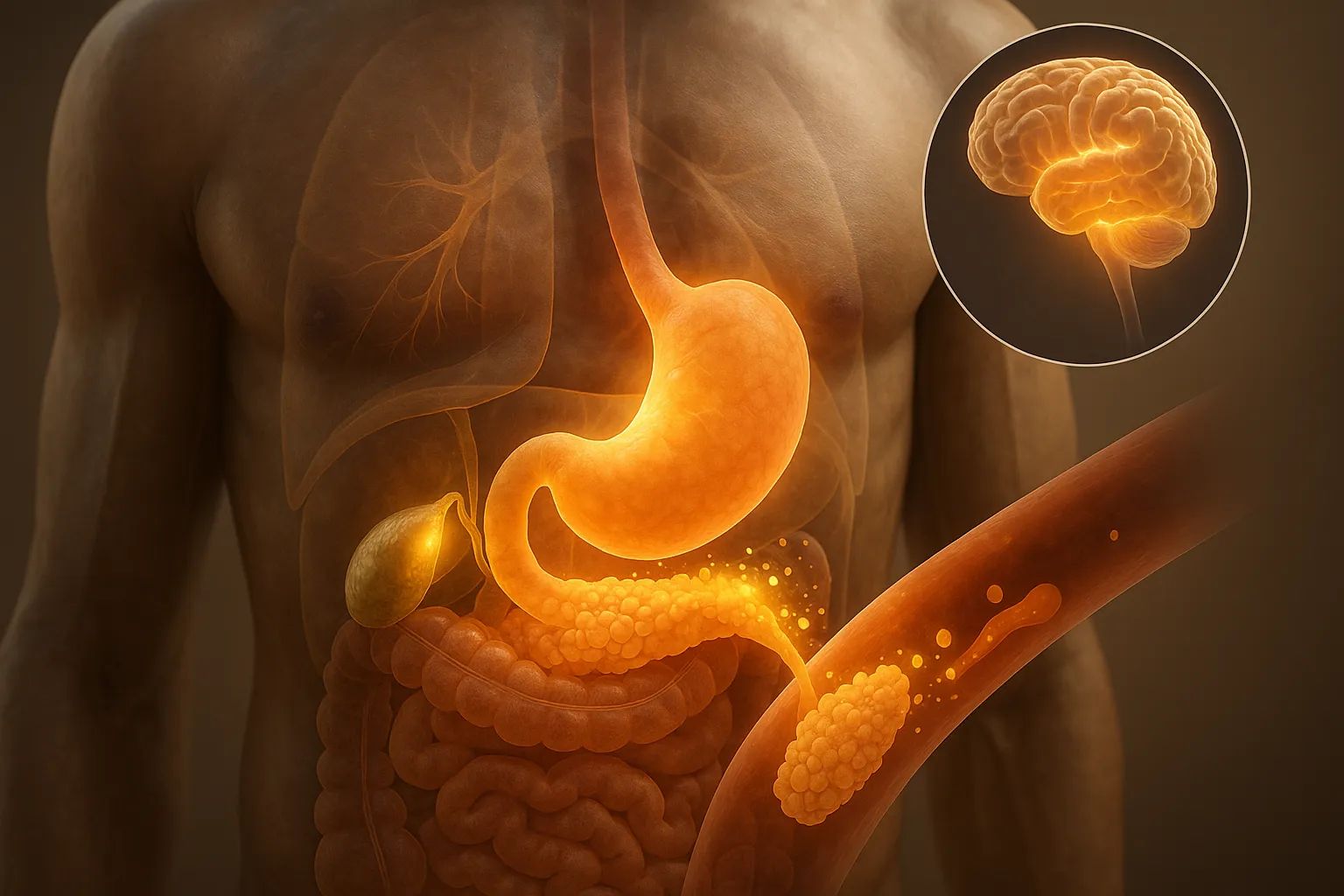
Cholecystokinin, usually shortened to CCK, is a hormone released by the small intestine when you eat, especially when a meal contains fat and protein. It tells the gallbladder to squeeze out bile, signals the pancreas to release digestive enzymes, and sends “you are getting full” messages to the brain. This helps you slow down, stop eating on time, and digest food more smoothly.
CCK works alongside other gut hormones that shape appetite and blood sugar, such as GLP-1, so it is part of a wider network rather than a solo fullness switch.
What Cholecystokinin (CCK) is and where it is made
CCK is a peptide hormone made by cells in the upper small intestine.
It is released into the blood when partially digested food, especially fat and protein, moves from the stomach into the small intestine.
CCK also signals through nerves that connect the gut and the brain, adding to the feeling of fullness.
What CCK does in your body
Triggers the gallbladder to contract and release bile, which helps break down fats.
Stimulates the pancreas to release digestive enzymes to break down fats, proteins, and carbohydrates.
Sends satiety (fullness) signals to the brain so you feel satisfied and tend to stop eating.
Slows stomach emptying so food moves at a manageable pace into the intestine, which can support more stable blood sugar and digestive comfort.
When Cholecystokinin (CCK) comes into the picture
CCK is not part of standard blood panels. Instead, it comes up in discussions around:
How fullness and satiety signals work and why eating slowly matters.
Gallbladder function, bile flow, and trouble digesting fatty foods.
Research on appetite, obesity, and gut–brain signaling.
Specialized tests of gallbladder function where a CCK like drug is given during imaging to see how well the gallbladder squeezes.
In everyday care, doctors usually evaluate digestion and appetite using symptoms, ultrasound or other imaging, and standard labs rather than a direct CCK level.
How to think about higher vs lower Cholecystokinin activity
There is no routine “high CCK” or “low CCK” blood test in clinic, so patterns are understood more through symptoms and context than through a specific number.
Higher or more sensitive CCK activity might be associated with:
Feeling full with smaller portions.
Slower eating and more natural meal endings.
In some people, upper abdominal discomfort or cramping when the gallbladder contracts strongly, especially if gallstones are present.
Lower or less effective CCK activity might be associated with:
Weaker fullness signals, particularly for rich or fatty meals.
Eating larger portions before feeling satisfied.
Less efficient bile and enzyme release, which may contribute to bloating or discomfort with higher fat meals in some conditions.
These patterns are broad and are usually interpreted alongside gallbladder history, diet, weight trends, and other digestive symptoms.
What can influence your Cholecystokinin (CCK) system
Meal composition: fat and protein are strong triggers for CCK. Very low calorie or highly processed snacks may give weaker satiety signals.
Eating speed: fast eating leaves less time for CCK and other satiety hormones to build and reach the brain.
Gallbladder status: if the gallbladder has stones, poor function, or has been removed, CCK driven bile release and symptoms can change.
Gut health and motility: conditions affecting the small intestine, gut lining, or gut nerves can alter CCK release and perception.
Body weight and metabolic state: long term weight gain and insulin resistance can shift overall appetite hormone patterns and how fullness signals feel.
Medications and surgery: some drugs and gastrointestinal surgeries can change gut hormone patterns, bile flow, and meal tolerance.
When to talk to a healthcare provider about Cholecystokinin related issues
It is worth discussing with a clinician if you notice:
Bloating, pain, or cramping after fatty meals, especially under the right rib cage.
Very weak fullness signals that lead to frequent overeating or feeling uncomfortably full.
Sudden changes in appetite, meal tolerance, or post meal discomfort.
A history of gallbladder disease, gallstones, or gallbladder removal with ongoing digestive issues.
A clinician can help decide whether symptoms are more likely due to gallbladder problems, bile or enzyme issues, other gut disorders, or lifestyle factors, and can use imaging, standard labs, and diet review to guide next steps.
Cholecystokinin (CCK) in one view
Cholecystokinin is a gut hormone released when you eat that helps you digest fat, triggers bile and enzyme release, slows stomach emptying, and tells your brain you are getting full. It is not usually measured directly; its effects show up in how comfortably you handle meals, how easily you feel satisfied, and how your digestion behaves, alongside other signals like Glucagon and Insulin. If fullness, portion size, or post meal comfort feel off, the next step is to review diet patterns, gallbladder history, and metabolic markers with a clinician and build a plan that supports calmer, more reliable satiety rather than chasing CCK as a lab value.