
Melatonin: Sleep Timing, Light, Testing, and Circadian Rhythm
Overview
Melatonin is a hormone made in the brain that helps signal when it is time to sleep and when it is time to be awake. Levels are normally low during the day, rise in the evening when it gets dark, and stay higher through the night, acting as a timing signal rather than a sedative. Clinicians think about melatonin when there are delayed bedtimes, difficulty falling asleep at the desired hour, jet lag, shift work issues, or suspected circadian rhythm disorders.
In many routines, melatonin is best supported by a structured light and timing plan such as a Circadian Entrainment approach, rather than pills alone.
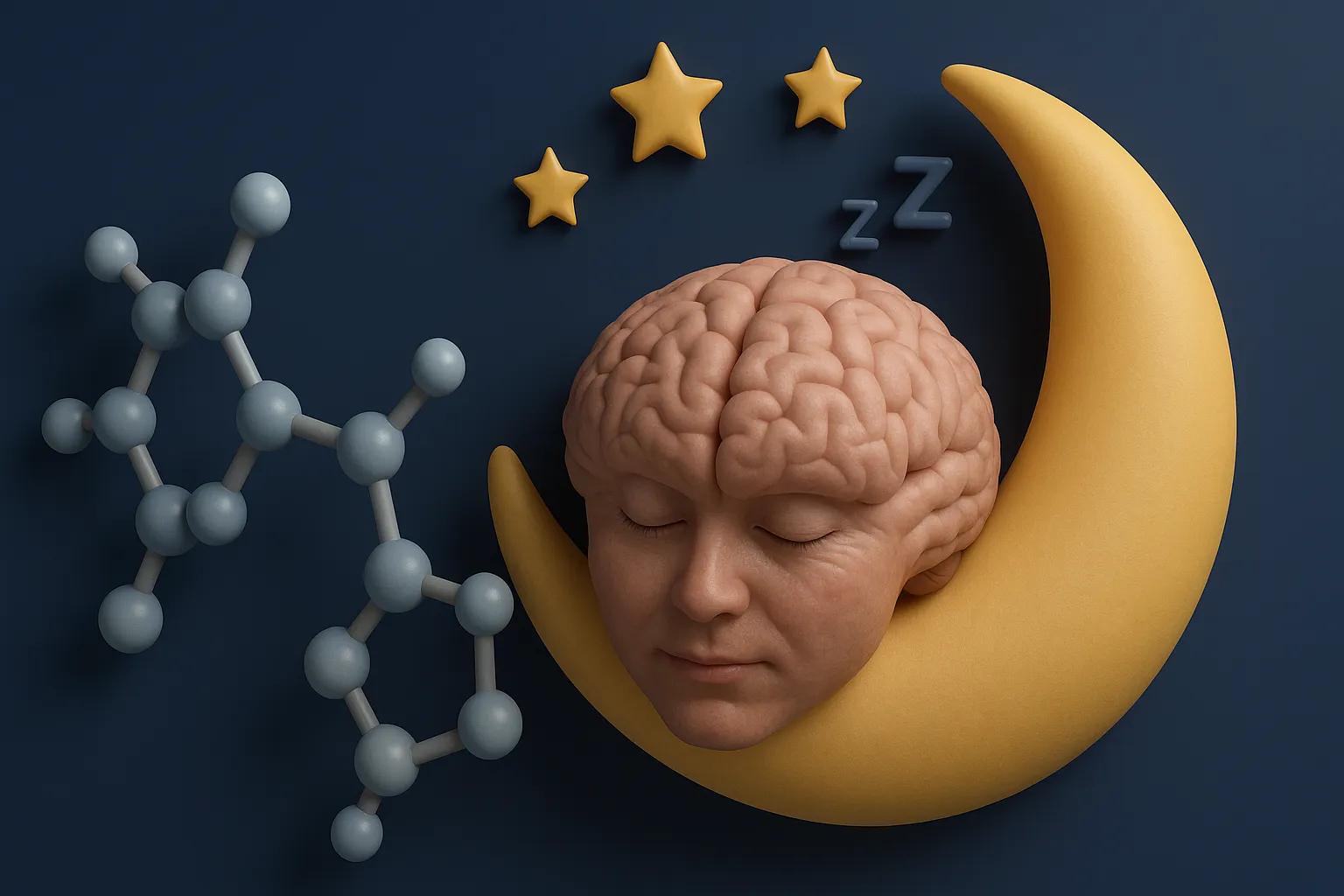
What Melatonin is and where it is made
Melatonin is a hormone produced mainly by the pineal gland, a small structure deep in the brain.
Its release is controlled by the brain’s circadian clock, which receives light and dark signals through the eyes.
Darkness increases melatonin production, while light, especially in the blue spectrum, suppresses it.
What Melatonin does in your body
Signals to the brain and body that it is biological night and helps coordinate sleep timing.
Helps align internal rhythms such as body temperature and some hormone cycles with the day night cycle.
Supports sleep onset and can modestly improve sleep continuity when timing is appropriate.
Plays a role in adjusting the body clock after time zone shifts or changes in schedule.
May influence antioxidant and immune pathways, although these effects are still being studied.
When testing Melatonin makes sense
Suspected circadian rhythm sleep wake disorders such as delayed sleep phase or non 24 hour sleep patterns.
Complex insomnia cases where timing versus depth of sleep needs to be separated.
Evaluation of melatonin secretion patterns with dim light melatonin onset testing in specialized centers.
Research or specialist clinics that are mapping circadian phase for light or timing based treatments.
Routine melatonin testing is not part of standard sleep or primary care panels and is usually reserved for specialist contexts.
How to think about high and low Melatonin results
This information is general and does not replace lab specific methods, timing rules, or medical evaluation.
Low melatonin at night might be associated with:
Exposure to bright or blue rich light in the evening and at night.
Shift work, jet lag, or highly irregular sleep schedules.
Some forms of insomnia where the body clock is delayed or misaligned.
Possible age related decline in peak overnight levels in some individuals.
High melatonin at unexpected times might be associated with:
Sampling at or after the natural nightly peak when high values are normal.
Use of melatonin supplements, especially close to the time of testing.
Rare pineal or other neurologic conditions in some specialist evaluations.
Because melatonin levels vary strongly by time of day and light exposure, a single value without precise timing and conditions is often hard to interpret. Patterns across several samples are usually more informative than one result.
What can influence your Melatonin levels
Evening and nighttime light exposure, especially from screens and overhead lighting.
Daytime light exposure, particularly morning outdoor light, which helps set the circadian clock.
Sleep schedule regularity and consistency of wake time.
Shift work, night work, and frequent time zone changes.
Melatonin supplements, both timing and dose.
Some medications that affect serotonin or melatonin pathways.
Age and certain neurologic or eye conditions that change light signaling to the brain.

When to talk to a healthcare provider about Melatonin
Persistent difficulty falling asleep at a desired time for weeks to months.
Strong night owl patterns that cause problems with work, school, or daily functioning.
Ongoing jet lag like symptoms or sleep problems related to shift work.
Questions about whether and how to use melatonin supplements safely and effectively.
Concern that sleep issues may be part of a broader neurologic or psychiatric condition.
A clinician or sleep specialist can help decide whether melatonin testing is needed, or whether focusing on light, schedule, and behavior changes will address most of the problem without lab work.
Melatonin in one view
Melatonin is a darkness linked hormone that helps the brain know when it is night, shaping sleep timing and circadian rhythm more than raw sleep depth. Its levels depend heavily on light exposure, schedule, and supplements, so results are most useful when tied to a clear timing protocol, often alongside a structured Sleep Optimization Routine, rather than used in isolation.