Fasting Glucose: What Your Morning Blood Sugar Says About Metabolic Health
Overview
Fasting glucose is the blood sugar value your lab checks after you have gone without food for several hours, usually overnight. It gives a snapshot of how your body handles sugar when you are at rest, without a recent meal in the way. In this glossary you will see what fasting glucose actually measures, how it fits together with markers like HbA1c, Insulin, and HOMA-IR, how to think about high and low results without panic, which habits and health conditions can nudge the number up or down, how a Blood Sugar Stabilization style approach can help, and when it is time to walk your result through with a clinician instead of guessing alone.
What fasting glucose is and why it matters
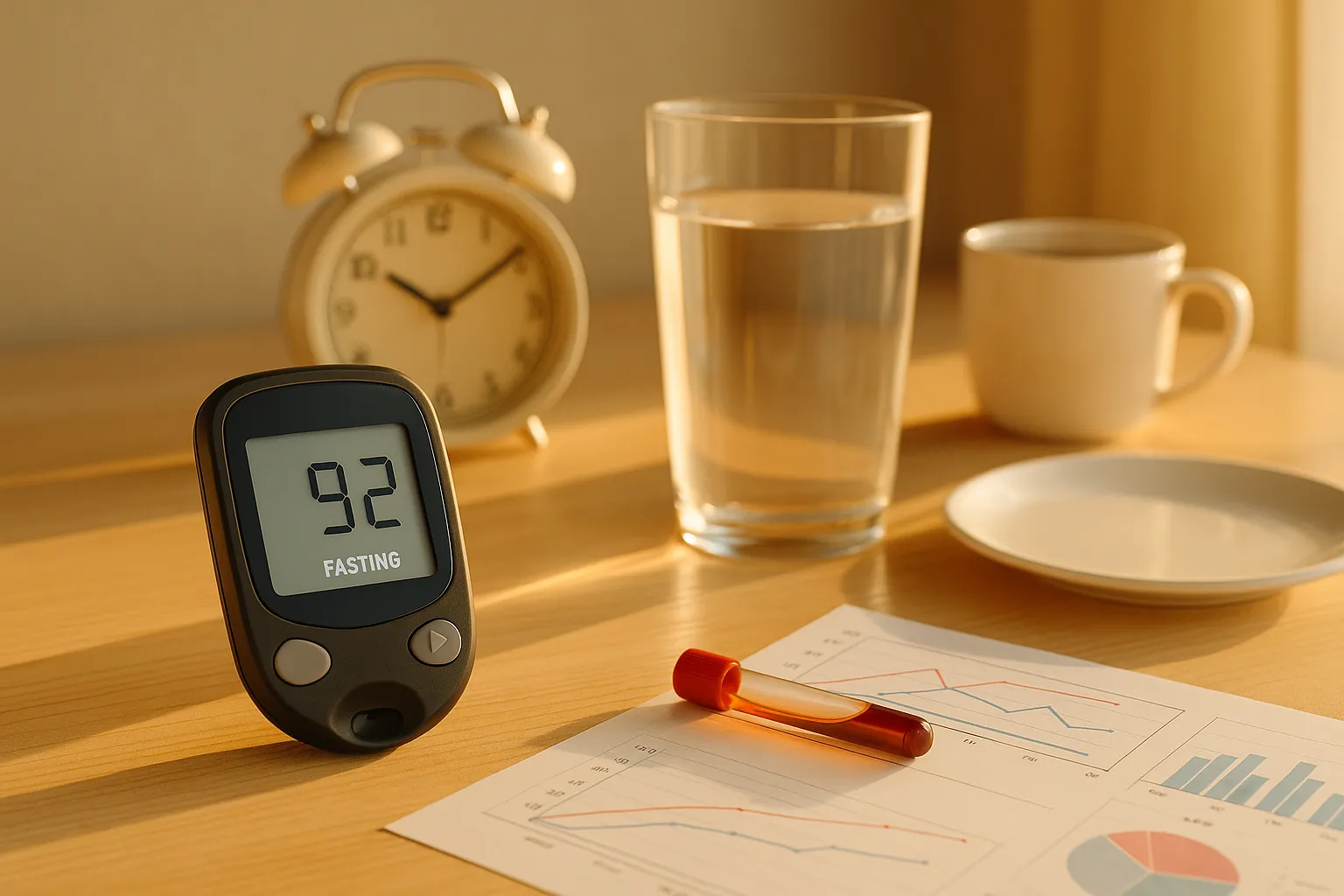
Fasting glucose is the amount of glucose circulating in your bloodstream after a period without eating, typically 8 hours or more. It reflects how well your body keeps blood sugar in a healthy range when you are not actively digesting food.
In simple terms:
your liver drips glucose into the blood between meals
your pancreas releases insulin to keep that glucose in check
fasting glucose is where the balance between sugar release and insulin response settles when you are at rest
If fasting glucose drifts higher over time, it can be a sign that your body is becoming less responsive to insulin or that your liver is releasing more glucose than ideal. That is why fasting glucose is used to screen for prediabetes and diabetes and to flag early metabolic stress before more obvious symptoms show up.
What your fasting glucose result can tell you
Your fasting glucose value can help answer questions like:
Is my baseline blood sugar control likely in a healthy range, on the edge, or clearly off track
Am I drifting toward prediabetes or diabetes
Do my daily habits around food, movement, weight, stress, and sleep seem to be supporting or straining my glucose control
How does this number line up with my HbA1c, insulin levels, and family history
On its own, fasting glucose is not perfect. Some people keep a normal fasting value while their blood sugar spikes high after meals. Others show elevated fasting glucose early. That is why it is most useful when you see it next to HbA1c, insulin related markers, lipids, blood pressure, and your real life patterns.
How to read high and low fasting glucose
Fasting glucose works best as a guidepost rather than a pass or fail stamp.
When fasting glucose is high
Higher fasting glucose often means:
your body is having a harder time keeping blood sugar in range between meals
your cells may be less responsive to insulin, so the pancreas has to work harder
extra glucose is circulating longer than ideal, putting more strain on blood vessels, nerves, kidneys, and other organs over time
In many people this shows up alongside central weight gain, higher triglycerides, lower HDL cholesterol, higher blood pressure, and a family history of type 2 diabetes. It is a clear early signal that your metabolism would benefit from support, not a reason to panic or give up.
When fasting glucose is low
Lower fasting glucose can mean different things depending on the context:
in many generally healthy people, a normal or slightly lower fasting value simply reflects good glucose control
in someone on insulin or certain diabetes medications, low fasting glucose can signal overtreatment and carries a risk of hypoglycemia
very low values with symptoms like shakiness, sweating, or confusion require prompt medical attention
Low fasting glucose is less common as a problem in people who are not on glucose lowering drugs, but when it shows up with concerning symptoms, it should be discussed with a clinician.
What can affect your fasting glucose result
Fasting glucose responds to both short term choices and long term patterns. Things that commonly move it include:
Food quality and timing
Frequent intake of sugary drinks, refined carbs, and large late night meals can keep fasting glucose elevated over time. Shifting toward more protein, fiber, and balanced meals, and giving your body a decent overnight break from food can help.Weight and where you carry it
Extra fat around the abdomen is closely linked with insulin resistance and higher fasting glucose. Gradual weight loss and building or maintaining muscle mass often improve fasting values as part of wider metabolic changes.Movement and fitness
Regular activity, especially a mix of walking, cardio, and resistance training, helps muscles use glucose more effectively and can lower fasting levels. Long stretches of sedentary time tend to push things the other way.Sleep and stress
Poor sleep and chronic stress can raise stress hormones, which in turn nudge fasting glucose higher. Improving sleep routines and stress management can make a real difference over time.Medications and medical conditions
Steroids, some psychiatric medications, and certain other drugs can raise blood sugar. Conditions like polycystic ovary syndrome, obstructive sleep apnea, and liver disease can also affect fasting glucose control.Test conditions
Not truly fasting, being sick, or getting tested after an unusually heavy meal day can all temporarily change the result. Trends over several tests are usually more helpful than a single value taken at a weird time.

When to talk to a healthcare provider about fasting glucose
It is especially important to discuss your fasting glucose with a clinician when:
Your result is clearly above the normal range on more than one test
Fasting glucose is high together with an elevated HbA1c, high triglycerides, central weight gain, or high blood pressure
You have a strong family history of type 2 diabetes or heart disease and your number is drifting upward over time
Your fasting glucose is low and you have symptoms of hypoglycemia, or you take glucose lowering medications
A clinician can look at fasting glucose alongside HbA1c, insulin and HOMA-IR, lipids, kidney function, blood pressure, and your personal history. Together you can decide whether to focus on structured lifestyle changes, consider medication, or both, and how often to recheck labs.
Fasting glucose in one view
Fasting glucose is your baseline blood sugar after a stretch without food and gives a simple window into how your body is handling glucose at rest. On its own it does not tell the whole story, but together with HbA1c, insulin related markers, lipids, and your daily habits it helps flag early metabolic stress before bigger problems show up. Persistently high fasting glucose is a nudge to clean up food quality, move more, improve sleep and stress, and work with a clinician on a plan that protects your long term metabolic, cardiovascular, and kidney health.