
Pine Bark Extract for Circulation, Antioxidant Support, and Focus: What It Does and How to Use It
Overview
Pine bark extract is a concentrated source of polyphenols taken from the bark of certain pine trees. The most famous branded form is Pycnogenol. People usually take it for circulation support, antioxidant protection, and sometimes for mental clarity and focus.
You will see pine bark extract in “vascular support,” “cognitive support,” and “healthy aging” formulas. Most of what it does is quiet background work: helping blood vessels function better and handling oxidative stress from daily life, not creating a big obvious buzz like a stimulant.
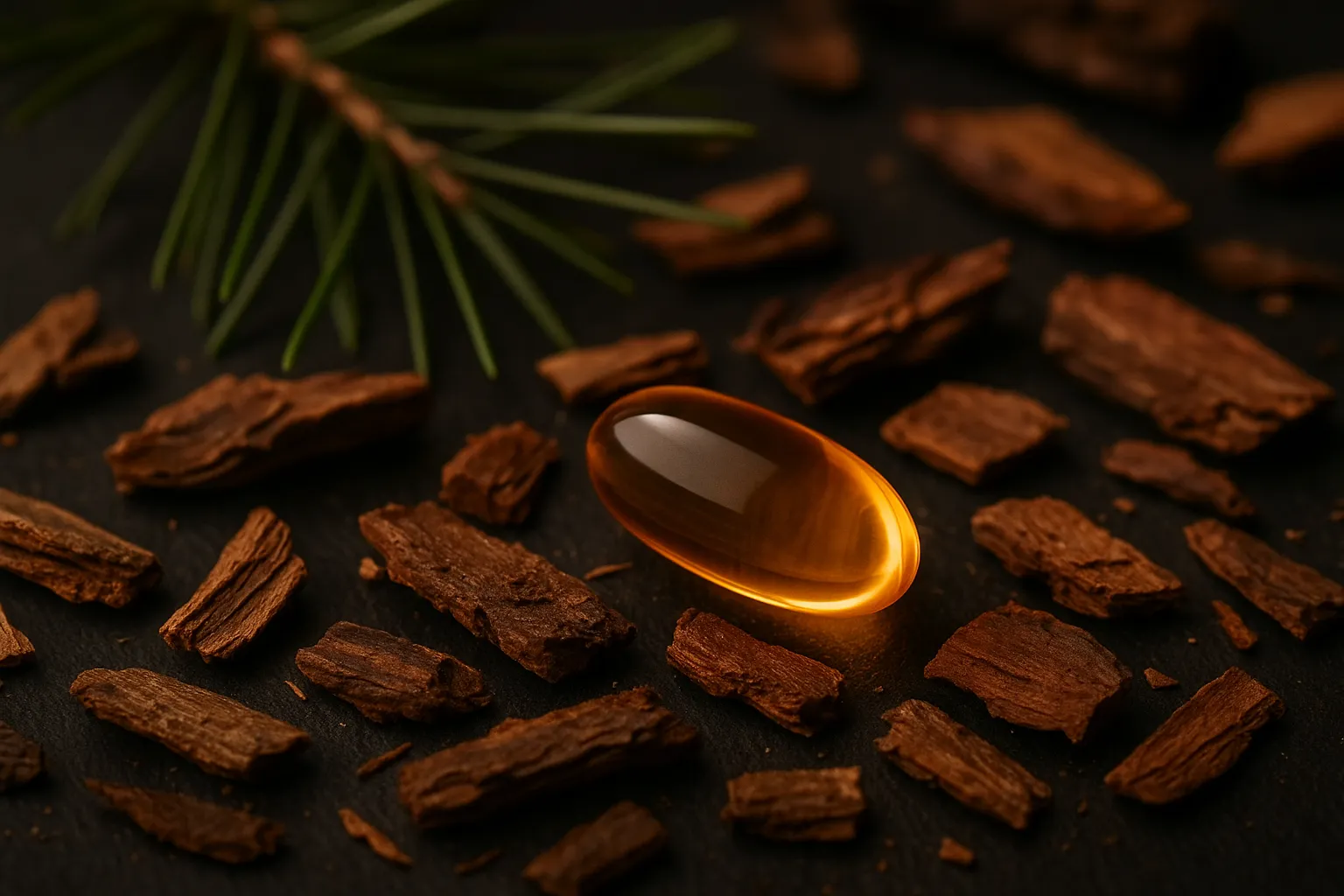
What Pine Bark Extract is and how it works
Pine bark extract is rich in proanthocyanidins and other polyphenols. These compounds act as antioxidants and also support the inner lining of blood vessels, called the endothelium. Healthier endothelium can mean better vessel relaxation, more comfortable circulation, and less damage from oxidative stress over time.
Supplements usually provide a standardized extract at a clear milligram dose. Pine bark extract is often layered on top of heart friendly eating patterns like a Mediterranean style diet that already focuses on fruits, vegetables, whole grains, and healthy fats.

What you may notice when you take Pine Bark Extract
More comfortable circulation
People who respond often notice that heavy legs feel a bit lighter and long days sitting or standing feel less draining. Hands and feet may feel a little warmer. The effect is subtle. It usually feels like “circulation is easier” rather than a strong drug effect.
Support for blood pressure and vessel health habits
Pine bark extract is not a blood pressure medication, but some people use it as part of a heart health plan. It may help the vessel lining work more smoothly and support elastic arteries when you are also working on salt intake, movement, and weight. Clinicians tracking cardiovascular risk look mostly at blood pressure and lipids like LDL-C, while pine bark sits in the background as a helper.
Clearer head and focus on busy days
Because it supports blood flow and helps handle oxidative stress, some people feel a small bump in mental clarity, especially in long work blocks. It is not like caffeine. It is more “my brain feels a little less foggy” than “I am wired.”
Skin and microcirculation support
Better microcirculation and antioxidant support can show up in the skin as well. Over time, users sometimes describe a more even tone and less “tired” looking skin, especially when they pair pine bark with sunscreen and an anti inflammatory way of eating. Background inflammation and oxidative stress matter here, so pine bark usually sits next to an Inflammation Reduction Routine, not instead of it.
Reality check
Pine bark extract will not fix uncontrolled blood pressure, erase vascular disease, or transform cognition on its own. It works as a small extra layer on top of good basics. If nutrition, sleep, stress, and movement are off, a capsule will not make up the gap.
How to test it
A realistic test window for pine bark extract is 6 to 8 weeks. Vascular and antioxidant shifts are slow.
Pick one main goal such as “less heavy legs after work,” “extra support for my heart while I work on diet,” or “slightly clearer head on long workdays.” Keeping the goal simple makes it easier to judge whether it helps.
Most supplements provide between 50 and 200 mg per day of standardized pine bark extract or Pycnogenol. Many people start at 50 to 100 mg daily with food and only consider higher doses if they tolerate it well and have a clear reason. It is often taken once per day with breakfast or lunch.
During your trial, track how your legs and feet feel at the end of the day, how your head feels after long focus blocks, skin comfort in sun and wind, and overall energy after stressful weeks. If you and your clinician already monitor inflammation, pine bark might be one small support under a plan that also tracks hs-CRP and other markers.
If after a steady 6 to 8 weeks you notice no difference at all in comfort, focus, or your broader plan, pine bark extract may not be worth keeping.
Safety, dosing and who should skip it
Because pine bark extract affects blood vessels, platelets, and oxidative stress, context matters.
Blood thinners and bleeding risk
Pine bark extract may have mild antiplatelet or blood thinning effects. If you are on anticoagulants, antiplatelet medications, or have a history of bleeding problems, do not start pine bark extract on your own. Any supplement that can change clotting should be cleared with the clinician who manages your medications.
Blood pressure medications
If you already use medicine for high blood pressure and your numbers are tightly controlled, it is smart to talk with your clinician before adding pine bark extract. Supporting vessel dilation on top of existing drugs can shift pressure lower in some people, and you may need closer monitoring.
Allergy and sensitivity
If you have known allergies to pine, tree pollens, or tree derived products, be cautious. While the extract is from bark, highly sensitive people sometimes react to related materials. If you develop rash, itching, swelling, or breathing changes after starting, stop and seek care.
Pregnancy and breastfeeding
There is limited safety data on concentrated pine bark extract in pregnancy and breastfeeding. Normal use of foods rich in polyphenols is fine, but high dose extracts should only be used if a clinician clearly recommends them for a specific reason.
New or unexplained cardiovascular symptoms
If you have new chest pain, shortness of breath, leg swelling, or neurologic symptoms, pine bark extract is not the right first step. You need an urgent medical evaluation. Using supplements to “smooth over” those signs can delay vital care.
Quality
Look for products that state the plant source, standardization (for example, a specific percent polyphenols or OPCs), and exact milligram dose. Third party testing is important because plant extracts can vary widely in potency and contamination risk. Opaque packaging and proper storage help protect delicate polyphenols from light and heat. Avoid proprietary blends that hide how much pine bark extract you actually get.
Final Thoughts: Pine bark extract
Pine bark extract is a polyphenol rich supplement used for antioxidant support, blood vessel comfort, and a small lift in focus and recovery. People who respond often notice lighter legs, slightly warmer hands and feet, and a less “foggy” head on demanding days, especially when they are already working on heart healthy nutrition, movement, and stress. Typical doses range from 50 to 200 mg per day with food, taken consistently for at least 6 to 8 weeks. It is usually well tolerated, but people on blood thinners, blood pressure medications, or with cardiovascular red flags should involve their clinician before adding it. Pine bark extract works best as a minor upgrade inside a solid cardiovascular and lifestyle plan, not as the main engine of change.