
LDL Cholesterol (LDL-C): What It Is, High vs Low, and How To Read Your Results
Overview
LDL-C is the cholesterol number that usually gets bolded on your lab report. It shows how much cholesterol is packed inside LDL particles in your blood and gives one important view of heart and artery risk, but not the whole story. In this glossary you will see what LDL-C actually measures, how it fits together with markers like ApoB, Triglycerides, HDL-C, and hs-CRP, how to think about high and low values without spiraling, what can push LDL-C up or down over time, and when a conversation with a clinician is more useful than trying to decode the number on your own.
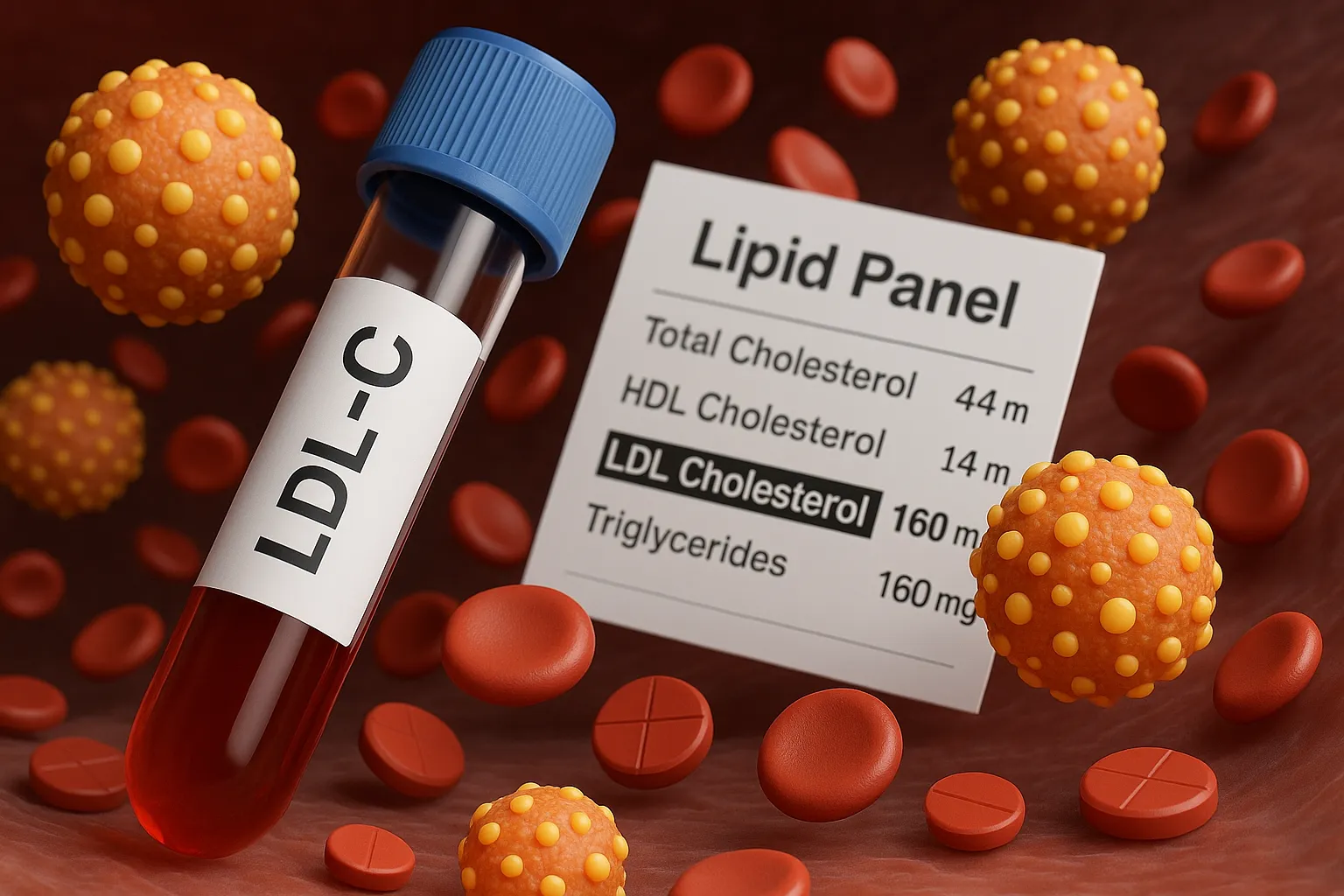
What LDL-C is and why it matters
LDL-C stands for low density lipoprotein cholesterol. LDL particles are tiny carriers that move cholesterol and other fats from your liver out to the rest of your body.
LDL-C measures how much cholesterol cargo is inside all of those LDL particles in a given amount of blood. A few simple ideas help:
Each LDL particle carries some cholesterol inside it
LDL-C adds up the cholesterol content inside all those particles
It does not directly tell you how many LDL particles are there
Plaque in arteries tends to build up when too many cholesterol carrying particles spend too much time in the bloodstream and slip into the artery wall. That is why LDL-C is linked with cardiovascular risk. A clearly higher LDL-C often means more cholesterol is moving around in particles that can interact with your arteries over the long term.
What your LDL-C result can tell you
Your LDL-C number is most helpful as a guide, not a verdict. Used well, it can help you and your clinician answer questions like:
Is my long term heart and artery risk probably higher or lower than it needs to be
Are my current food, movement, and weight patterns helping keep risk in check, or working against me
Does my cholesterol pattern fit with my family history and the rest of my labs, or is something out of sync
Do we likely have enough room to focus on lifestyle first, or should we talk about medication alongside lifestyle
On its own, LDL-C cannot tell you everything. In context with other lipids, metabolic markers, and your habits, it becomes a useful indicator of how much strain your arteries may be under and how aggressive your prevention plan should be.
How to read high and low LDL-C
LDL-C works best as a signal to explore, not something to panic about.
When LDL-C is high
A higher LDL-C often means:
More cholesterol is being carried in atherogenic particles than is ideal for long term artery health
There may be background issues such as insulin resistance, metabolic syndrome, type 2 diabetes, central weight gain, high triglycerides, or low HDL-C
Your genes may be pushing your cholesterol higher than average, especially if LDL-C has been high from a young age or is high despite thoughtful habits
A high LDL-C is your system tapping you on the shoulder. It is a prompt to take prevention seriously, look honestly at food quality and weight trends, pay attention to blood sugar and blood pressure, and decide with a clinician whether lifestyle alone is enough or whether medication should be part of the plan.
When LDL-C is low
A lower LDL-C usually means:
Nutrition, weight, and medication strategies are doing a good job reducing the cholesterol load on your arteries
In someone on cholesterol lowering medication, low LDL-C is often the intended goal
Very low LDL-C without a clear reason is less common and worth checking, especially if you feel unwell, are losing weight without trying, or have other concerning symptoms
If LDL-C has come down together with better patterns in other risk markers, it generally signals that your current prevention approach is working.
What can affect your LDL-C result
LDL-C can move up or down over weeks to months.
Common things that nudge it include:
Food pattern
Regular intake of ultra processed foods, high calorie meals, and a lot of saturated or trans fat tends to push LDL-C up. More fiber, whole foods, and healthier fat sources often help bring it down.Weight and where you carry it
Weight gain, especially around the middle, usually worsens lipids and metabolic health. Gradual weight loss and building or maintaining muscle mass can improve LDL-C as part of an overall shift.Medications and hormones
Cholesterol lowering drugs, hormone therapy, and thyroid treatment can all change LDL-C. Sometimes this is helpful and planned, sometimes it signals a need to adjust treatment.Metabolic and kidney health
Poorly controlled diabetes, low thyroid function, or kidney conditions can nudge LDL-C in the wrong direction. Treating the underlying condition often improves the cholesterol picture too.Illness and inflammation
Being acutely sick or inflamed can temporarily distort lipid values. One odd high or low result during a bad infection is less meaningful than a trend over time.How and when the test was done
Fasting versus non fasting matters more for triglycerides, but knowing when and what you last ate, and whether you were feeling well, helps put the entire lipid panel in context.
Because so many levers can move LDL-C, trends and patterns are more useful than reacting to a single reading in isolation.


When to talk to a healthcare provider about LDL-C
A proper conversation with a clinician is especially important when:
LDL-C is clearly above the lab range and stays high on repeat tests
LDL-C is high together with other concerns such as high ApoB, high triglycerides, low HDL-C, elevated hs-CRP, smoking, high blood pressure, or a strong family history of early heart disease
You are unsure whether lifestyle changes are likely to be enough or whether medication should be on the table
LDL-C is very low without an obvious reason, especially if you feel unwell, are losing weight, or have other worrying symptoms
A good clinician will not just say “good” or “bad.” They can line up LDL-C next to your other lipids, blood pressure, glucose control, kidney and thyroid function, and family story, then help you choose next steps that fit your life. That might mean focusing on food and movement first, adding medication, or adjusting a current regimen rather than starting from scratch.
LDL-C in one view
LDL-C is the classic cholesterol number that shows how much cholesterol is riding inside LDL particles, not how many particles are on the road. It cannot describe your entire cardiovascular risk by itself, but alongside ApoB, HDL-C, triglycerides, metabolic markers, and your day to day habits, it becomes a useful guide to how hard your arteries may be working.
A clearly elevated LDL-C is not a final verdict, it is an early chance to adjust food choices, movement, weight, sleep, stress, and, when appropriate, medication so your long term heart and metabolic risk moves in a safer direction. The most helpful question is not “Is this number good or bad,” but “How does this LDL-C result fit with the rest of my markers and my real life, and what is the next small step that actually changes my risk over time."