Grape Seed Extract for Circulation and Collagen: Antioxidants, Blood Flow, Dosing, Safety
Overview
Grape seed extract is a concentrated source of polyphenols, especially OPCs (oligomeric proanthocyanidins), taken from the seeds of grapes. People usually take it for blood vessel support, general antioxidant protection, and sometimes for skin and collagen health.
You will often see grape seed extract positioned as a way to help the body deal with oxidative stress that comes from everyday life: processed food, pollution, UV exposure, long stress periods, and high blood sugar swings. It shows up in “vascular support,” “heart health,” and “beauty from within” formulas.
What Grape Seed Extract is and how it works
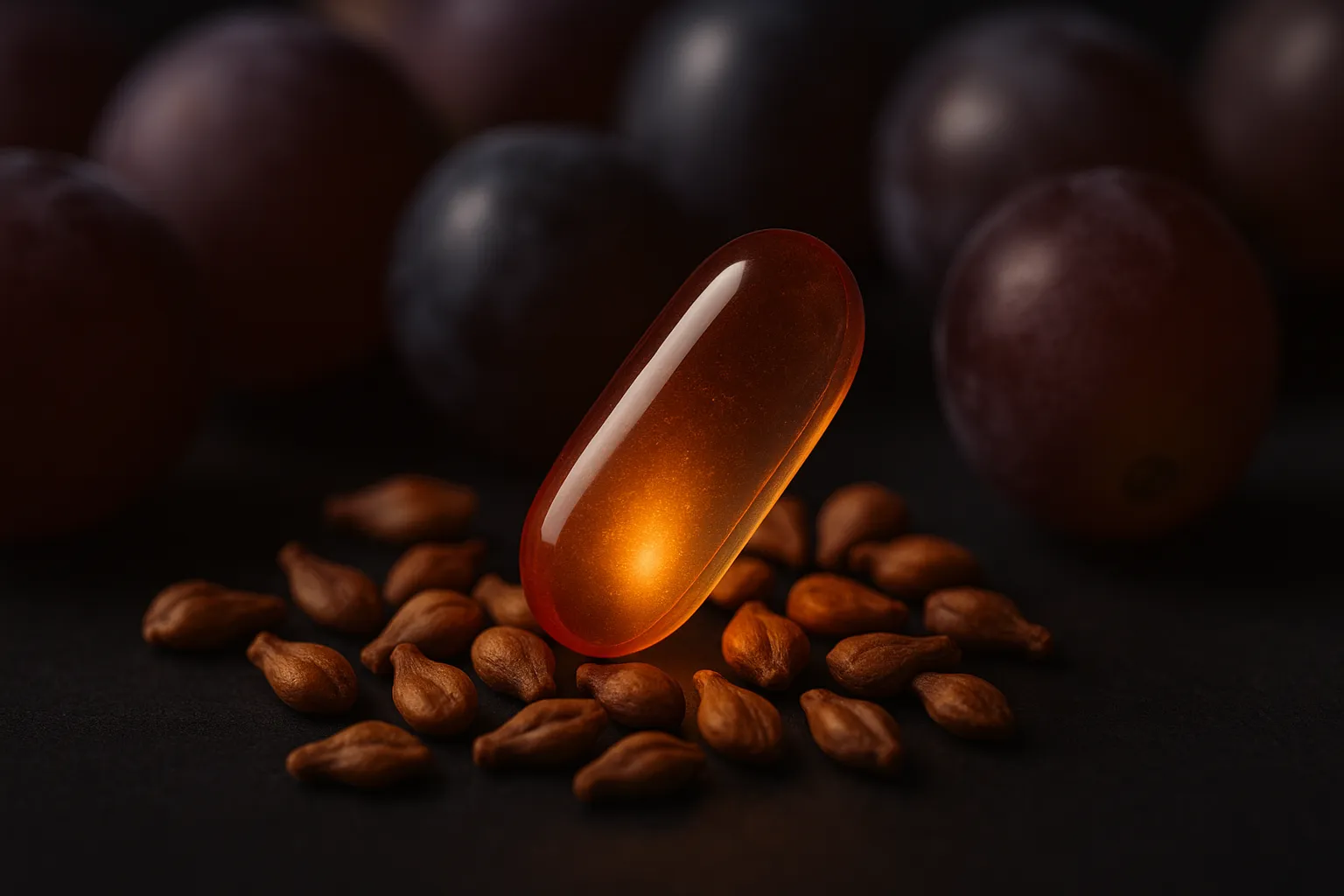
Grape seed extract is made by concentrating active compounds from the seeds of grapes, usually standardized to a certain percentage of OPCs. These OPCs act as antioxidants and can also support blood vessel tone and capillary strength.
In the body, grape seed polyphenols help neutralize free radicals and support the inner lining of blood vessels. That lining, the endothelium, plays a key role in healthy blood flow, blood pressure control, and how “stiff” or relaxed your vessels feel over time.
Grape seed extract is often paired with heart friendly food patterns like a Mediterranean style diet that already includes fruits, vegetables, olive oil, and healthy fats.

What you may notice when you take Grape Seed Extract
Calmer, more comfortable circulation
People who respond often notice their hands and feet feel a bit warmer, heavy legs feel less “draggy,” and long days on their feet are slightly more comfortable. It is subtle, but for some it feels like blood flow is a little smoother, especially when they also work on walking, movement breaks, and salt intake.
Support for blood pressure and heart health habits
Grape seed extract is not a blood pressure drug, but it is sometimes used as a gentle helper inside a heart health plan. Some people working on blood pressure, LDL-C, and overall cardiovascular risk add it on top of diet, movement, and weight loss. Clinicians may track markers like LDL C or other lipids as part of the big picture, while grape seed extract is more of a supporting character than the star.
Skin and collagen support
Because OPCs interact with collagen and blood vessels in the skin, some people notice that their skin feels a bit less reactive and looks slightly more even over time. This usually goes along with better sunscreen use, sleep, and an anti inflammatory style of eating. It is not a fast “beauty pill,” but it can add a small layer of support from inside.
Antioxidant backup on stressful days
If your life includes long screen days, poor air quality, or periods of high stress, grape seed extract can act as extra antioxidant backup. People sometimes describe feeling less “fried” after a run of hard days when they also have their basic health habits in place. It pairs well with broader inflammation and detox routines, rather than standing alone.
Reality check
Grape seed extract will not fix high blood pressure, reverse vascular disease, or transform skin quality on its own. It needs a base of real heart health work - nutrition, movement, sleep, stress management, and any prescribed treatment - to be meaningful. Think of it as a small upgrade to an already decent plan, not the main engine.
Safety, dosing and who should skip it
Because grape seed extract influences blood vessels and platelet activity, it is usually well tolerated but not completely risk free.
Blood thinners and bleeding risk
Grape seed extract may have mild blood thinning or antiplatelet effects. If you take anticoagulants, antiplatelet drugs, or have a history of bleeding problems, do not start it on your own. Any new supplement that can change clotting or platelets should be cleared with your prescribing clinician, who understands your dose and risk level.
Blood pressure medications
Some people notice small changes in blood pressure while taking grape seed extract. If you are on blood pressure medication and your regimen is already tight, talk to your clinician before adding it. You may need closer monitoring to ensure levels do not drift too low.
Allergy and sensitivity
If you have known grape allergies or react badly to wine or grape products, be cautious. While the extract comes from seeds, people with strong sensitivities should still approach slowly or avoid it. Any signs of rash, itching, swelling, or breathing difficulty after starting are a stop sign and reason to seek care.
Pregnancy and breastfeeding
Normal grape consumption in food is considered safe, but concentrated grape seed extract supplements have not been well studied in pregnancy or breastfeeding. In those phases, it is better to lean on food based antioxidants and your prenatal unless a clinician specifically signs off on a supplement.
New or unexplained symptoms
If you have new chest pain, shortness of breath, leg swelling, or other possible cardiovascular red flags, grape seed extract is not a first step. You need a medical evaluation. Using it to “take the edge off” serious symptoms can delay diagnosis and treatment.
Quality
Look for products that clearly state standardized OPC content (for example, “95 percent OPCs”), the exact milligram dose per serving, and third party testing. Because polyphenols can degrade with heat and light, opaque packaging and proper storage matter. Avoid proprietary blends that do not tell you how much grape seed extract you are actually getting.
Final Thoughts: Grape Seed Extract
Grape seed extract is a polyphenol rich supplement used for antioxidant support, blood vessel health, and gentle skin and collagen support. People who like it often notice slightly lighter legs, warmer extremities, and more resilient skin when they pair it with heart healthy nutrition, movement, and good sun habits. Typical doses are 100 to 300 mg per day with food, used consistently over at least 6 to 8 weeks. It is generally well tolerated, but anyone on blood thinners, blood pressure medications, or dealing with cardiovascular symptoms should involve their clinician before adding it. At its best, grape seed extract is a small, helpful layer in a cardiovascular and skin health plan, not a replacement for core medical and lifestyle work.