Foam Rolling for Mobility, Recovery, and Pain Relief: Daily 5–15 Minute Protocol
Overview
This protocol is for people who feel chronically tight, experience regular post workout soreness, or sit long hours and want a simple way to keep tissues moving well. It runs as a short, repeatable routine instead of random, aggressive rolling and is designed to pair with strength work, mobility, and warm ups.
What the Foam Rolling Protocol is and how it works
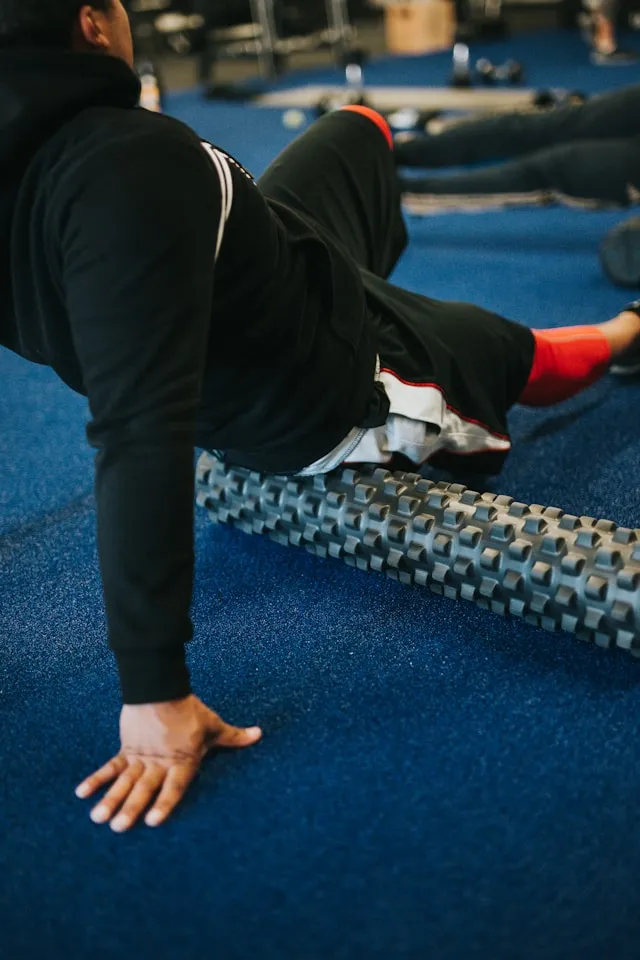
The Foam Rolling Protocol is a structured self myofascial release routine using a roller or ball on major muscle groups. Slow, controlled pressure can help reduce perceived tightness, increase comfort through range, and support local blood flow before or after training. It is not a cure for injury, but a consistent, low stress input that complements lifting, stretching, rehab, and movement practice.

What you may notice when you follow this protocol
Less day to day tightness in key areas such as quads, calves, glutes, and upper back.
Reduced post workout soreness when combined with smart loading and sleep.
Easier access to squat, hinge, lunge, and overhead positions.
A simple ritual that frames warm up or cooldown and supports body awareness.
How to follow the Foam Rolling Protocol
Baseline (3 to 5 days)
Pick 2 to 3 priority areas, such as quads, glutes, and upper back.
Roll each selected area for 45 to 90 seconds with slow movement and mild to moderate pressure.
Active phase (3 to 6 weeks)
Aim for 5 to 10 minutes of foam rolling on most training days or after long sitting periods.
Focus on big muscle groups around problem zones rather than joints or the low back spine line.
Move slowly, breathe normally, and pause briefly on tender spots without forcing sharp pain.
Follow rolling with 1 to 2 simple active mobility drills for the same region.
Maintenance and repeat
Maintain 2 to 4 short sessions per week once mobility and comfort improve.
Increase frequency for 1 to 2 weeks around heavy training blocks or travel when stiffness returns.

Safety notes and who should be careful
Do not roll directly on joints, the front of the neck, or along the lumbar spine; stay on surrounding muscles.
People with acute injuries, suspected tears, uncontrolled pain, varicose veins, bleeding disorders, or on anticoagulant therapy should confirm safety with a clinician.
Discomfort should stay in a tolerable range; sharp, electric, or numb sensations are a signal to stop.
If symptoms worsen, do not assume more pressure or volume is the answer; seek assessment for underlying issues.
The Foam Rolling Protocol in one view
The Foam Rolling Protocol is a focused, low friction way to reduce perceived tension, support recovery, and move more freely with just a few minutes of work. Used consistently alongside solid training, sleep, and load management, it is a useful accessory, not a fix for serious injury. Persistent or sharp pain is a cue to shift from self release to targeted clinical evaluation.