Sea Moss for Minerals, Gut, and Immunity: What It Does and How to Use It
Overview
Sea moss, often called Irish moss, is a type of red seaweed used for its mineral content and soothing effect on the gut. In supplement form it shows up as capsules, powders, or gels.
People usually take sea moss for gut and digestion support, immune health, skin and hair, and general “mineral top up.” It is often marketed as a natural source of iodine, magnesium, potassium, and other trace minerals, although exact amounts vary a lot by product.
Sea moss is popular in wellness circles, but it works best as a small add on to a decent nutrition pattern rather than a replacement for fruits, vegetables, and whole foods. It often shows up next to anti inflammatory or gut focused routines like a Gut Reset Protocol.
What Sea Moss is and how it works
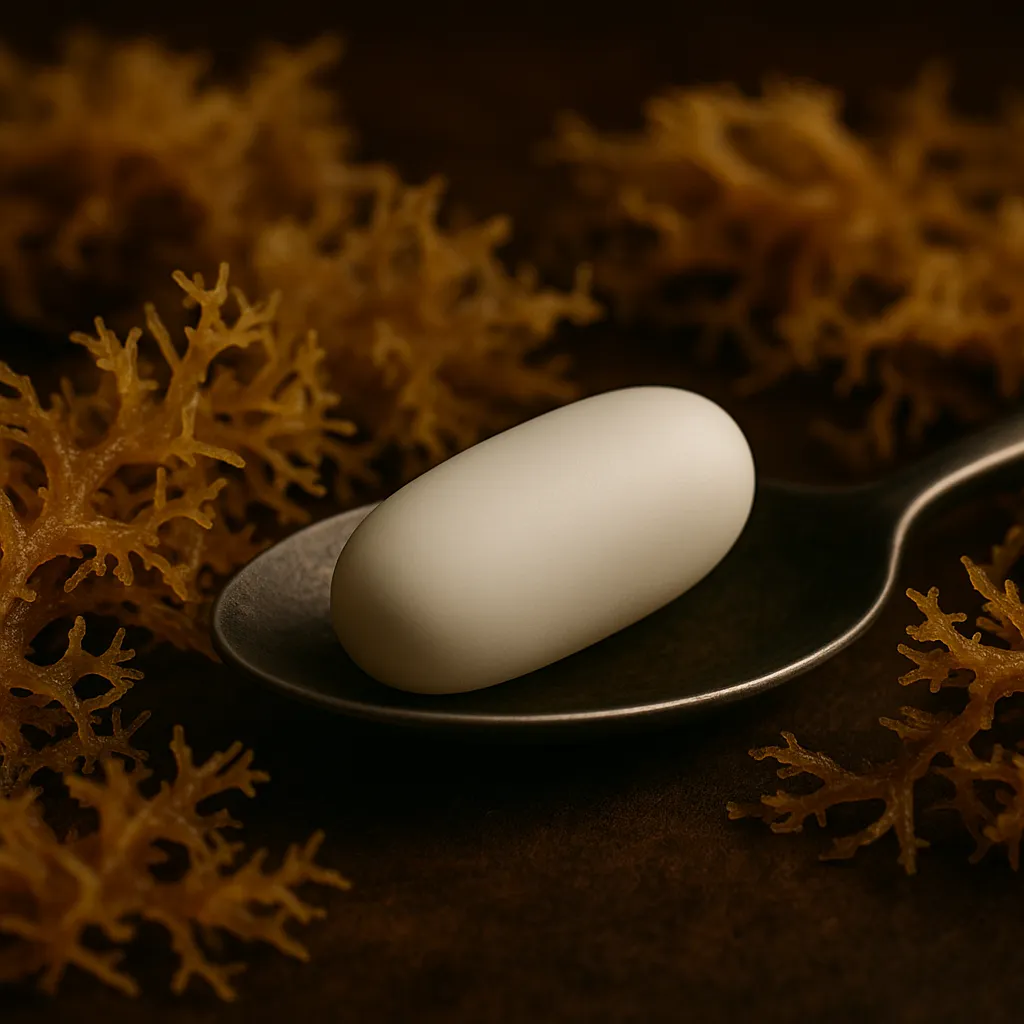
Sea moss is a common name for several species of red seaweed, often Chondrus crispus or related species. When soaked or heated, it becomes gel like due to natural polysaccharides. Those gels can coat and soothe the gut lining, which is one reason it is used for digestion.
Nutritionally, sea moss can provide small amounts of minerals and iodine. These can support normal thyroid hormone production and overall mineral status, but the levels are highly variable and depend on where and how the seaweed was harvested and processed.
Because of its gut coating and mineral features, sea moss is often layered into broader Gut Barrier and Anti Inflammatory plans.

What you may notice when you take Sea Moss
Smoother digestion and gut comfort
Some people notice that sea moss gel feels soothing on the stomach and gut. It can make mild acidity, irritation, or “scratchy” digestion feel calmer, especially if you take it with or between meals. It is more of a coating and calming effect than a strong laxative or antacid.
A bit more regularity
Because of its fiber and gel forming components, sea moss can sometimes help with more regular bowel movements. People who respond may feel less random constipation or incomplete emptying, especially when they also hydrate well and increase other fiber sources.
Gentle mineral and iodine support
Sea moss can contribute small amounts of Iodine and other minerals. In people who do not eat much seafood or iodized salt, that can be a helpful layer. When it works well, some people describe slightly better energy and fewer “cold and sluggish” sensations, but this is subtle and strongly depends on thyroid health and overall diet. Thyroid markers like TSH and iodine status are usually monitored through labs if you are using sea moss for that reason:
Immune and skin support as downstream effects
By supporting gut comfort, mineral intake, and background inflammation, some people report softer skin dryness, fewer small irritations, and a sense of being a little more resilient during stressful or cold seasons. This is usually very modest and assumes you are already working on sleep, nutrition, and basic immune
support.
Reality check
Sea moss will not “detox” the body, cure thyroid disease, or replace a solid mineral rich diet. It is best treated as a modest gut soothing and mineral support option, not a cure all.
Safety, dosing and who should skip it
Because sea moss comes from the ocean and contains variable iodine and minerals, there are a few important guardrails.
Thyroid conditions and iodine intake
Sea moss often contains iodine. Too little iodine is a problem, but so is too much, especially if you have thyroid disease like Hashimoto’s, Graves’, nodules, or are on thyroid medication. If you have a known thyroid condition or you already use iodized salt, seafood, or iodine containing supplements, do not add sea moss as a high dose daily habit without talking to your clinician. Thyroid labs such as TSH can shift in response to changes in iodine intake.
Heavy metals and contamination
Because it is a seaweed, sea moss can accumulate heavy metals or pollutants from the water it grows in. This is why product quality matters a lot. Poorly sourced sea moss may carry unwanted contaminants alongside minerals. If you choose to use it, it is worth picking brands that test for heavy metals and publish results.
Kidney and heart conditions
Sea moss can contain significant potassium and other minerals. If you have kidney disease, are at risk of high potassium, or have heart conditions that require strict electrolyte control, sea moss is not a DIY choice. Extra mineral load
can be risky in these settings and should only be managed with your care team.
Pregnancy and breastfeeding
In pregnancy and breastfeeding, iodine needs increase, but both deficiency and excess can harm the baby’s thyroid. Because sea moss iodine content is highly variable and not tightly standardized, concentrated sea moss supplements or high intake gels are better avoided unless your obstetric provider specifically recommends and monitors them.
New or unexplained symptoms
If you develop new neck swelling, strong fatigue, heart palpitations, temperature intolerance, or significant digestive or skin changes, do not assume sea moss will fix it. These can be signs of thyroid or systemic issues and require medical evaluation. If symptoms begin after starting sea moss, stop and discuss it with your clinician.
Quality
Look for products that clearly list species, origin, and any testing for heavy metals and contaminants. Avoid products that combine sea moss with several other iodine rich seaweeds in unknown amounts. Simple, well documented sourcing is better than very complex proprietary blends. If you make gel at home from dried sea moss, sourcing from a reputable supplier still matters.
Final Thoughts: Sea Moss
Sea moss is a mineral rich seaweed used for gut comfort, mild immune and skin support, and gentle iodine and mineral intake. People who respond often notice slightly calmer digestion, a bit more regularity, and a sense of softer overall irritation when it is used alongside better food, hydration, and sleep. Typical use involves 1 to 2 tablespoons of gel once or twice daily or capsule forms that match a moderate intake, for 4 to 6 weeks. It is not appropriate as a primary treatment for thyroid disease, kidney or heart conditions, or serious symptoms without medical input. At its best, sea moss is a small, soothing support layer in a larger gut and wellness plan, not a cure all by itself.