Schisandra Chinensis for Stress, Focus, and Liver Support: What It Does and How to Use It
Overview
Schisandra chinensis is a tart, aromatic berry used in traditional Chinese and Russian medicine as an adaptogen. People take it to help the body handle stress, support focus and mental performance under pressure, and gently support liver function.
You will often see Schisandra in “stress support,” “focus and productivity,” and “liver and detox” blends. The goal is not to knock you out or hype you up, but to smooth how your system responds to stress and long workloads. It is most useful when paired with a real Stress Resilience routine, not as the only tool.
What Schisandra Chinensis is and how it works
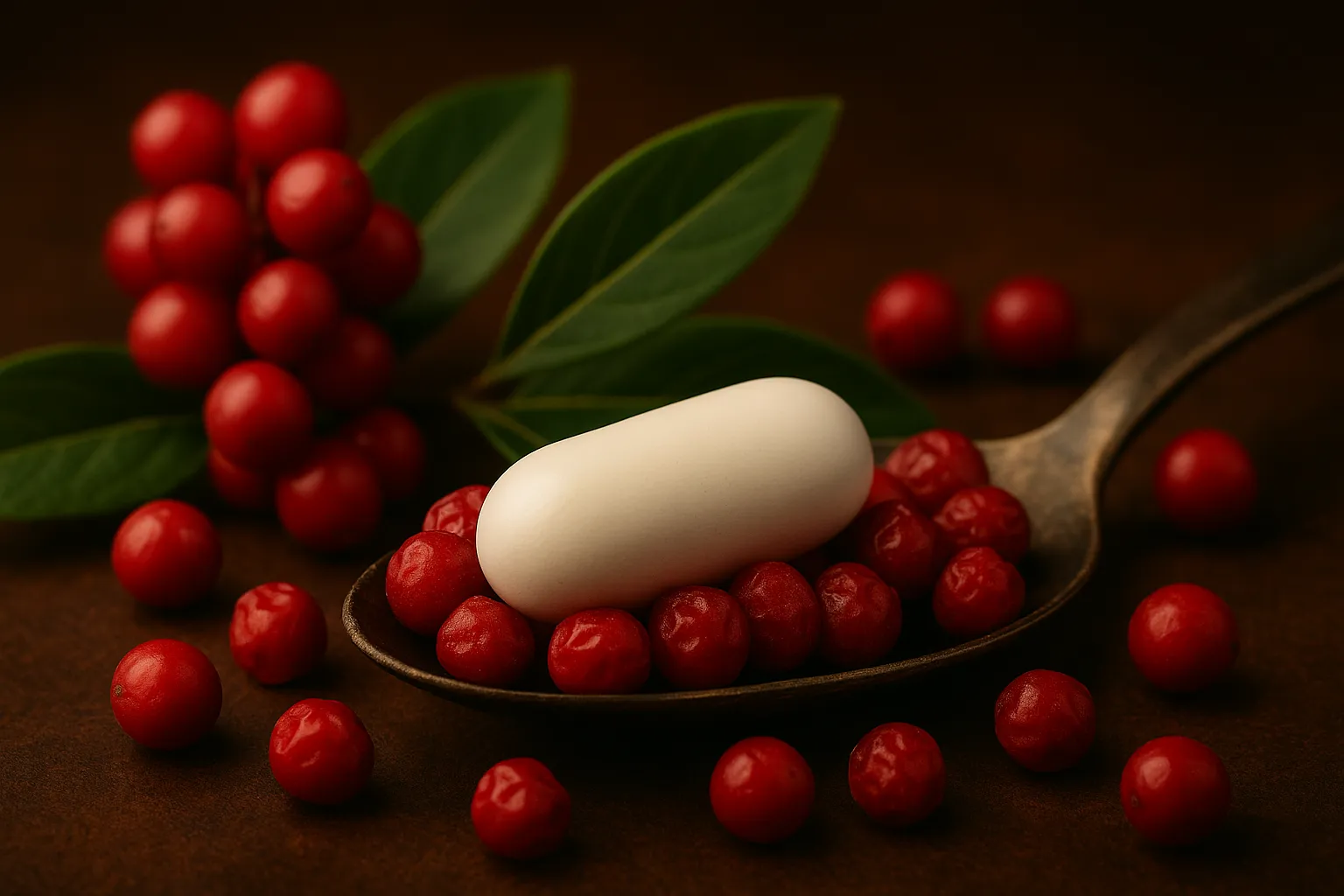
Schisandra chinensis is a berry that contains lignans and other bioactive compounds often called “schisandrins.” These compounds appear to influence the stress response system, including how the HPA axis and nervous system react to ongoing pressure.
It is considered an adaptogen, which means it aims to help your body adapt to physical and mental stress without forcing it in one direction like a pure stimulant or sedative. Schisandra is also used for liver support because some of its compounds interact with liver enzymes and cell protection pathways.
You will often see it paired with Anti Inflammatory and liver friendly routines that reduce toxin load and processed food, for example : Inflammation Reduction Routine.
What you may notice when you take Schisandra Chinensis
Calmer focus under pressure
When Schisandra works well for someone, they often describe a calmer type of focus. It can feel easier to stay on task during busy, demanding days without the jittery push of caffeine. People say it helps them feel more “held together” rather than wired.
Smoother stress tolerance and mood
Some users notice that small stressors do not spike them as much. Mood swings can feel a bit flatter in a good way, with less snapping at minor annoyances and fewer moments of feeling overwhelmed. It is not a happiness pill, but it can make the emotional landscape less sharp at the edges when combined with sleep and coping skills.
Gentle liver and detox support
Schisandra is often used as part of liver support protocols. When it helps, people may feel fewer “sluggish liver” sensations such as heaviness after rich meals, mild nausea, or an overdone feeling after small amounts of alcohol. In the lab, your clinician might track liver enzymes like ALT or AST as part of a broader liver and detox picture.
More stable energy over the day
Because Schisandra works on stress systems rather than directly stimulating, it can contribute to more stable energy. Users sometimes describe fewer big dips during the workday and less of a “crash” after intense focus blocks, especially if they are working on sleep and blood sugar at the same time.
Reality check
Schisandra will not erase burnout, fix major mood disorders, or reverse serious liver disease on its own. It is a support for systems that healthy routines already target. If work volume, sleep, and nutrition are not changing, any effect from Schisandra will be limited.
Safety, dosing and who should skip it
Because Schisandra influences stress pathways and liver enzymes, it is usually well tolerated but not neutral.
Liver disease and medications cleared by the liver
Schisandra interacts with liver enzymes that help process medications and toxins. If you have known liver disease, very high liver enzymes, or you take multiple medications that rely on liver metabolism, do not add Schisandra on your own. It can change how drugs are processed. In this situation, only consider it with your clinician’s guidance and lab monitoring.
Blood pressure and stimulant combinations
While Schisandra is not a classic stimulant, combining it with high caffeine or other stimulating supplements can sometimes feel too activating for sensitive people. If you have blood pressure issues, anxiety, or palpitations, be more cautious and start low, or talk to your clinician first.
Mood disorders and psychiatric medications
Because Schisandra can affect stress response and neurotransmitter balance indirectly, people with significant mood disorders or those on psychiatric medications should not treat it as a DIY fix. It should only be layered into a plan if your mental health provider agrees, to avoid unexpected mood shifts or interactions.
Pregnancy and breastfeeding
There is not enough safety data on concentrated Schisandra extracts during pregnancy or breastfeeding. Traditional use is not the same as modern high dose supplementation. Until more is known, it is safer to avoid Schisandra supplements in these phases unless a specialist explicitly approves them.
New or severe symptoms
If you develop new severe fatigue, jaundice, dark urine, confusion, strong mood swings, or chest pain, Schisandra is not the solution. These are red flag symptoms and need a medical evaluation. Supplements should not be used to push through serious warning signs.
Quality
Look for products that clearly state “Schisandra chinensis” with the amount of extract per capsule or serving and whether it is standardized to specific compounds. Third party testing is important to rule out adulterants and confirm identity. Avoid complex proprietary blends that list Schisandra without telling you how much is actually in the product.
Final Thoughts: Schisandra Chinensis
Schisandra chinensis is an adaptogenic berry used for stress resilience, focus under pressure, and gentle liver support. People who respond often notice calmer, more stable focus on busy days, slightly smoother mood, and better tolerance of lifestyle clean up efforts that tax the liver. Typical doses range from about 500 to 2 000 mg per day with food, used consistently for 4 to 8 weeks. It works best as one piece of a larger plan that includes sleep, nutrition, movement, and stress management, and it is not an appropriate stand alone treatment for serious liver or mental health conditions without medical supervision.