Pregnenolone for Stress, Memory, and Hormone Support: What It Does and How to Use It
Overview
Pregnenolone is a hormone precursor that also acts as a neurosteroid in the brain. People usually reach for it when they feel chronically stressed, mentally foggy, or like their recovery and mood are not as steady as they used to be. It is also used in some clinician guided plans to support upstream steroid hormone production, especially as levels drift down with age. Evidence is mixed, so it works best as a careful trial rather than a forever supplement.
What Pregnenolone is and how it works
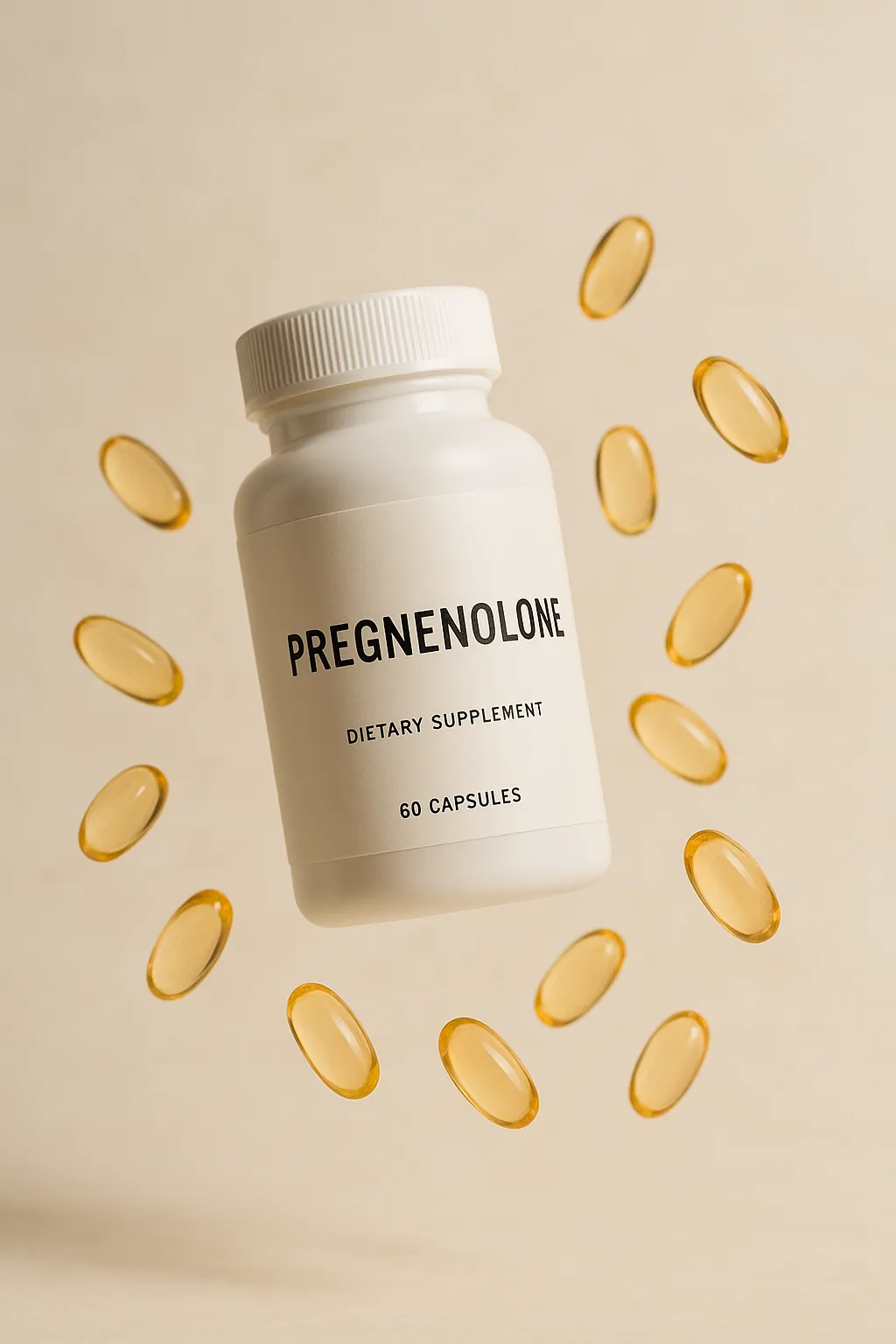
Pregnenolone is a steroid your body makes from cholesterol, mainly in the adrenal glands, brain, and gonads. It sits near the top of the hormone pathway, meaning your body can convert it into downstream hormones like progesterone, cortisol, DHEA, and then further into sex hormones.
It is also a neurosteroid, which means it can influence brain signaling directly, not only through conversion into other hormones. That brain activity is one reason researchers have studied it for mood, stress, and cognition.
If you want to understand whether downstream hormones are actually low, pregnenolone is usually interpreted alongside markers like Cortisol (AM) and DHEA rather than on its own.
What you may notice
Calmer stress response
Some clinical trials show improvements in perceived stress or mood in specific groups, but effects are not consistent in every study. If stress is your main bottleneck, pregnenolone can feel like a gentle stabilizer rather than a dramatic shift.
Cognition and mental clarity
Pregnenolone has been tested for attention, memory, and cognitive symptoms in psychiatric and neurologic contexts, with some studies showing modest improvements and others showing no clear effect. Translation to healthy people is still uncertain.
Energy and recovery feel
Anecdotally, people sometimes report steadier daytime energy, especially if they were running low on upstream hormones. Trials in healthy volunteers did not show major “boost” effects, so expect subtlety.
Reality check
Because pregnenolone can convert into multiple hormones, benefits depend on your starting point and your conversion pattern. It is not a guaranteed fix for fatigue or low mood, and it is not a replacement for sleep, nutrition, or stress hygiene. Pairing it with a real stress routine is usually smarter than hoping for a pill-only solution. Stress Resilience Protocol
Safety, dosing and who should be careful
Side effects
Pregnenolone can cause steroid-like side effects in some people, especially at higher doses. These can include overstimulation, irritability, insomnia, anxiety, acne, headaches, or mood swings. If this happens, lower the dose or stop.
Hormone sensitive conditions
Because pregnenolone can convert into estrogens and androgens, it is not recommended for people with hormone sensitive cancers, endometriosis, or uterine fibroids unless a clinician approves.
Drug and hormone interactions
Pregnenolone may amplify effects of hormone therapies like estrogen, progesterone, or testosterone. If you are on any of these, talk to a clinician before stacking.
Pregnancy, breastfeeding, and age
Avoid using pregnenolone if you are pregnant, breastfeeding, or under 18, unless specifically directed by a clinician.
Product quality
Look for:
third party testing
clear mg per serving
simple formula without “proprietary hormone blends”
consistent dosage per capsule
Final thoughts: Pregnenolone
Pregnenolone is an upstream steroid precursor and neurosteroid that some people use for stress resilience, mood steadiness, and cognitive support. Low doses in the 15 to 30 mg per day range have been used in healthy volunteers, while much higher doses have only been studied under clinical supervision. Benefits are usually subtle and depend on your hormone pathway context. Start low, trial for a few weeks, and stop if you feel wired, moody, or acne-prone. Avoid pregnenolone if you are pregnant, breastfeeding, under 18, have hormone sensitive conditions, or use hormone therapy without clinician input.