
Hormone Wind-Down for Cortisol Balance, Sleep, and Mood: 14–21 Day Routine
Overview
This routine is for people who feel wired at night, wake at 2–3 a.m., or start a “second wind” near bedtime. It runs 14–21 days and aligns evening cues - light, food timing, stimulants, and calm breathing—so cortisol drifts down and melatonin rises on time. Many track Cortisol (PM) over weeks to see if timing improves alongside sleep.
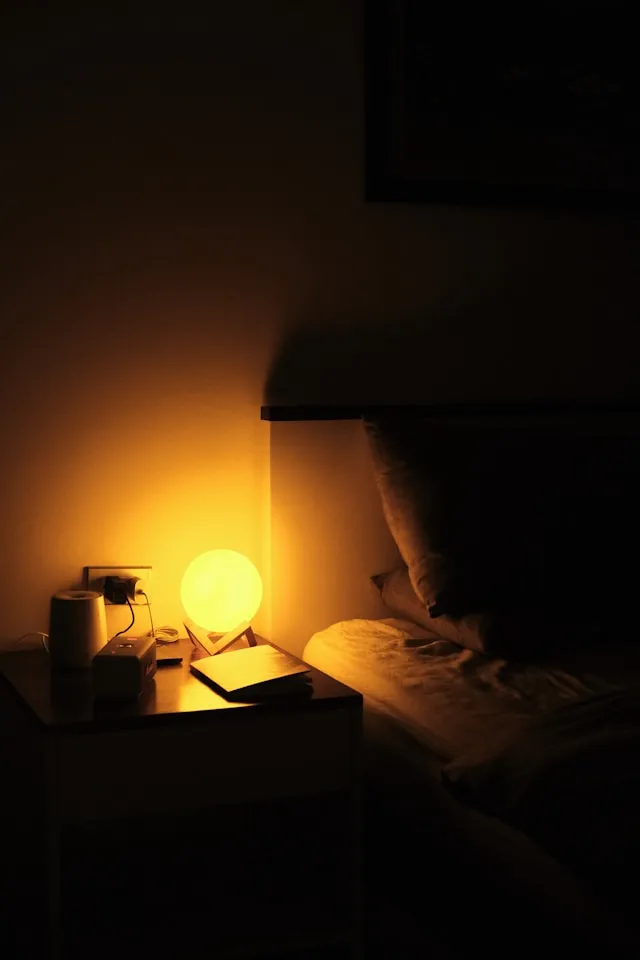
What the Hormone Wind-Down Routine is and how it works
A time-bound evening protocol that removes “daytime” signals (bright/blue light, late caffeine, heavy late meals) and adds parasympathetic inputs (long-exhale breathing, warm light, quiet tasks). The shift lowers arousal, supports melatonin release, and improves sleep onset/continuity - without supplements as the first line.
What you may notice when you follow this routine
Faster sleep onset and fewer awakenings.
Calmer evening mood and steadier next-day energy.
Less reliance on late-night screens and stimulants.
Clearer focus from more consistent sleep.
How to follow the Hormone Wind-Down Routine
Baseline (2–3 days)
Note bedtime, last caffeine, last bright screen, and dinner timing.
Set a fixed wake time you can keep daily.
Active phase (14–21 days)
Light: 2–3 h before bed use lamps/warm light; enable night mode and dim screens.
Caffeine: set cutoff ≥8 h before lights out.
Food: finish dinner 2–3 h before bed; keep it lighter on fats and alcohol.
Breathing: 5–10 min long-exhale practice (e.g., 4s inhale, 6–8s exhale) or 2–3 rounds of physiological sighs.
Phone dock: park it outside the bedroom or across the room 60 min before lights out.
Wind-down (30–60 min): book, stretch, journaling; no intense work/news.
Maintenance and repeat
Keep “lamps only” after sunset and the phone-dock rule.
Re-run a strict 2-week block after travel, busy seasons, or schedule drift.

Safety notes and who should be careful
If you have loud snoring/pauses, restless legs, severe insomnia, or major mood changes, seek clinical evaluation alongside this routine.
Blue-blocking glasses can help, but dimming and timing usually matter more.
Late-evening high-intensity exercise, alcohol, or heavy meals can override light gains - align all cues, not just screens.
Shift workers and new parents should focus on consistency of cues (dark room, cool temp, fixed wind-down) even if clock times vary.
New red-flag symptoms (chest pain, severe breathlessness, palpitations) → stop and seek care.
The Hormone Wind-Down Routine in one view
Two to three hours before bed, swap overheads for warm lamps, set screens to warm + dim, keep dinner earlier/lighter, and practice 5–10 minutes of long-exhale breathing with your phone docked away. In 2–3 weeks most people fall asleep faster, wake less, and feel steadier the next day. Hold the lamp-and-dock habits long term; add supplements only if needed and with guidance.