Folate: Energy, Red Blood Cells, and What Low Levels Can Tell You
Overview
Folate, also known as vitamin B9, is a B vitamin your body uses to build DNA and make healthy red blood cells. When levels are too low, you can end up tired, foggy, and more prone to a type of anemia that affects how well you carry oxygen. In this glossary you will see what a folate test actually measures, how it fits with Vitamin B12, Homocysteine, and Iron, how to think about low results without panic, what can nudge folate up or down, and when it is worth going through the result with a clinician.
What folate is and why it matters
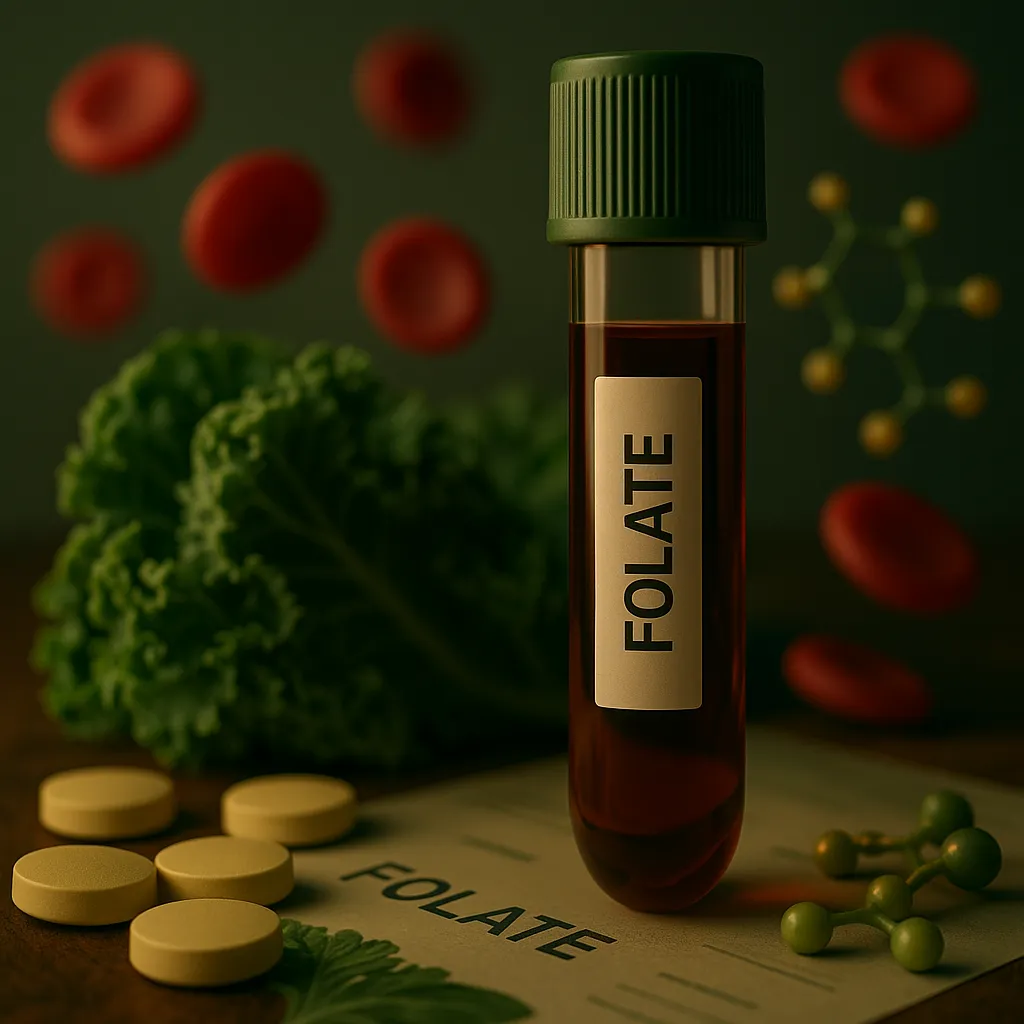
Folate is a water soluble B vitamin that your body cannot make in meaningful amounts, so you need a steady supply from food or supplements. It plays key roles in:
Building and repairing DNA
Making new red blood cells in the bone marrow
Supporting normal growth, cell division, and early development
Helping process homocysteine, an amino acid linked with heart and vessel health
In blood work, folate is usually measured as serum folate, red blood cell folate, or both. These give a sense of how much folate is available in circulation and how well your tissues have been supplied over time.
If folate is consistently low, your body may struggle to make red blood cells properly, which can lead to megaloblastic anemia and symptoms like fatigue and poor exercise tolerance.
What your folate result can tell you
Your folate value can help answer questions like:
Do I have enough folate on board to support healthy red blood cell production and DNA repair
Could my fatigue, brain fog, or anemia be related to folate status
Does my folate level fit with my vitamin B12, homocysteine, and iron markers, or is something out of balance
Low folate often shows up with elevated homocysteine and changes in red blood cell size. It can also overlap with vitamin B12 deficiency, which is why both are usually checked together. Normal folate with symptoms or abnormal blood counts suggests the need to look at other causes beyond simple folate intake.
How to read high and low folate
Folate levels are most helpful when interpreted together with B12, homocysteine, and full blood counts.
When folate is low
Lower folate can mean:
you are not getting enough folate from food or supplements
your body is losing more than usual, or not absorbing folate well
your needs are higher than usual, for example during periods of rapid growth
Low folate can contribute to:
anemia with larger than normal red blood cells
fatigue, reduced exercise capacity, paleness, or shortness of breath on exertion
in pregnancy, increased risk of problems with early fetal development if not corrected
A low folate result is a prompt to look at diet quality, gut health, medications, and overall nutrient status rather than just grabbing any supplement at random.
When folate is high
Higher folate is less common as a problem on its own and is often due to:
high intake from fortified foods or supplements
blood being drawn soon after a folate rich meal or recent supplement dose
Very high folate when vitamin B12 is low can sometimes hide early B12 related blood changes, which is another reason to pair these markers rather than look at folate alone.
What can affect your folate result
Folate status can change with intake, absorption, and overall health. Common influences include:
Diet
Folate is found in leafy green vegetables, legumes, citrus, and many fortified grain products. Diets that are low in these foods or rely heavily on ultra processed options can come up short. Patterns like Vegetarian or plant forward eating can provide plenty of folate if they include a variety of whole plant foods.Alcohol and gut health
Heavy alcohol use and gut conditions such as celiac disease or inflammatory bowel disease can reduce absorption and increase folate loss.Medications
Some medicines, including certain seizure drugs and methotrexate, can interfere with folate metabolism and increase needs.Increased demand
Growth, recovery from illness, and pregnancy all increase the body’s need for folate. If intake does not rise to match, levels can drift down.
Because folate is water soluble and not stored in huge amounts, levels can improve relatively quickly once intake and absorption are corrected.

When to talk to a healthcare provider about folate
You should review your folate result with a clinician when:
Folate is low and you have symptoms like fatigue, shortness of breath, or paleness
Your blood counts show larger than normal red blood cells or anemia
Folate is low together with high homocysteine or abnormal B12 levels
You are pregnant, planning pregnancy, or have conditions or medications that affect folate metabolism
A clinician can place folate next to vitamin B12, homocysteine, iron studies, and your full blood count. From there they can help decide whether you are dealing with simple low intake, absorption problems, medication effects, or a mix of factors, and what dose and form of folate or folic acid is appropriate.
Folate in one view
Folate is a B vitamin that keeps DNA building and red blood cell production running smoothly, so low levels can quietly drain energy and oxygen delivery. On its own a folate value is just one snapshot, but together with vitamin B12, homocysteine, iron markers, and your symptoms it helps explain patterns of fatigue and anemia and guides whether you need diet changes, supplements, or further investigation. A persistently low folate is a gentle push to upgrade food quality, check for absorption issues, and work with a clinician so red blood cells and tissues stay well supplied.